What's Really in Your Relaxer: A Safety Guide to Black Hair Products
Published on May 12, 2026
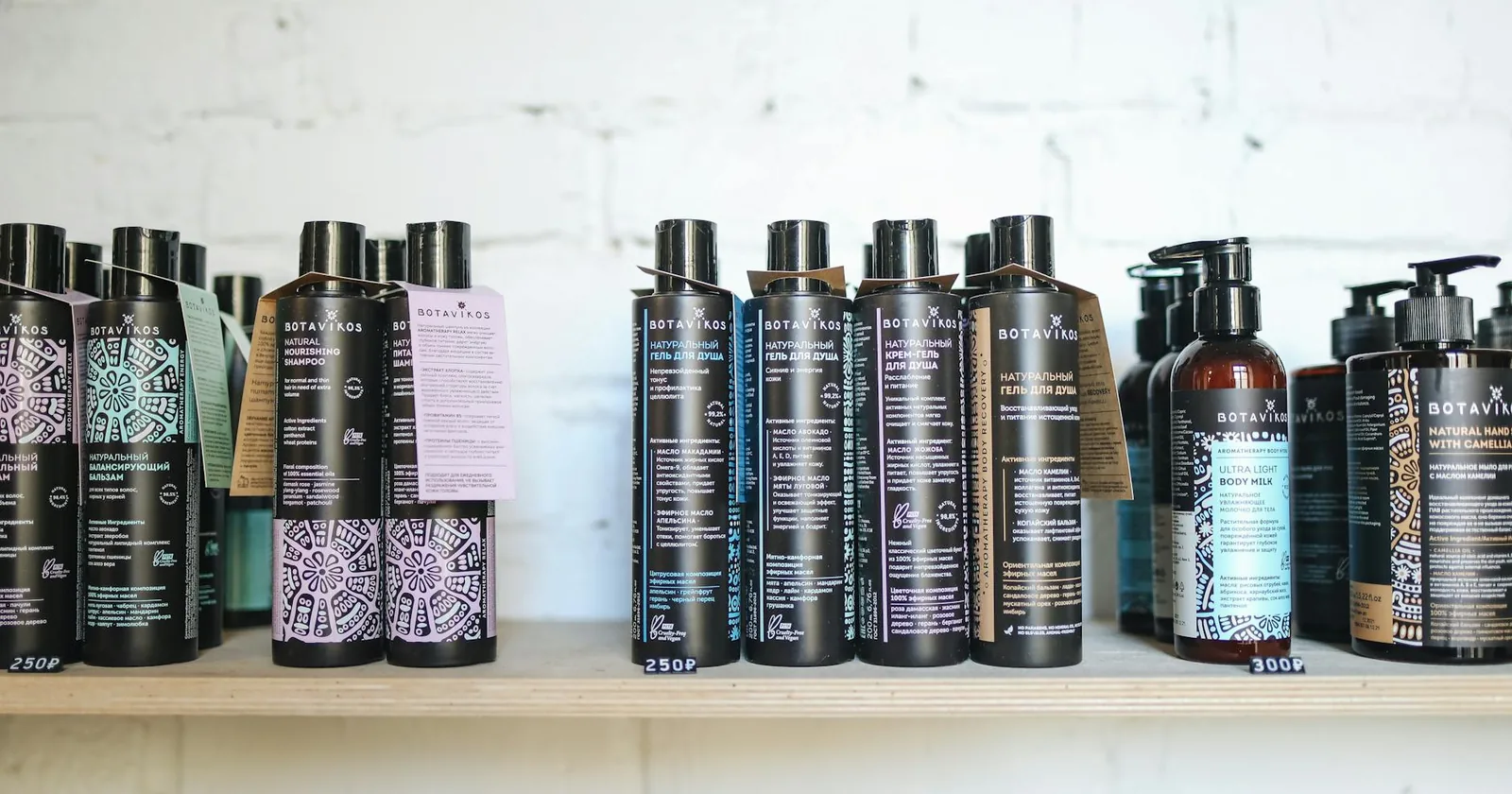
When Congress Names Your Shampoo
In July 2025, federal lawmakers introduced four bills, collectively the Safe Beauty Bill Package, aimed squarely at the chemicals in hair and beauty products marketed to Black women. The Toxic-Free Beauty Act in that package would ban two classes of chemicals and 18 of the most hazardous individual ingredients found in those products, among them formaldehyde, phthalates, parabens, lead, mercury, and asbestos. Representative Ayanna Pressley, one of the bill’s champions, put it bluntly: products sold to Black women and girls have carried unregulated ingredients “for decades.”
For anyone who sits in a barber’s or stylist’s chair, or stands behind one, that headline raises a fair question: what is actually in this stuff, and how worried should I be? This guide walks through the ingredients under scrutiny, what the research does and does not show, where the law stands, and how to read a label without a chemistry degree.
A note up front. Scalp and hair-shaft health is genuinely medical territory. Nothing here replaces a conversation with a licensed barber or cosmetologist, and if you have a specific scalp concern, a trichologist or dermatologist is the right call.
How a Relaxer Actually Works
A chemical relaxer permanently straightens tightly coiled hair by breaking the disulfide bonds that give Type 4 hair its shape. There are two broad families.
Lye relaxers use sodium hydroxide, the same compound found in drain cleaner, at a pH around 12 to 14. They work fast and rinse clean, but the high alkalinity can irritate or burn the scalp if it is left on too long or applied to a scalp that is already tender.
No-lye relaxers swap in calcium hydroxide mixed with guanidine carbonate, which react together to form guanidine hydroxide. They are marketed as “gentler,” and the burn risk is somewhat lower, but the pH is still high, the straightening chemistry is the same, and the leftover calcium can leave hair dry, dull, and harder to moisturize over time. “No-lye” does not mean “no chemicals” and it does not mean “no risk.”
Worth separating from both of those: keratin treatments and Brazilian-style smoothing systems. Those are a different process, and they are where the formaldehyde conversation really lives.
The Ingredients Under Scrutiny
Formaldehyde and formaldehyde releasers. Formaldehyde is classified as a known human carcinogen by the U.S. National Toxicology Program and by the World Health Organization’s cancer agency. It rarely appears on a label by that name. Instead, watch for methylene glycol, formalin, DMDM hydantoin, quaternium-15, imidazolidinyl urea, diazolidinyl urea, sodium hydroxymethylglycinate, and bronopol. Many keratin smoothing systems release formaldehyde gas when the product is blow-dried and flat-ironed, which is why salon workers, who breathe it in shift after shift, sit at the center of the concern.
Phthalates. These plasticizers often hide inside the single word “fragrance” or “parfum,” because manufacturers are not required to break a fragrance blend down into its parts. They are endocrine disruptors, meaning they can interfere with the body’s hormone signaling, and research has associated them with reproductive harm and early puberty.
Parabens. Methylparaben, propylparaben, and butylparaben are preservatives that weakly mimic estrogen in the body. The wave of “paraben-free” labeling you see now exists precisely because of consumer pushback on this group.
Heavy metals and other contaminants. Lead and similar metals turn up not as listed ingredients but as contaminants. A 2025 Consumer Reports investigation found carcinogens in all 10 synthetic braiding-hair products it tested and detectable lead in nine of them, the kind of hair widely used for braids, twists, and extensions. Coal-tar dyes, certain sulfate cleansers that carry a 1,4-dioxane byproduct, and undisclosed fragrance blends round out the list that advocacy groups such as Breast Cancer Prevention Partners and its Campaign for Safe Cosmetics keep flagging.
What the Research Actually Shows
The headline study is the National Institutes of Health Sister Study, which followed about 33,500 women for nearly 11 years. Published in 2022, it found that women who used chemical hair straighteners frequently, defined as more than four times in the prior year, had more than double the uterine cancer risk of women who did not use them. In concrete terms, the researchers estimated the risk of uterine cancer by age 70 rose from roughly 1.6 percent among women who never used straighteners to about 4 percent among frequent users. Earlier work from the same group of women linked frequent straightener and permanent-dye use to higher rates of breast and ovarian cancer.
Two honest caveats belong next to that. First, uterine cancer is relatively uncommon, so even a doubled risk still affects a small share of women in absolute terms. Second, the researchers could not name one guilty ingredient. Their leading suspects are the endocrine-disrupting compounds in the formulations, things like parabens, bisphenol A, certain metals, and formaldehyde, rather than the alkaline straightening agent itself. The science says reduce frequency and use caution. It does not say every relaxer causes cancer. But for a product category used heavily, often starting in childhood, and disproportionately by one group of people, “use caution” deserves to be said loudly. About 60 percent of the women in that study who reported recent straightener use were Black.

The Ban That Keeps Not Happening
In 2023 the FDA signaled it would propose a rule banning formaldehyde and formaldehyde-releasing chemicals from hair smoothing and straightening products, with a first target date of October 2023 that slid to April 2024. That date came and went. The proposed rule, formally titled “Use of Formaldehyde and Formaldehyde-Releasing Chemicals as an Ingredient in Hair Smoothing Products or Hair Straightening Products,” slipped again and again through 2024 and 2025, and as of early 2026 it still has not been issued. A 2025 executive order freezing pending federal regulations did not help. The agency says it remains a priority.
That vacuum is part of why the 2025 Safe Beauty Bill Package exists, and why states have moved on their own. Since 2023, Vermont has banned 17 chemicals and two chemical classes from cosmetics, California has banned 25, and Washington and Oregon have each banned 13 chemicals and three classes. The federal Modernization of Cosmetics Regulations Act of 2022 gave the FDA more authority over the industry, but as lawmakers themselves point out, it did little to change what is actually allowed in the bottle.
Why This Falls Hardest on Black Hair
None of this is an accident of chemistry alone. For generations, straight hair was treated as the price of admission to schools, offices, and “professional” settings, which is exactly the discrimination the CROWN Act, short for Creating a Respectful and Open World for Natural Hair, was written to outlaw. First passed in California in 2019 and now law in roughly two dozen states, the CROWN Act matters to this conversation because the pressure to chemically straighten, often beginning on young girls, drove decades of heavy exposure. The growing embrace of natural texture in modern barbering is partly an aesthetic shift and partly a health one.
How to Read a Black Hair Product Label
You do not need to memorize a chemistry textbook. A few habits go a long way.
- Scan for the formaldehyde family first. Formaldehyde, methylene glycol, formalin, DMDM hydantoin, quaternium-15, imidazolidinyl urea, diazolidinyl urea, bronopol, sodium hydroxymethylglycinate. Any of those is a formaldehyde or formaldehyde-releasing ingredient.
- Treat “fragrance” or “parfum” as a question mark. It can legally conceal phthalates. A brand that discloses its fragrance components, or skips added fragrance entirely, is telling you something useful.
- Read what is named, not just what is claimed. “Paraben-free” and “no-lye” are marketing phrases, not safety guarantees. The full ingredient list is the real document.
- Use the free tools. The Environmental Working Group’s Skin Deep database and apps like Think Dirty will score most products in seconds.
- Mind the air, not just the bottle. If a smoothing service makes your eyes water or your throat burn, that is a signal, for you and for the person performing it.
What Barbers and Stylists Can Do
If you work behind the chair, you are both the most exposed person in the room and the most trusted voice your clients hear on this. Ventilate the space. Wear gloves, and for smoothing services consider a respirator-grade mask rather than a paper one. Read the safety data sheets your distributor is required to provide. Be honest with clients about what a service actually involves, including the conversation that no-lye is not magic. And remember that health codes, ventilation rules, and product restrictions vary from state to state, so check your own board’s requirements rather than assuming they match a neighbor’s.
For clients, the move is simpler: stretch the time between relaxer touch-ups, ask whether a skilled barber or stylist who knows your hair can get you to a style with less chemical maintenance, and bring your questions into the shop. A good professional will welcome them.
The Bottom Line
Relaxers and smoothing treatments are not going away, and plenty of people will keep using them with their eyes open. The reasonable response to the 2025 bills, the stalled FDA rule, and the NIH research is not panic. It is information. Know how these products work, learn which ingredient names to watch, cut down the frequency where you can, and lean on the licensed professionals, barbers, stylists, dermatologists, and trichologists, who do this for a living.
Further reading (sources)
- NBC News on the Congressional bills targeting cancer-linked ingredients in Black hair products
- National Institutes of Health with the Sister Study findings tying hair straighteners to uterine cancer risk
- CNN for the FDA missing yet another deadline on its formaldehyde ban
- Consumer Reports on carcinogens and lead detected in synthetic braiding hair
- Campaign for Safe Cosmetics on the Black Beauty Project and toxic ingredients in hair products
- The CROWN Act for the legislative history behind natural-hair discrimination law
- Environmental Working Group with the Skin Deep cosmetics ingredient database
Feature photo by Polina Tankilevitch on Pexels.