Barbers as Mental Health First Responders in Black Communities
Published on June 17, 2026
The Most Honest Room in the Neighborhood
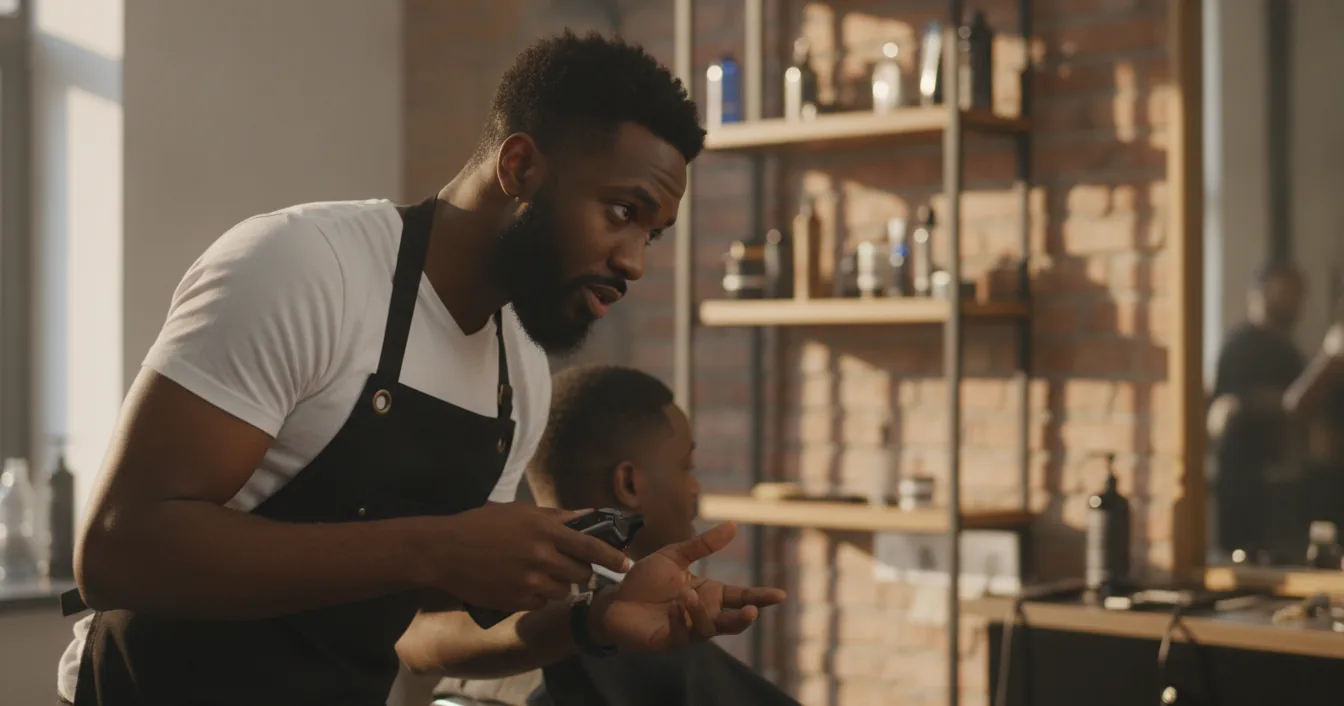
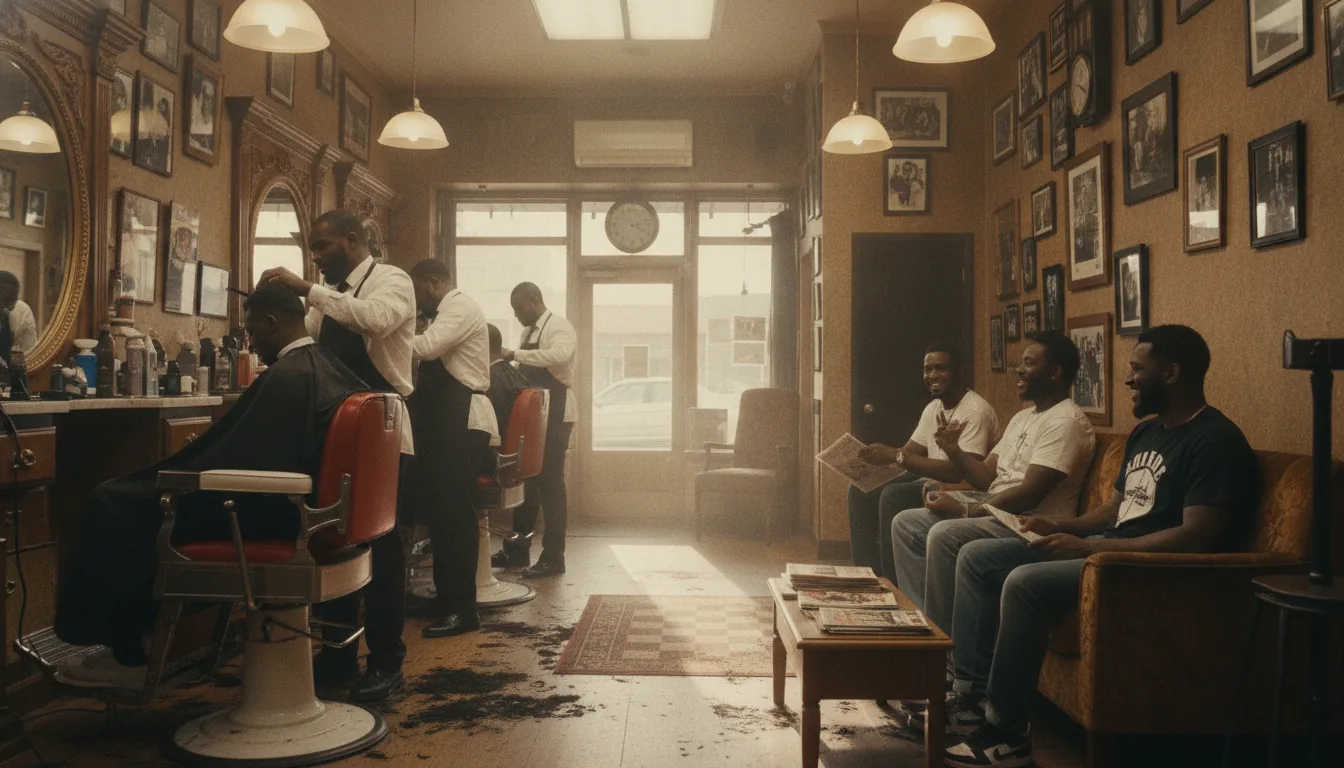
Spend an hour in a Black barbershop and you will hear far more than talk about hair. A man in the chair mentions he has not been sleeping. Someone waiting his turn talks about a layoff, a divorce, a son who stopped calling. The barber listens, nods, says the right thing at the right moment, and keeps the clippers moving. None of that is on the list of services posted by the mirror, but it has always been part of the work.
For generations that listening happened by instinct. Now a national movement is putting structure behind it, training Black barbers to recognize when a client is struggling and to respond with skill instead of guesswork. Advocates call them mental health first responders. The idea is simple and, increasingly, backed by evidence. The chair is already a place where Black men open up, so meet them there.
Why the Barbershop, and Why Now
Black men carry one of the heaviest mental health burdens in the country and use formal care at some of the lowest rates. Stigma, cost, a shortage of Black therapists, and a long and earned distrust of medical institutions all push men away from a clinic door. The result is a wide gap between the people who are quietly struggling and the people who ever get help.
The barbershop sits right in the middle of that gap. It is a place Black men already go, voluntarily and on a schedule, often every two weeks for years at a time. The relationship between a barber and a regular client is measured in seasons, not minutes. As I have written in my guide to why the right barber matters so much, the trust built across the chair is its own trained craft, separate from the cutting itself. That trust is exactly what mental health outreach has struggled to manufacture anywhere else.
Public health researchers noticed years ago. A landmark trial published in the New England Journal of Medicine in 2018 placed pharmacists inside 52 Black-owned barbershops in Los Angeles to manage high blood pressure. Men in the program lowered their pressure by an average of 27 points, a result strong enough to change how doctors think about reaching Black men. If the shop can move blood pressure, the reasoning goes, it can move the conversation about stress, anxiety, and depression too.
From Informal Therapy to Formal Training
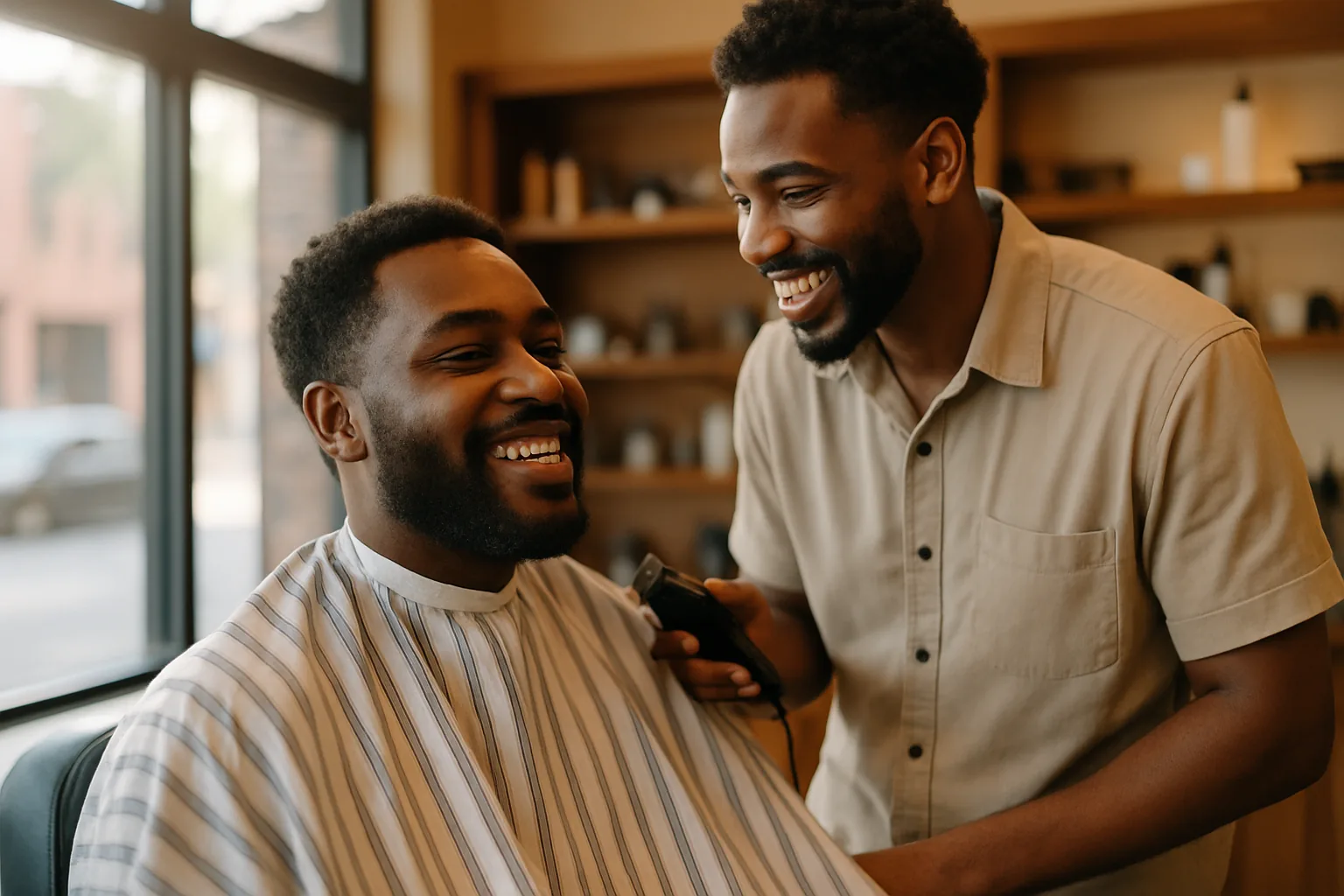
Barbers have been doing the informal version of this work for as long as the institution has existed. “The barbershop was therapy for a lot of people,” Pierre Johnson, a Chicago OB-GYN who cut hair before medical school, told WHYY. “A lot of people didn’t even really need haircuts at the time. They’d come in just to have conversations and to tell their problems and get advice.” Mike Jordan, a Philadelphia barber, said much the same thing in plainer terms. “Barbering is not just cutting hair. You got counseling, advising, you get friendships.”
That history is part of why the shop became, in its informal way, a counseling office and a clinic running on the same hourly appointment, a role I trace in the cultural history of the Black barbershop. What is new is the decision to formalize it, to hand barbers real tools instead of leaving them to improvise through their clients’ hardest moments.
What the Training Actually Teaches
The flagship program in the United States is The Confess Project of America, founded by Lorenzo Lewis, who built it out of his own experience with anxiety, depression, and a childhood shaped by incarceration. Its “Beyond the Shop” curriculum trains barbers in four core skills: active listening, validation, positive communication, and stigma reduction. The organization says it has trained more than 6,000 barbers and community leaders across 54 cities and 31 states.
The common thread across programs like it is what is often called Mental Health First Aid, an eight-hour, evidence-based course from the National Council for Mental Wellbeing that teaches everyday people to spot the warning signs of a mental health or substance use crisis and to offer support until professional help is available. Brought into the barbershop, the training tends to cover a handful of things:
- Active listening that invites a client to keep talking instead of shutting the moment down with a quick fix or a change of subject.
- Recognizing distress, from the obvious signs of sadness to the quieter ones. A regular who suddenly goes silent, loses weight, stops making eye contact, or jokes a little too darkly is telling you something.
- Reducing stigma by treating the conversation as normal, so a man never feels weak for admitting he is not okay.
- Knowing how to refer, which is the most important skill of all. A trained barber is not there to diagnose or treat anyone. He is there to listen, to respond well, and to hand off, ideally to a real therapist the shop already knows.
What It Looks Like in the Chair
Done well, this is quiet work. Sheldon Walker, a barber with almost 30 years behind the chair, described how it shows up day to day. Over the years he learned to read his clients’ moods and can tell when a regular is carrying something heavy. The skill is not delivering a speech or playing therapist. It is noticing, asking one real question, and holding the space long enough that a man can say the thing he walked in not planning to say.
The boundary matters here. A barber trained as a first responder is exactly that, a first responder, not a replacement for treatment. The strongest programs build a referral bridge, a standing partnership with a local therapist or clinic, so that when a client opens up the barber has somewhere to point him rather than carrying the weight alone. In Canada, Black Mental Health Canada’s Self Care Through Hair program pairs its barber training with precisely that kind of professional backstop, connecting shops directly to social workers and psychotherapists who can take the next step.
For Shop Owners Who Want to Support Community Wellness
If you own a shop, you do not have to open a clinic to take part. A few practical moves go a long way.
- Bring training in. The Confess Project, the University of Maryland’s HAIR initiative (Health Advocates In-Reach and Research, which has trained barbers and stylists as health advocates since 2014), and local Mental Health First Aid chapters all train barbers directly, and some offer certification.
- Build the referral list before you need it. Find a Black therapist, a community clinic, or a crisis line in your area and keep the numbers somewhere your team can reach them fast. A wellness corner beside your grooming and self-care products can hold resource cards as easily as it holds beard oil.
- Protect your barbers. Hearing heavy things all day takes a toll. Secondary stress is real, and a barber who absorbs his clients’ pain without any support of his own will burn out. Give your team room to decompress, and keep reminding them the job is to listen and refer, not to fix.
The Chair Is a Doorway, Not a Diagnosis
The barbershop will never replace a therapist’s office, and no one serious about this movement is pretending it should. What the shop can do is shorten the distance between a man who is hurting and the help he needs, using a relationship that already exists and a room where he already feels safe. For a community the formal system has too often failed, that doorway is worth a great deal.
If you are a barber weighing whether to take the training, understand what is actually being asked. You are not being told to become a counselor. You are being offered a way to get a little better at something you are probably already doing every single day. And if a man in your chair is ever in real crisis, you do not have to hold it by yourself. In the United States, the 988 Suicide and Crisis Lifeline is available by call or text, around the clock, and pointing someone toward it can be the most important cut you make all week.
Further reading (sources)
- The Globe and Mail on a program training barbers as mental-health first responders for Black communities
- The Confess Project of America on the Beyond the Shop programme that trains barbers as mental health advocates
- National Council for Mental Wellbeing with what the Mental Health First Aid course actually teaches
- New England Journal of Medicine on the cluster-randomized blood-pressure trial run inside Black barbershops
- University of Maryland School of Public Health for the HAIR program that turns barbers into trusted health advocates
- WHYY The Pulse with the barbershop as care beyond hair