The Black Hair Desert: A Complete Guide to Hair Care Access in Underserved Communities
Published on July 15, 2026
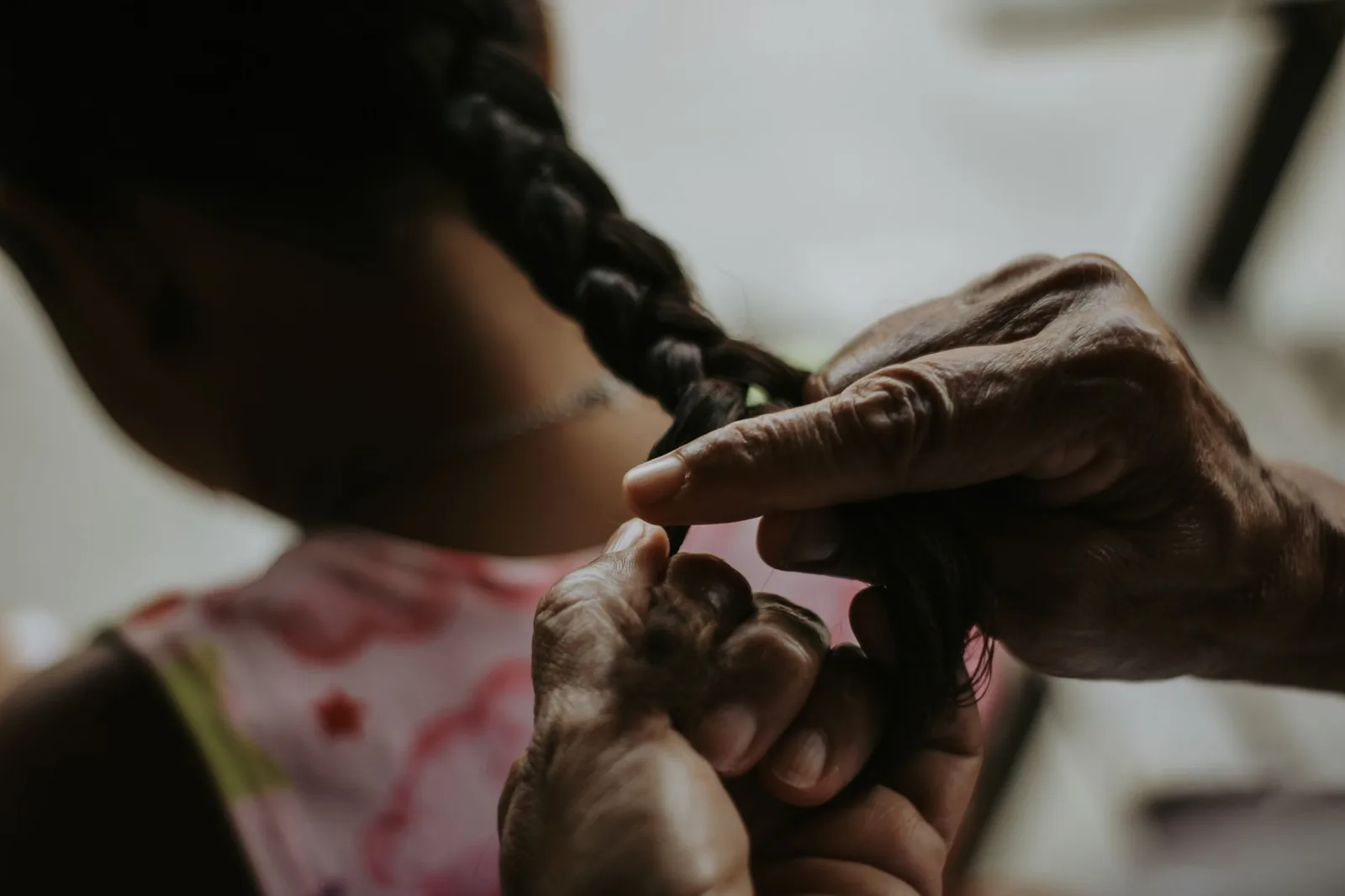
In early 2021, a creator named Mimi Taylor filmed herself calling salon after salon near her home in Olympia, Washington. She wanted something simple: straight-back cornrows to wear under a new wig. She called 26 shops. Not one could work with her 4C texture. She finally got her hair braided by her grandmother, who lived two hours away. The video went viral because thousands of Black women recognized the story on sight. They live it every month.
That experience has a name. It is called a Black hair desert, and it quietly shapes daily life for Black families across large stretches of the United States and Canada. This guide explains what a hair desert is, why they form, what life inside one actually looks like, and the reforms and business models that are starting to close the gap.
What a Black Hair Desert Actually Is
A Black hair desert is a region where almost no barbershops or salons have professionals trained to cut and style Afro-textured hair. Residents with Type 3 and Type 4 hair are left to travel long distances, ship in their own products, or teach themselves from YouTube. The phrase “Black salon desert” traces to a 2018 New Hampshire Public Radio story, and it borrows from the more familiar idea of a food desert: a place where a basic need simply is not stocked nearby.
These deserts are most often rural, but not exclusively. A gentrifying city neighborhood can become one as long-standing shops get priced out. Even where a willing salon exists, residents sometimes run into texturist practices, such as an upcharge for Type 4 hair or a stylist who expects the client to do half the detangling that a looser-textured client would never be asked to do. When the nearest chair is 30 or 40 miles away, that kind of friction is more than an annoyance. It is a barrier to looking presentable for a job interview, a graduation, or a first day at a new school.
The Training Gap Starts in Cosmetology School
The root of the problem is not a shortage of interest. It is a shortage of training. Many cosmetology and barbering programs in both the United States and Canada still treat textured hair as optional. Natural hairstyling is frequently taught as a separate specialty course, bolted on after the core curriculum rather than built into it.
The stories from the field are consistent. Maine has a single barber school, in Augusta, and barber Jake Stanley has said he was taught to cut Black hair “verbally,” with almost no hands-on practice. In St. John’s, Newfoundland, the two hairstyling programs follow a provincial plan of training that includes no course specifically on Black hair, and because the local clientele skews white, students rarely get to practice on coily textures at all. The result is a pipeline of licensed professionals who are certified to cut hair but were never actually taught to cut every kind of hair.
This is where the craft gap becomes a licensing question. Back in the 1960s, a civil rights protest boycotted a campus barber in rural Ohio who claimed he could not cut Black hair. The organizers asked a sharp question that still lands today: what does it mean that a barber must be licensed by the state to cut hair, yet can turn a client away by claiming no skill with that client’s texture? Cutting coils well is a genuine, learnable skill rooted in how the hair is built, from its curved follicles to its fragile bends. If you want the technical side of why textured hair behaves the way it does, see our breakdown of why Black hair breaks differently. Licensing standards and health codes vary from state to state, so what a program is required to teach in one place may be entirely optional in the next.
Demographics, Redlining, and the Cost of a Chair
The other half of the story is economics. Where the Black population is small and spread out, demand is thin and scattered, which makes it hard for a specialized stylist to build a full book of business. Sociologist Shatima Jones of New York University points to demographics, class, property costs, and gentrification as the tangled roots of the problem. Who gets to live in the resource-rich suburbs, and who gets pushed out of a gentrifying city block, both come down heavily to race and class.
History compounds it. Redlining, the federal practice that from the 1930s marked Black neighborhoods as too risky for mortgages, left a lasting map of segregation and disinvestment that outlived its 1968 ban. Opening any shop carries real overhead: a license, rent or booth rent, and supplies. For Black practitioners, funding that launch is harder, since Federal Reserve data has shown Black-owned businesses are turned down for loans at markedly higher rates. When the money side of running a shop is this steep, thin local demand can be enough to keep a chair from ever opening. If you are weighing that math yourself, our Black barbershop owner’s business guide walks through booth rent, pricing, and overhead in detail.
Life in a Hair Desert: Vermont, Maine, and Rural Canada
Statistics get abstract fast, so look at three real places.
In Vermont’s Upper Valley, where roughly 95 percent of residents identified as white in 2015, Dartmouth College contracted a Philadelphia barber named Sean Taylor to set up a chair once a month in the basement of Cutter Hall, historically the campus’s African American dorm. Students stream in all day. Dartmouth’s Office of Pluralism and Leadership even maintains a web page to help students of color find Black hair care, and Taylor is one of only two names on it for the whole area. His clients used to drive to Boston, Manchester, or Burlington. Now they wait for the second Saturday.
In Maine, one of the whitest states in the country, University of Maine basketball coach Chris Markwood cut his own hair in his dorm room as a student because there was no barber in the Orono area who could. Today he raises the subject of hair access early when he recruits players, because they ask. In Bangor, braider Angela Okafur says her clients routinely spend hundreds of dollars on gas and even roundtrip plane tickets to Portland, Boston, and New York just to sit in a skilled chair, and only three or four stylists in the whole city serve Black women.
And it crosses borders. In St. John’s, Newfoundland, writer Thandi O’Grady described a province with exactly one storefront Black hair salon, Joana Smits’ Braids and Fades. Smits learned her craft back home in Angola, not in any Newfoundland beauty school. An earlier shop, Bellezza, opened in 2015 and closed by 2017, undercut on price and squeezed by rent. When the only trained hands in a province learned their skills somewhere else entirely, that tells you how deep the training gap runs.
What It Really Costs
The price of a hair desert is measured in more than miles. It is measured in time, since a wash day plus an eight-hour set of box braids is a job you would rather sit through in a comfortable chair than attempt alone. It is measured in money, in tanks of gas and plane tickets. And it is measured in self-esteem, in the quiet blow of a botched DIY style when, as O’Grady put it, your hair is not just hair but a large part of who you are.

There is a community cost too. Okafur is blunt about it: when Black people cannot find the basics they need to feel good about themselves, they eventually move somewhere they can. A missing barbershop becomes a reason a town cannot retain Black families, professionals, or students. It also means losing the shop itself as an institution, the rare space, as Jones describes it, that sits outside the white gaze entirely. Our history of the Black barbershop as a community institution covers just how much a neighborhood loses when that room disappears.
Solutions That Are Already Working
The encouraging news is that every part of this problem has a working fix somewhere.
On the training side, the Blanche Macdonald Centre in Vancouver added a 60-hour module dedicated to Black hair, launched a Black Canadian scholarship program, and set out to hire more Black instructors. Any school can follow that template. On the licensing side, reform means two things at once: trimming the excessive hours and fees some states have piled onto natural hair braiding, while building genuine textured-hair competency into the core requirement for every barber and cosmetology license. On the delivery side, the Dartmouth model shows that mobile and contract barbering can serve a scattered population that could never support a full-time storefront, with a traveling professional setting up a chair on a schedule. And community-led, home-based businesses continue to fill the gap in real time, often run by immigrants and self-taught stylists who saw a need and met it.
For a resident living in one of these deserts right now, the most practical move is knowing how to vet a professional from a distance. Our guide on choosing a skilled barber can help you find someone worth the drive on the first try instead of the third.
For Advocates, Schools, and Entrepreneurs
If you are scouting a market, a hair desert is an underserved one, and unmet demand is opportunity for a skilled barber willing to plant a chair where the only current option is a two-hour drive. If you lead a barber or cosmetology school, adding required textured-hair training is both an equity move and a way to graduate more employable barbers. And if you advocate for policy, the lever is licensing reform grounded in local demographics, so that a state credential actually certifies what it claims to: the ability to cut every client who walks in. For scalp or hair-loss concerns that surface along the way, a licensed barber or trichologist is still the right person to consult.
A haircut is a small thing until you cannot get one. Closing the Black hair desert is not charity. It is training, licensing, and access finally catching up to a need that was always there.
Further reading (sources)
- Allure on why some Black women travel for hours to get their hair done
- Vermont Public for the one barber drawing a crowd in the Upper Valley
- News Center Maine with Black Mainers struggling to find barbers and stylists
- Refinery29 on life as a Black woman in a city that overlooks Black hair