Keloids and the Barber's Chair: Nicks, Piercings, and Raised Scars on Black Skin
Published on October 9, 2026
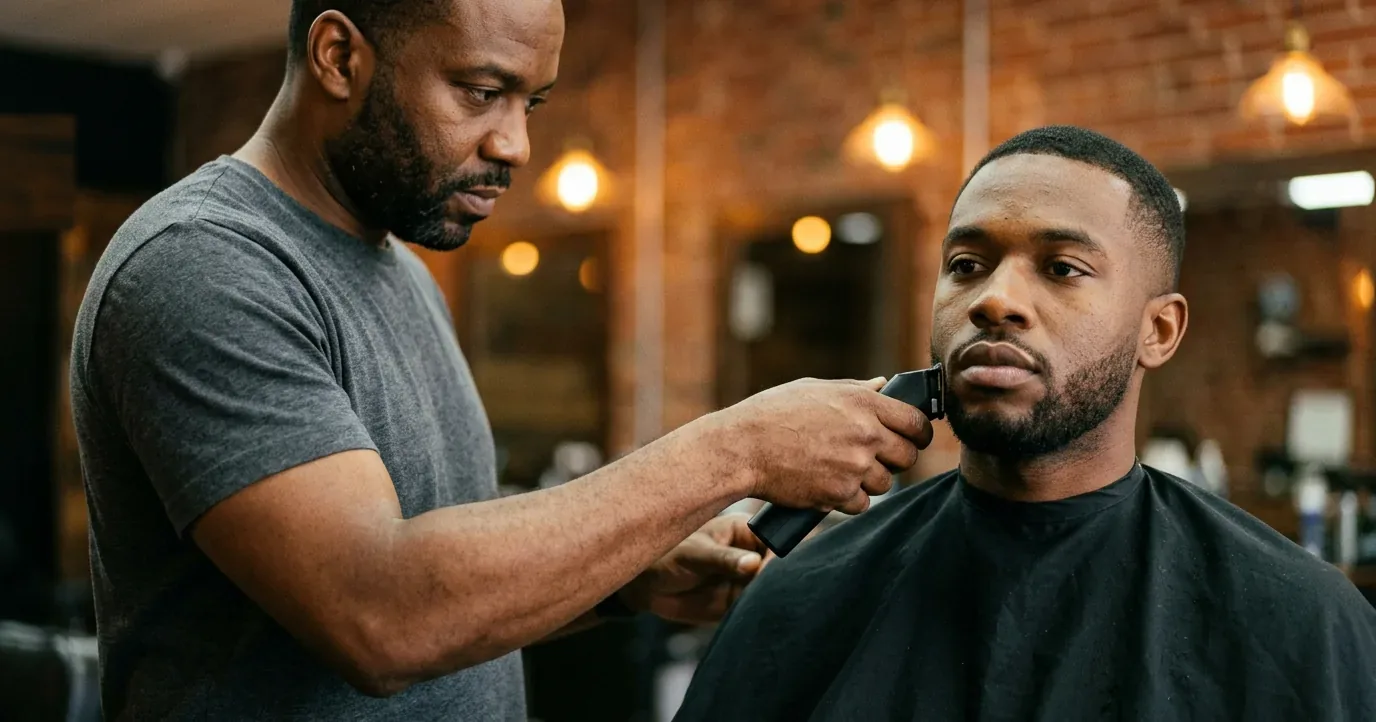
The line-up is almost done when the barber’s thumb finds it: a smooth, firm ridge under the jaw, darker than the skin around it, sitting right where a razor bump healed two summers ago. On the next client it is a rubbery ball on the back of an earlobe, left by a piercing at fifteen. Anyone who has cut Black clients for long has learned to work around a keloid.
A keloid is a scar that keeps building after the wound has closed, and it is far more common on Black skin. DermNet, the dermatology reference, notes that 16 percent of Black people report having one. This guide is for keloid-prone clients and the barbers who cut them: what a keloid is, why it runs in families, where a barber sees one, how a nick, a razor bump or a new piercing can start one, and what dermatologists actually do about it.
What a Keloid Is, and What It Is Not
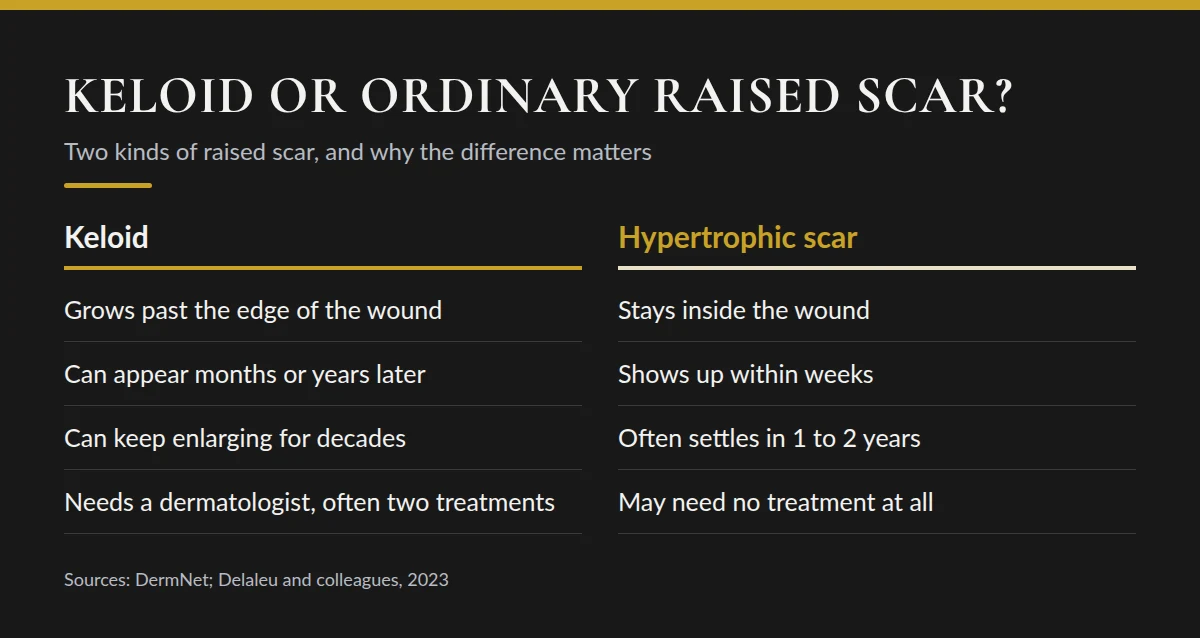
Most cuts heal into a flat line. Some heal raised, and dermatologists split raised scars into two kinds, because the difference decides what happens next.
- A hypertrophic scar stays inside the borders of the original wound. It shows up within weeks, and a 2023 review by dermatologists at Hôpital Saint-Louis in Paris notes that it usually settles on its own within 12 to 24 months.
- A keloid grows past the edges of the wound into skin that was never injured. It can appear months or even years after the injury, according to DermNet, and it tends to stay without treatment.
The Paris review describes keloids as chronic, progressive growths that can keep enlarging for decades but do not invade other tissue. They are not cancer, and DermNet says they do not turn into it. On dark skin a keloid usually looks more pigmented than pink, and it feels firm and smooth. Many itch or hurt, sometimes intensely. A keloid is overgrown scar tissue, not an infection, so nobody catches one from a client’s clippers or cape.
Why Black Skin Forms Them More Often
Keloids turn up in every population, but not evenly. DermNet reports them most often in people with Fitzpatrick skin types III to VI, the medium to dark end of the scale, and least often in people with white skin. A 2024 review of dermatology in Black skin lists keloids among the conditions most specific to it, alongside razor bumps and acne keloidalis nuchae.
Genes explain much of that. The Paris review describes an inherited predisposition, passed down in a dominant pattern, that falls hardest on people of sub-Saharan African descent. A 2010 genetics review from the University of Manchester points to keloids running in families and in twins, and concludes that more than one gene is probably involved. In practice, the best predictor is history. If you have had a keloid, or a parent, brother or sister gets them, treat your skin as keloid-prone.
One more risk factor belongs in the shop conversation. In a study of 304 keloid patients treated at a Tokyo hospital, higher blood pressure went with larger and more numerous keloids, and the authors suggested that keloid patients be screened for hypertension. The finding still needs confirming in larger trials, but it is one more reason to take the shop’s blood pressure check seriously.
Where a Barber Sees Them

DermNet names the upper chest, shoulders, ears and neck as especially prone. From behind the chair, that comes down to four places.
- Earlobes. Usually a piercing scar: a firm, round ball on the front or back of the lobe, sometimes both, joined through the hole like a dumbbell.
- The jaw, beard line and neck. Where razor bumps live, keloids can follow. A 2019 review of razor bumps by Nigerian dermatologist Adebola Ogunbiyi notes that keloids can develop once the bumps take hold, leaving extensive scars.
- The upper chest, shoulders and upper back. A barber mostly sees the top edge of one at the collar, sometimes left behind by acne.
- The nape. True keloids can form here after a nick, but firm bumps clustered along the back hairline are more often acne keloidalis nuchae (AKN). In a 2016 review, Ogunbiyi stresses that despite its name AKN is not a keloid but a scarring inflammation of the hair follicles, and that people who have it are not more prone to keloids elsewhere. It needs different care, covered in our scalp health guide.
How the Chair Can Start One
Any break in keloid-prone skin can seed a keloid. DermNet’s list of triggers runs from surgery and burns down to insect bites, acne and infections, and the scar can surface months or years later. In a barbershop, the injuries are small and familiar:
- Nicks and scrapes. A razor catch at the neckline, a corner of the line-up taken too sharp, skin stretched too tight under a blade.
- Clipper burn. A hot or dull blade pressed into the skin for a skin fade can leave it raw, and a minor injury is exactly what that list is made of.
- Razor bumps. Every ingrown hair is a small wound with inflammation around it, so the client with chronic bumps along the jaw is also the client most at risk of a keloid there. Our razor bump treatment ladder covers stopping them.
- Piercings. The classic earlobe keloid. In a survey of 32 patients at the Medical College of Georgia whose keloids followed ear piercing, half had developed one after their very first piercing. Those pierced at 11 or older were more likely to develop keloids (80 percent) than those pierced younger (23.5 percent), and the authors advised people with a family history to consider skipping ear piercing altogether.
Most nicks still heal flat. The risk concentrates in people who have had a keloid before or have one in the family, and for them a nick is not nothing.
Prevention for Keloid-Prone Clients
If your skin forms keloids, prevention is cheaper and more reliable than any treatment. The American Academy of Dermatology (AAD) advice comes down to avoiding the injuries you can avoid and caring well for the ones you can’t.
- Tell your barber. Say it at the start of the cut, and again whenever someone new takes the chair.
- Leave a little length. A trimmer or foil shaver that stops at the surface spares the skin a blade. Skip the razor finish on the neckline and beard line.
- Think twice about new piercings. The AAD says the best way to prevent an ear keloid is to skip piercing any part of the ear. If you go ahead, watch the lobe. At the first sign of thickening, take the earring out and switch to a pressure earring, worn at least 12 and preferably 20 hours a day for four to six months.
- Treat a nick like it matters. Wound care is where a keloid is won or lost.
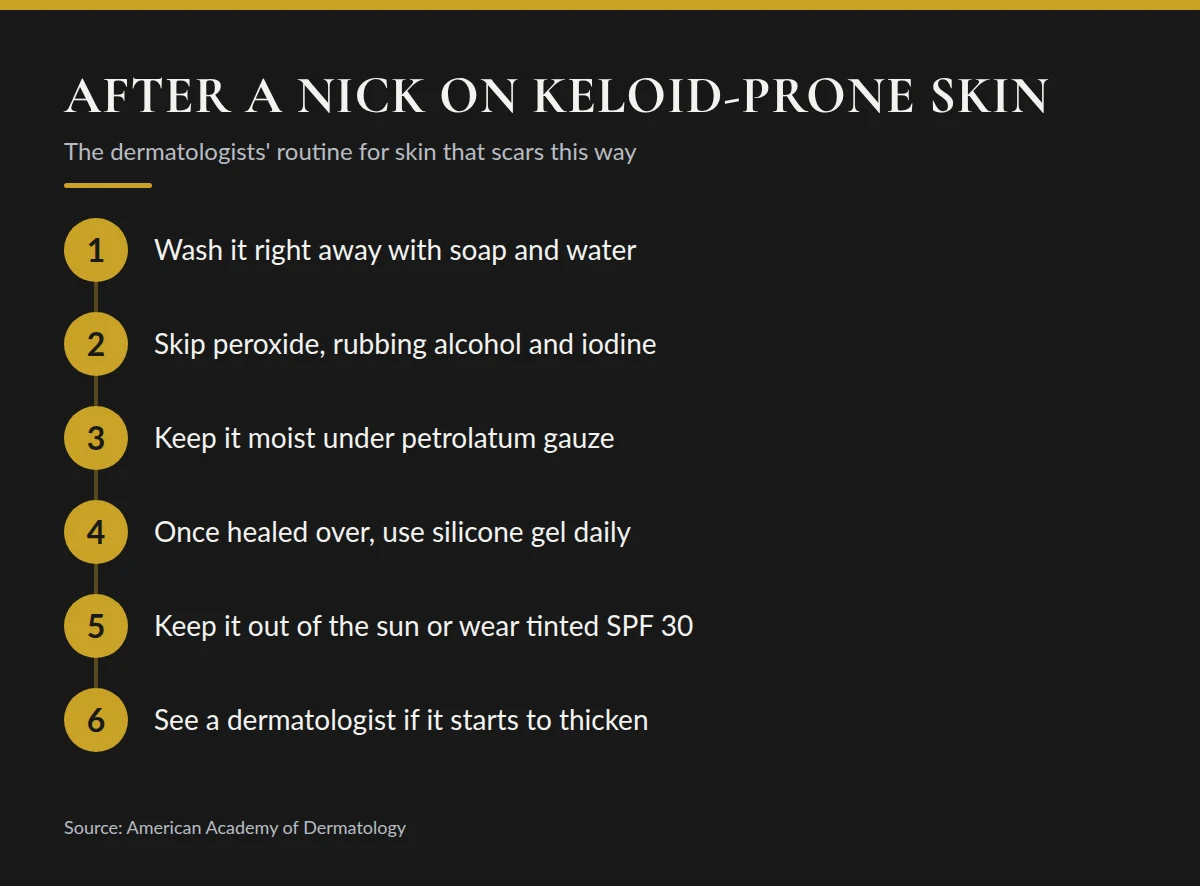
The AAD’s routine for a minor wound starts with washing it right away with soap and water, and skipping hydrogen peroxide, rubbing alcohol and iodine, which dry it out. Keep it moist under petrolatum gauze or a hydrogel dressing, changed daily until it heals. Once the skin has closed over, with no open wound or scab left, apply silicone gel or a silicone gel sheet every day for about six months. Both are sold without a prescription. Keep the spot out of the sun, which can darken a scar, and on brown skin the AAD recommends a tinted sunscreen with SPF 30 or higher. If the spot starts to thicken anyway, see a dermatologist then, not after it has grown.
What Dermatologists Actually Do
No single treatment reliably gets rid of a keloid, the AAD says, so dermatologists often combine two or more. Before the first appointment, know your goal: stopping the itch, flattening the scar, or wearing earrings again.

- Steroid injections. The workhorse. A series of corticosteroid shots softens the keloid and eases itch, and 50 to 80 percent of keloids shrink, though many regrow within five years. On darker skin the injections can leave light spots, and dermatologists have other medicines to inject when that is a concern.
- Surgery, never alone. Cutting a keloid out looks like a cure, but nearly all of them return after surgery alone, the AAD says, and DermNet warns the new one can be larger than the original. Surgery is paired with injections, pressure or radiation. For ear keloids, a 2016 meta-analysis of 25 studies put recurrence after removal at 15.4 percent with follow-up steroid injections and 14 percent with radiation.
- Pressure earrings. Worn after earlobe surgery, they reduce blood flow to the healing lobe. They take 12 to 20 hours a day for several months, though they are the easiest pressure device to live with. In a Dutch study of 88 patients who wore custom pressure clips 12 hours a day for 6 to 18 months after ear keloid surgery, 70.5 percent were still free of keloids after an average of 6.5 years.
- Silicone gel sheets. Used to flatten a new keloid and to help stop one returning after other treatment.
- Freezing, with caution. Cryosurgery shrinks small keloids, but the AAD warns it can leave a permanent light spot on brown or Black skin.
- Laser and radiation. Laser can lower and fade a keloid, usually alongside injections or pressure. Superficial radiation after surgery helps prevent regrowth when proper safety measures are taken, but it can cause peeling, itching and lasting color change.
- A tied thread. A keloid with a base narrow enough to tie a surgical thread around can be tied off, with a new thread every two to three weeks, until it falls away.
A 2022 review by plastic surgeon Rei Ogawa, updating his treatment algorithms from a decade earlier, sorts the choice by size: a small, single keloid can be removed with surgery plus follow-up therapy such as radiation, or treated with a mix of nonsurgical options, while for large or multiple keloids surgery aims to reduce them. Whatever the treatment, he writes, patients need long-term follow-up.
Is It Really a Keloid?
Not every raised spot near the hairline is a keloid, and some look-alikes need very different care.
- Bumps with pustules or hairs at the nape are more likely AKN.
- Small bumps along the beard line a day or two after a shave are razor bumps, not scars yet.
- A flat dark mark where a bump or nick healed is post-inflammatory hyperpigmentation. It fades with time and has its own fixes.
- A raised scar that stays inside the cut and appeared within weeks is more likely hypertrophic, and may settle by itself.
- Swelling around an earring can be an allergy to the metal. The AAD notes that a reaction to gold earrings can look like a keloid.
- A lump that appeared without any injury, grows fast or changes needs a doctor. DermNet lists skin tumors among keloid look-alikes, including dermatofibrosarcoma, a rare skin cancer, and squamous cell carcinoma. A dermatologist can settle it with a quick biopsy in the office.
From the Chair
A barber cannot treat a keloid, but the chair is where many of them get noticed first, and where some get started. A few habits protect the clients who scar this way:
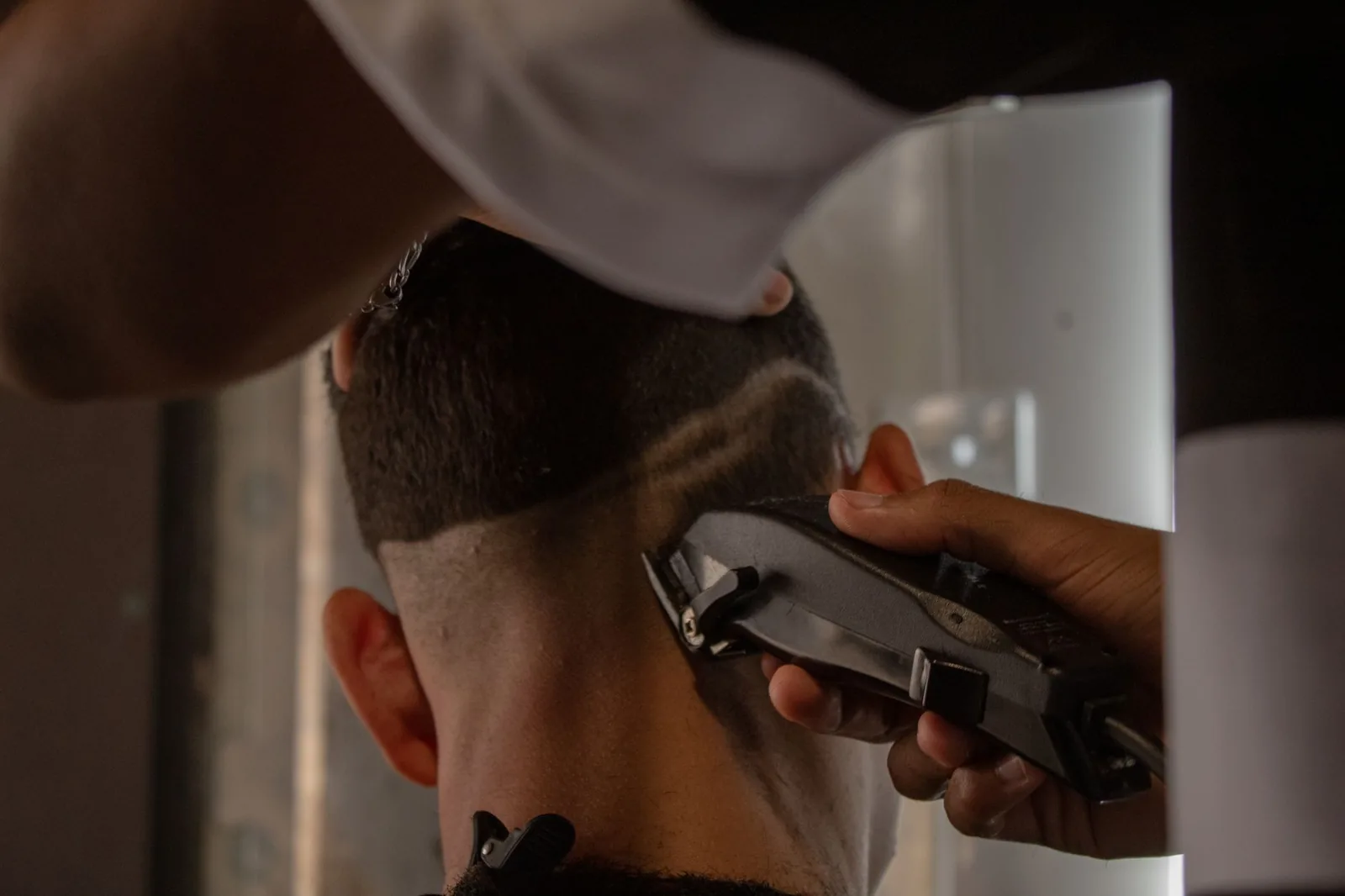
- Ask once, and remember it. “Do you or anyone in your family get keloids?” belongs in a new client’s consultation, next to the guard number.
- Cut around, never through. Keep blades and razors off a keloid. Use a guard over raised scar tissue, and let the edge go soft rather than lining up straight across one.
- Finish at the surface on prone skin. A trimmer or foil shaver on the neckline and beard line, with the skin relaxed instead of stretched under the blade.
- Handle a nick by the book. Stop, clean it, cover it, and disinfect the tool before it touches anyone else, as the sanitation rules require. Then tell the client, and pass on the wound routine above.
- Watch for bleeding at the nape. Ogunbiyi’s AKN review warns that active lesions bleed during haircuts, and that shared shaving tools put clients at risk of blood-borne infections.
- Never treat one in the shop. No cutting, tying off or home remedies. The same review describes people who tried to remove nape bumps with corrosives, acids and even car engine oil, and ended up with larger lesions or worse scars.
- Say what you see. “That spot under your jaw has grown since spring. Get a dermatologist to look at it.” A small, new keloid gives a dermatologist more options than a large, old one.
The Bottom Line
Keloids are scars that overshoot, and Black skin, especially in families that already have them, is where they most often do it. Nobody can promise a keloid-prone client smooth skin forever, but the odds improve with simple choices: no razor finish on the neckline, second thoughts about new piercings, real wound care after a nick, and a dermatologist at the first sign of thickening. Treatment works best early and in combination. From behind the chair, the most useful things a barber can offer are a careful blade and an honest word.
Further reading (sources)
- American Academy of Dermatology on how dermatologists diagnose and treat keloids
- American Academy of Dermatology with tips for preventing keloids after piercings and wounds
- DermNet for keloids and hypertrophic scars, from who gets them to their look-alikes
- Delaleu, Charvet and Petit on defining and diagnosing keloid disease
- Alchorne and colleagues with a review of dermatology in Black skin
- Shih and Bayat for the genetics of keloid scarring
- Arima and colleagues on blood pressure and keloid severity
- Ogunbiyi with current treatment options for razor bumps
- Ogunbiyi on why acne keloidalis nuchae is not a true keloid
- Lane, Waller and Davis for age at ear piercing and keloid formation
- Shin and colleagues with steroid injections versus radiation after ear keloid surgery
- Tanaydin and colleagues on custom pressure clips after ear keloid surgery
- Ogawa for updated algorithms to treat and prevent keloids