Sweat Without Wrecking Your Style: A Black Woman's Guide to Working Out and Hair Care
Published on August 18, 2026

Ask a room full of Black women why they skipped the gym this week, and somewhere among the answers, usually said with a laugh that is not really a laugh, is the hair. It sounds like a small thing to anyone who washes and goes. It is not. A style can represent four hours in a chair, a hundred dollars or more, and a two-week runway before the next appointment. Sweating that out on a Tuesday means either living with it or redoing it, and neither option is free.
Researchers have been documenting this for over a decade, and the numbers are hard to argue with. In one study at a historically Black university, 80 percent of the African American women surveyed reported exercising less than 150 minutes per week, the federal minimum, and more than a third said they modified their hairstyle specifically to accommodate physical activity. Hair is not a vanity excuse. It is a scheduling problem, a cost problem, and a maintenance problem, and it deserves a real plan rather than a shrug.
This is that plan. None of it requires giving up the styles you like.
What Sweat Actually Does Up There
Understanding the mechanism makes the fixes obvious. Sweat is mostly water, but it carries salt, urea, and lactic acid, and those stay behind on the scalp once the water evaporates. Salt is drying, and textured hair is already the most moisture-hungry hair type there is. That combination is why post-workout hair often feels stiff, gritty, and brittle at the ends.
The bigger issue is the scalp itself. Warm, damp skin left under a tight style for hours is a friendly environment for both the yeast that drives seborrheic dermatitis and the bacteria behind folliculitis. Persistent itch, flaking that will not settle, and small tender bumps along the hairline are the usual complaints. Sweat sitting on the scalp is also a low-grade inflammatory nuisance, and inflammation is the last thing a scalp already prone to scarring hair loss at the crown needs.
Notice what is missing from that list: sweat does not damage the hair shaft directly. The damage comes from what happens next. Rewashing constantly strips the hair, over-manipulating it while it is wet breaks it, and pulling a damp style tighter to hide the frizz puts tension exactly where tension does the most permanent harm. The workout is rarely the culprit. The recovery routine is.
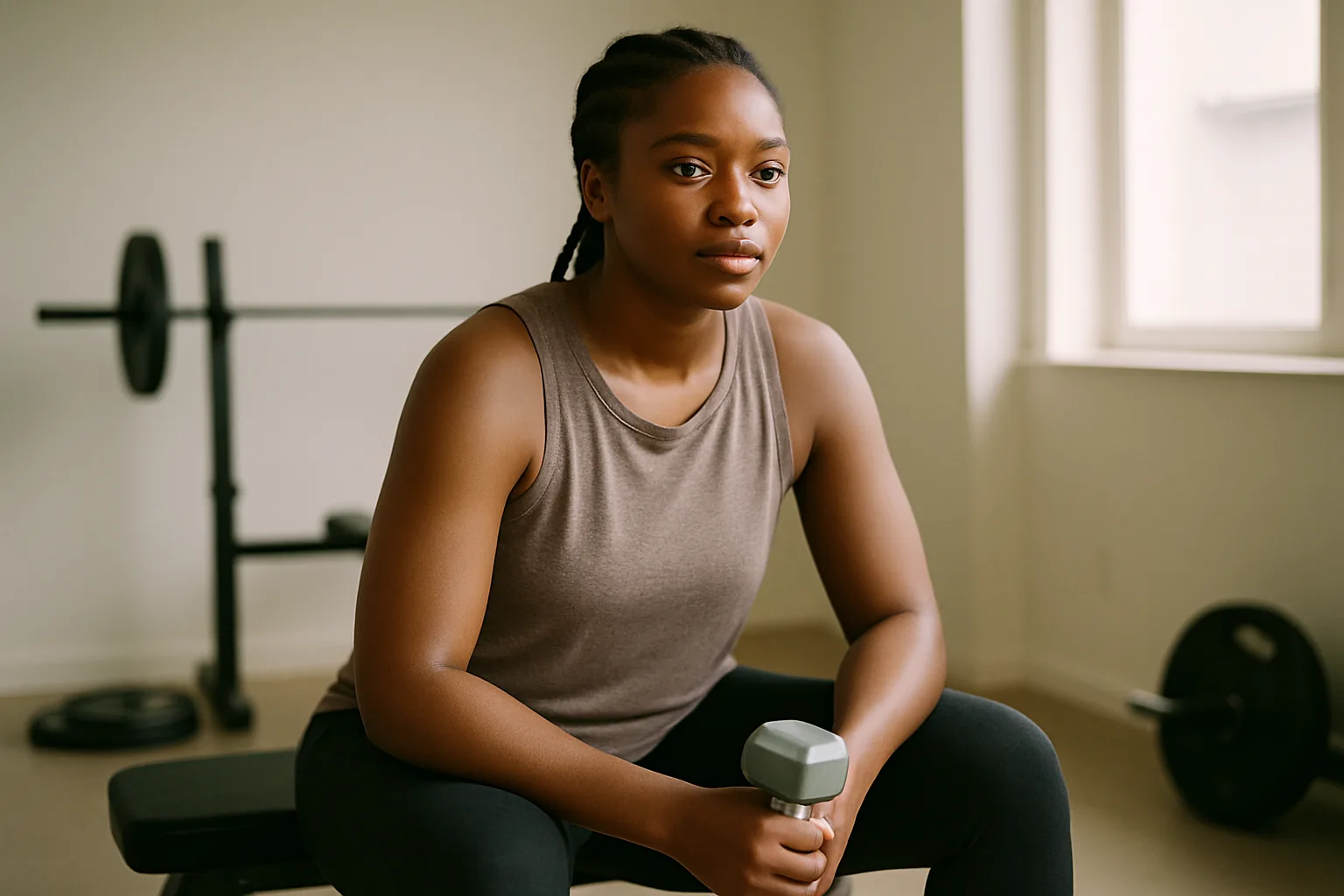
Build the Week Around Wash Day, Not the Other Way Around
The single highest-leverage change costs nothing: stop treating your workout schedule and your wash schedule as separate calendars.
Put your hardest, sweatiest sessions in the day or two immediately before wash day. Heavy cardio on Friday when you wash Saturday morning means the sweat has one night to sit, not six. Then taper as the week goes on. Strength training, mobility work, walking, and most yoga produce a fraction of the scalp sweat of a spin class, and those sessions can live comfortably in the middle of a style’s lifespan.
A workable rhythm for most people looks like this:
- Days 1 and 2 after wash day: anything. The style is fresh and the hair is clean.
- Mid-week: lower-intensity work. Weights, walking, Pilates, easy swimming with a proper cap.
- Day before wash day: the hardest session of the week. Sweat freely.
If you wash weekly, that gives you two guilt-free hard sessions and four or five lighter ones, which is comfortably past 150 minutes. The goal was never a shower after every workout. It was hitting the activity target without a fight.
Styles That Survive a Sweat
Some styles genuinely hold up better than others, and knowing which ones lets you plan a protective style around a training block instead of against it.
Reliable under sweat: medium box braids, twists, cornrows, flat twists, loose buns, and locs. They keep the hair contained, they do not depend on a set pattern that humidity can undo, and they let you get at the scalp between the parts.
Fragile under sweat: freshly pressed or silk-pressed hair, blowouts, and anything relying on straightened texture. Sweat reverts it, and the temptation is to reach for the flat iron again a week early. That cycle is one of the fastest routes to heat damage.
Depends entirely on the wearer: wash-and-gos, wigs, and sew-ins. A wash-and-go often revives fine with water and a little product. A unit worn during heavy exercise traps heat and moisture against a scalp you cannot easily reach, which is a recipe for itch and buildup. If you train hard in a unit, take it down more often than you otherwise would and give the scalp real air time.
Two practical rules cut across all of them. First, whatever style you choose, it should be installed at normal tension, not gym tension. Tightening a style so it survives a workout is trading a frizz problem for a hairline problem. Second, gather the hair up and off the neck before you train. Sweat runs downhill, and a high loose bun keeps the nape and hairline out of the worst of it.
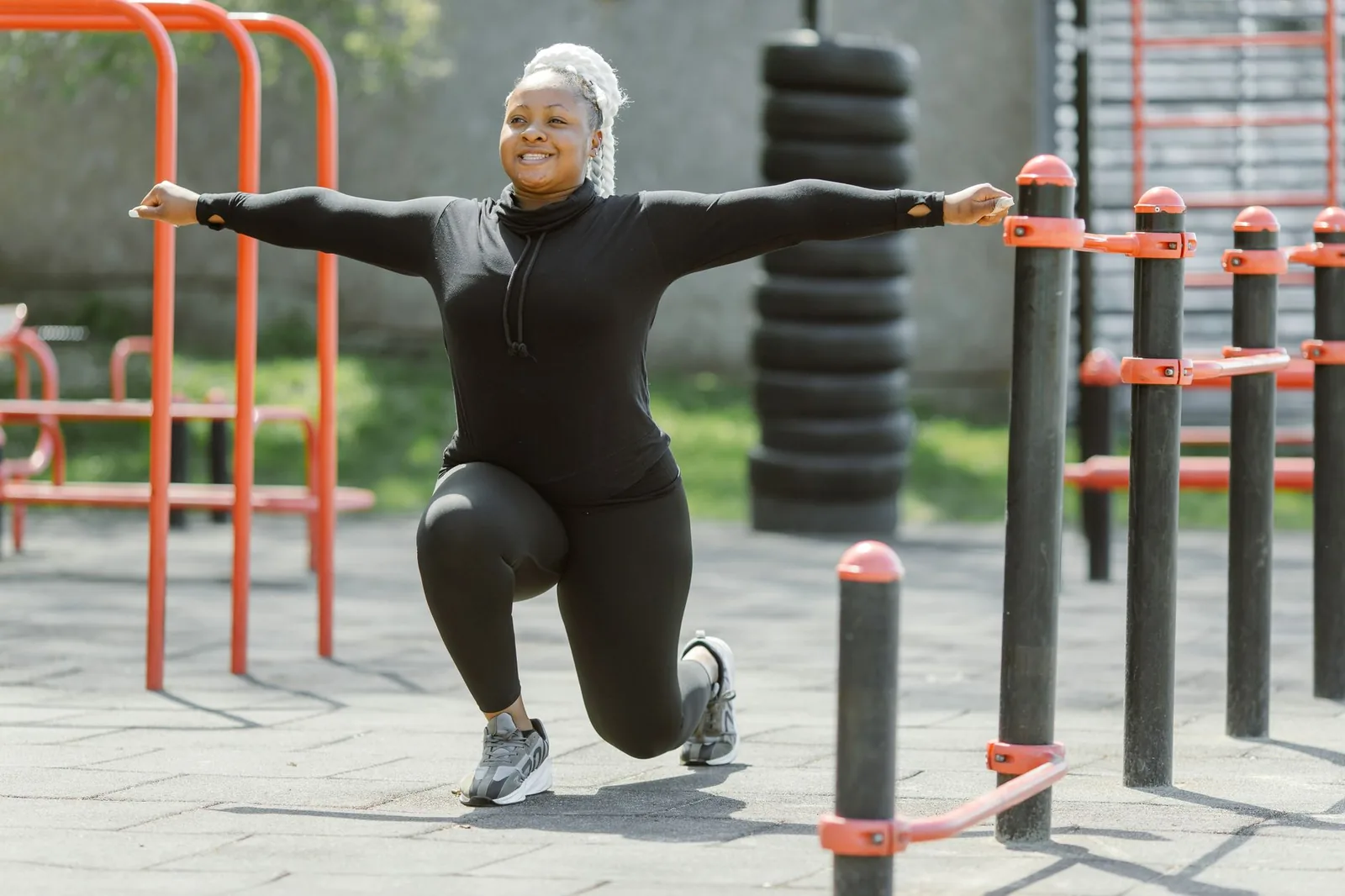
Before, During, and After: The Actual Routine
Before. Tie the hair up and back, and use a satin-lined or moisture-wicking headband rather than plain cotton terry. Cotton absorbs sweat and then sits against the hairline holding it there, and the friction on already-fragile edges does not help. Some people like to dampen the hairline lightly with water and seal it with a light oil beforehand, which keeps the salt from concentrating on bare skin. Skip heavy creams and butters on training days. They melt, they run, and they clog.
During. Blot the hairline and nape with a small towel rather than wiping. Wiping drags the edges. If you are outdoors, remember that sun exposure on parted scalp is real and a wide part in full sun burns.
After (and this is the part most people get wrong) dry the scalp; do not wash the hair. Take a towel or a cool blow dryer on low and get the scalp itself dry within a reasonable window. Wet scalp under a style for hours is the actual problem, not the fact that you sweated.
Then, depending on how much you sweated:
- Light session: dry the scalp, spritz the length with a water-based leave-in, retie, done.
- Moderate session: add a scalp refresher between the parts. Witch hazel on a cotton pad, a diluted apple cider vinegar spray, or a purpose-made scalp tonic lifts the salt without wetting the whole head.
- Heavy session, days from wash day: consider a co-wash or a targeted scalp-only rinse rather than a full shampoo. You are cleaning the scalp, not resetting the style.
Dry shampoo works on textured hair, with a caveat. Its job is absorbing oil at the roots, and it does that. It does not remove salt or sweat residue, so it is a stopgap, not a substitute. Use it sparingly, work it in at the scalp, and make sure it actually comes out on wash day, because dry shampoo buildup is a genuine cause of flaking and itch that gets misread as dandruff for months.

Talking to a Doctor Who Does Not Get It
Here is a frustration worth naming, because it is documented rather than imagined. Researchers surveyed 62 primary care clinicians at a large urban academic medical center about hair as a barrier to physical activity. Almost all of them (95 percent) said they regularly discuss exercise with their Black women patients. But 76 percent had never once included hair care or maintenance in that conversation, and only 34 percent said they felt comfortable raising it at all. Asked to rank barriers to exercise, clinicians rarely flagged hair maintenance or scalp sweating as important.
So if you have ever mentioned your hair to a doctor and watched their face go blank, that was not you being unreasonable. It was a documented knowledge gap.
What helps in the room:
- Frame it as scheduling, not appearance. “My protective style has to last three weeks, so I need help fitting 150 minutes around a wash day” is a logistics question a doctor can actually engage with.
- Bring the cost and the time. Naming the hours in the chair and the dollars per appointment turns an abstract preference into a concrete constraint.
- Ask for a scalp referral separately. If itch, flaking, or bumps are the real limiter, that is a dermatology question, and it should not get folded into a general fitness talk.
- Push back on false choices. Nobody has to pick between a healthy heart and their hair, and any plan built on that trade will not survive contact with real life.
The same gap runs the other way in fitness spaces. A trainer who schedules a client’s hardest conditioning block on the day after a fresh install is going to lose that client, and will probably never know why.
What the Shop Can Do
Barbers and stylists are in an unusually good position here, because they see the scalp regularly and they already know the client’s schedule. Asking a client what their training week looks like before recommending a style is a thirty-second conversation that changes what you install and at what tension. Flagging a hairline that is thinning where the headband sits, or a scalp that has been damp and itchy for weeks, catches problems while they are still reversible. Persistent flaking, tenderness, or shedding that does not settle belongs with a dermatologist, and the full range of what can go wrong on a Black scalp is wider than most clients realize.
There is also a bigger picture. The Black barbershop and salon have already proven they can move health outcomes, most convincingly through the blood pressure programs that cut readings by nearly thirty points. Physical activity sits in exactly the same territory: a modifiable risk factor, in a community carrying more than its share of cardiovascular disease, blocked partly by a barrier the shop understands better than any clinic does. A stylist who can say “here is a style that will hold up for your Saturday runs” is doing preventive health work, whether or not anyone calls it that.
The Bottom Line
Hair being a barrier to exercise is real, well documented, and solvable. The fix is not choosing between your style and your health. It is sequencing the hard workouts near wash day, picking styles that tolerate sweat, drying the scalp instead of rewashing the hair, and refusing to accept a blank look from a provider who has not been trained on this. Textured hair is structurally more fragile than other hair types, which means the routine has to be gentler, not that the workouts have to be smaller. Sweat is not the enemy. An unplanned recovery routine is.
Sources
- Skin Appendage Disorders on whether an educational website can shift hair and exercise habits
- Journal of the American Board of Family Medicine for what primary care providers actually know about hair as an exercise barrier
- JAMA Dermatology with guidance on hair and scalp care in African American women who exercise
Further reading
- American Academy of Dermatology on hair care tips for Black hair, including washing and styling frequency
- Office of Disease Prevention and Health Promotion for the physical activity guidelines behind the 150-minute target
- American Academy of Dermatology for everyday care advice specific to Black hair
- Skin of Color Society with patient dermatology education on hair and scalp