The Evolution of Fade Cuts: Trends in Black Barber Shops
Published on February 1, 2025
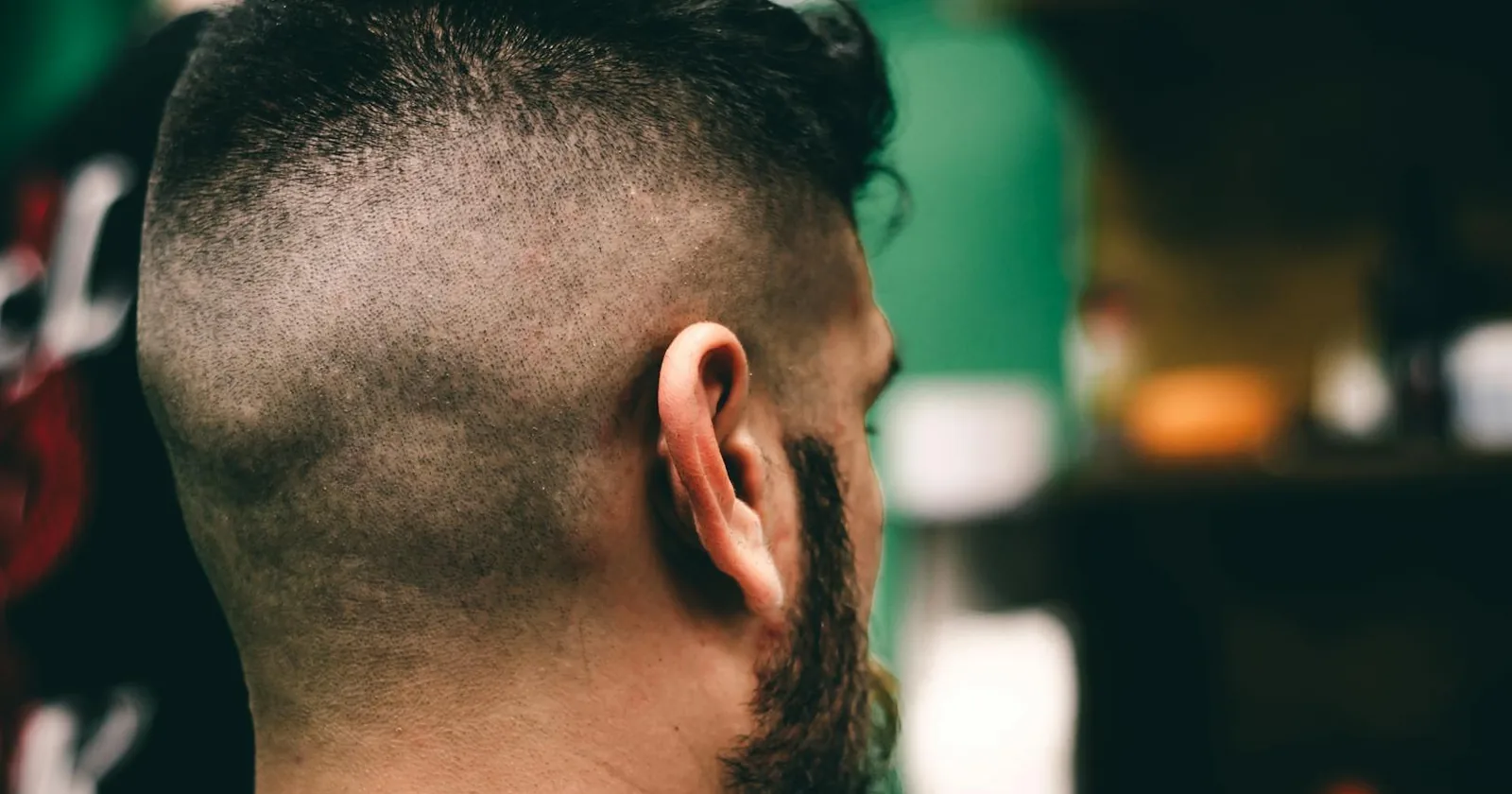
A Cut That Carries Culture
The fade is one of the most recognizable and enduring hairstyles in modern grooming, but its significance extends far beyond aesthetics. The fade’s evolution is inseparable from the history of Black barber shops in America, spaces that have functioned as community centers, cultural incubators, and sites of creative innovation for well over a century. What began as a practical military haircut became, in the hands of Black barbers, a canvas for artistic expression, cultural pride, and individual identity. Understanding how the fade developed means understanding the communities and craftspeople who shaped it.
Military Roots
The fade’s earliest form emerged from the United States military during the 1940s and 1950s. Soldiers during World War II and the Korean War were required to maintain short, uniform haircuts for hygiene and discipline. The “high and tight” (short sides blending into a slightly longer top) met regulation standards while being quick to cut and easy to maintain under helmets and in field conditions. These early military cuts were not called fades, and they were not designed for style. They were functional.
When Black servicemen returned home from the war, they brought the cut with them, and the barbers in their communities began to refine it. Using electric clippers, Black barbers in cities like Chicago, Detroit, New York, and Los Angeles transformed the blunt military taper into something more deliberately graduated, a smoother transition from skin to length that required genuine technical skill to execute well. By the 1950s, the fade was no longer just a military holdover. It was becoming an art form, perfected in the very barbershops that served as cornerstones of Black neighborhoods.
The Barbershop as Cultural Institution
To understand the fade’s evolution, it helps to understand the spaces where that evolution occurred. Black barber shops have served as far more than grooming establishments since the nineteenth century. The Smithsonian’s National Museum of African American History and Culture describes them as sanctuaries, places where Black men could gather, speak freely, debate politics, share news, play games, and simply be themselves in a world that often did not afford them that safety elsewhere. During the Jim Crow era, when public spaces were systematically closed to Black Americans, barbershops became vital gathering points. Historian Quincy Mills, author of a landmark study on the barbershop trade, argues that these shops were central to the production of Black identity, not merely a response to segregation but a reflection of cultural life, mentorship, and shared experience that would have existed regardless of external conditions.
This cultural depth shaped the barbering craft itself. Black barbers were not simply cutting hair; they were building relationships, sustaining community, and developing a technical tradition passed directly from master to apprentice. The nuances of working with textured, curly, and coiled hair (understanding how it shrinks, how it moves, how to blend it seamlessly from skin to length) demanded a level of expertise that could not be learned from a manual. It required hands-on mentorship, repeated practice, and the kind of creative problem-solving that comes from serving a diverse clientele within a close-knit community.
The 1980s Explosion: Hip-Hop and the High-Top Fade
The 1980s represent the pivotal decade in the fade’s cultural journey. As hip-hop emerged from Black and Latino communities in New York, Los Angeles, and Chicago, the fade moved from neighborhood barbershops to the national stage. The high-top fade (hair sculpted into a tall, flat, geometric shape on top with sides faded to the skin) became one of the defining visual signatures of hip-hop’s golden age. Rappers like Big Daddy Kane, Doug E. Fresh, and Rakim wore elaborately sculpted versions that showcased both the barber’s precision and the wearer’s boldness. The duo Kid ‘n Play made the towering high-top an iconic image through their performances and the 1990 film House Party, where Christopher “Kid” Reid’s exaggerated version became instantly recognizable. Salt-N-Pepa helped bring the style to broader audiences through music videos as early as 1987.
The high-top fade was more than a trend. It was a statement of creative defiance and cultural pride, aligned with the aesthetics of breakdancing, graffiti art, and MCing that defined hip-hop culture. Black barbershops became creative laboratories where barbers competed to push the style further, adding carved lines, names, geometric patterns, and designs that turned the head into a literal canvas. The flat top, the Gumby (with its angled front extension), and various asymmetrical cuts all emerged from this period of intense creative experimentation. Barbershops drew directly from the energy of their surrounding communities, and the results were visible on every block.
The 1990s Shift and the Rise of the Low Fade
By the early to mid-1990s, the high-top’s dominance began to give way to cleaner, lower-profile cuts. The low fade (sides closely tapered with the hair on top kept shorter and often styled into waves or a Caesar cut) reflected a shift in hip-hop aesthetics toward a smoother, more refined look. Television amplified this transition; Will Smith’s evolving hairstyles across the run of The Fresh Prince of Bel-Air tracked the broader move from bold high-tops toward more versatile, wearable fades. The flat top, while never fully disappearing, receded as cornrows and closely cropped fades became the dominant styles in Black communities through the late 1990s and into the 2000s.
Throughout this period, the core skill set remained the same: precise clipper work, seamless blending, clean lines, and the ability to customize a cut to the individual client’s head shape, hair texture, and personal style. The tools improved (better clippers, finer guard sizes, more refined edging tools), but the artistry was still human, still learned face to face, and still practiced most intensely in Black barbershops.
Modern Variations: A Vocabulary of Fades
Today’s fade vocabulary reflects decades of accumulated innovation. The low fade begins just above the ears and tapers gradually, offering a subtle, professional appearance. The mid fade starts around the temples, balancing contrast and versatility. The high fade begins near the top of the head, creating dramatic separation between the faded sides and the styled top. The skin fade (sometimes called a bald fade) takes the taper all the way down to bare skin for the sharpest possible contrast.
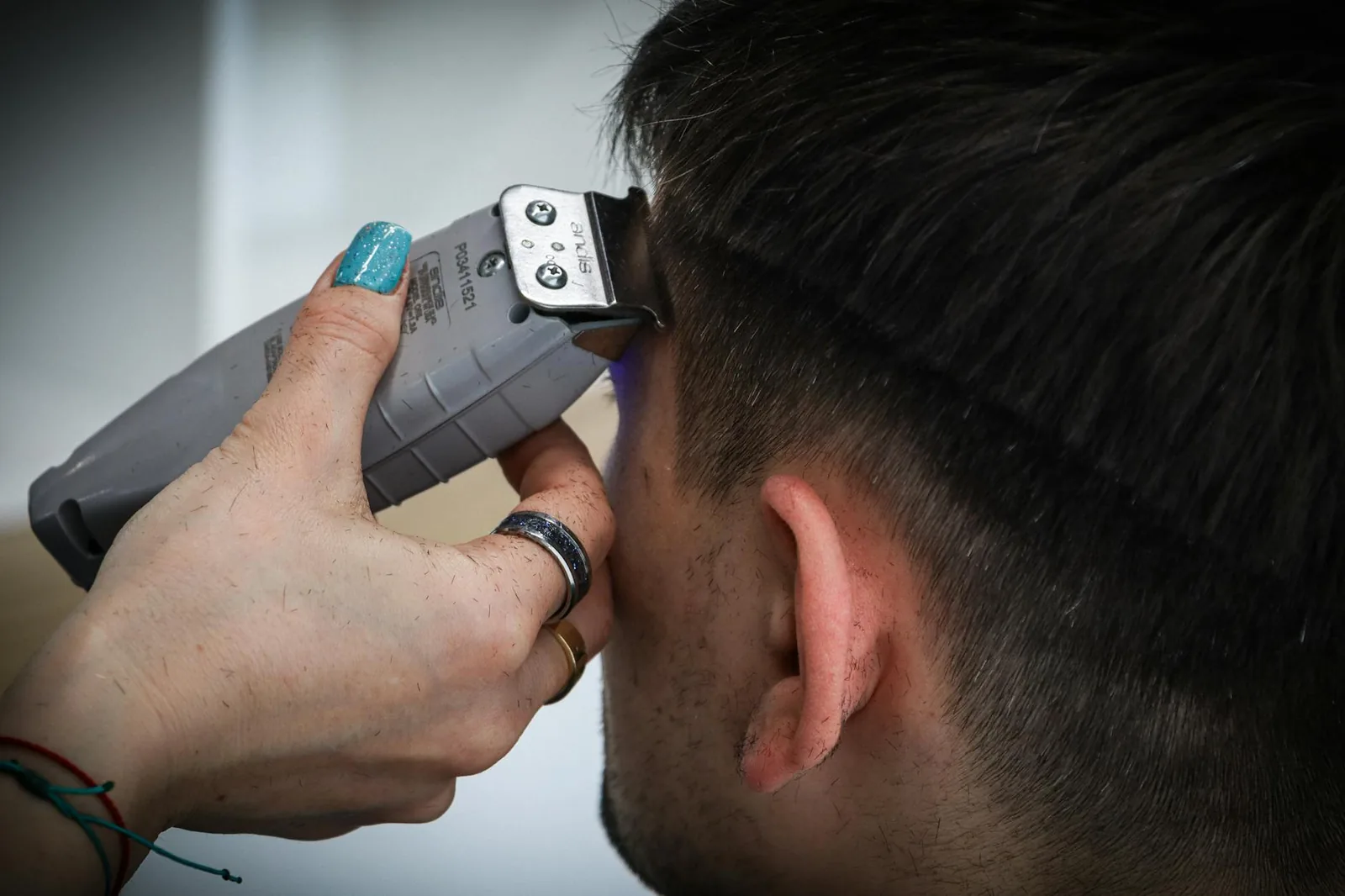
Beyond these foundational styles, several specialized variations have gained real popularity. The drop fade curves downward behind the ear, following the natural shape of the head for a more organic silhouette. The burst fade radiates outward from the ear in a semicircular pattern, pairing particularly well with mohawks and textured styles. The temple fade (also known as the Brooklyn fade or temp fade) concentrates the taper at the temples and hairline for a clean, minimal effect. Each variation requires specific technical knowledge and a trained eye for proportionality, which is why the quality of a fade remains one of the most reliable indicators of a barber’s skill level.
Current trends in Black barber shops reflect both innovation and tradition. Afro-textured fades are being executed with sharper precision and tighter customization than ever before. The temple fade paired with a crisp lineup dominates as a go-to style that balances sharpness with wearability. Natural texture on top (curls, coils, and waves styled with intention rather than suppressed) is increasingly paired with clean fades on the sides, celebrating hair’s natural behavior while maintaining structure. Barbers are also blending fades directly into beards for a seamless transition from hairline to jawline, creating a unified look that treats the entire head and face as one composition. Custom design work, from etched patterns to geometric lines and personalized details, continues the tradition of turning the fade into an expressive art form.
The Fade’s Enduring Legacy
Social media has amplified the fade’s global reach. Instagram and TikTok showcase barbershop work to audiences of millions, and tutorials on YouTube have made advanced techniques more accessible than ever. International barbering competitions spotlight the best talent from around the world, and the cross-pollination of styles across cultures has produced new hybrid looks that did not exist a generation ago.
The fade’s heart remains in the communities that created it. Black barber shops continue to serve as mentorship spaces where established barbers pass their knowledge to the next generation, not just clipper technique but the meaning of the craft, the importance of community, and the legacy they are carrying forward. The fade is not simply a haircut. It is a cultural artifact that carries within its clean lines and seamless blends more than half a century of artistic innovation, community identity, and creative pride.
Feature photo by Ali Aliev on Pexels.
Further reading (sources)
- National Museum of African American History and Culture on the community roles of the barber shop and beauty salon
- National Museum of African American History and Culture for the pioneers who built the Black beauty industry
- Bureau of Labor Statistics with how the barbering trade is trained, licensed and paid today
- National Association of Barber Boards of America on the state boards that set barbering standards