Locs From Start to Retirement: Starting, Maintaining, and Growing Them Out
Published on September 8, 2026
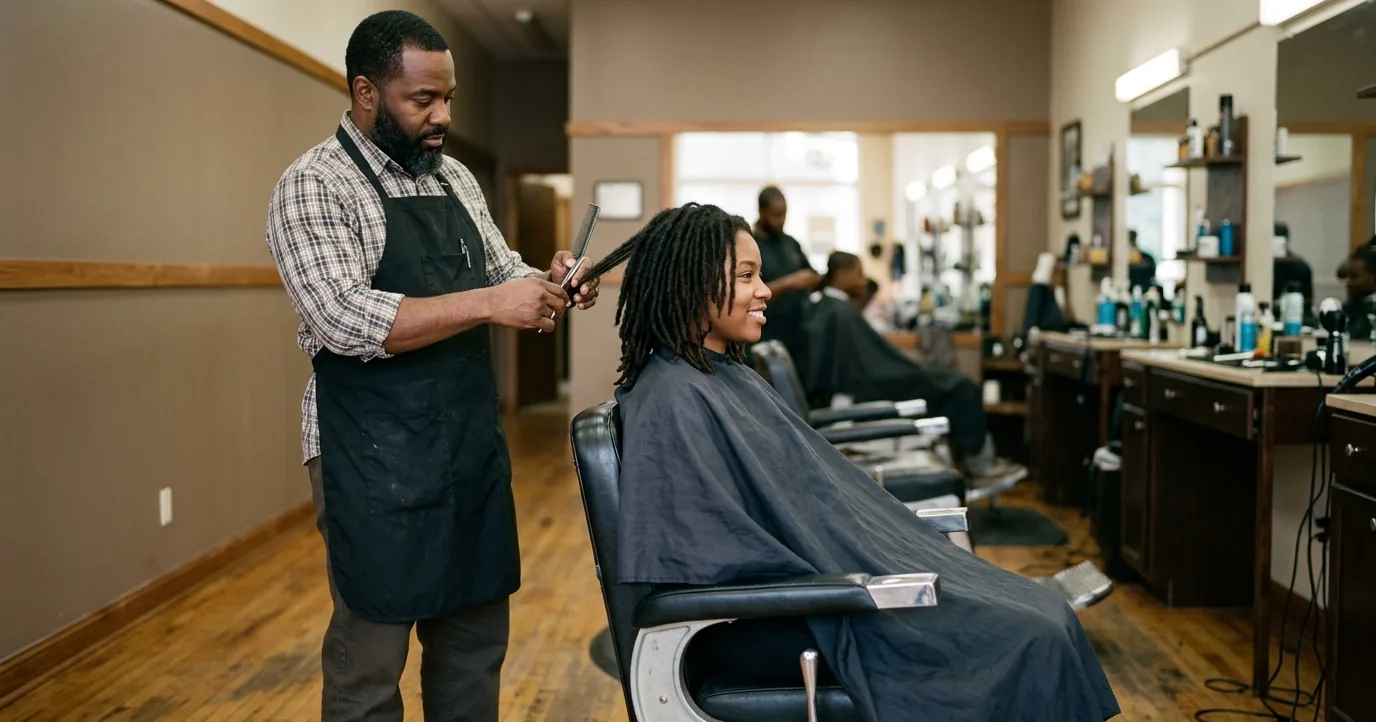
Locs are the only style in Black hair care that you do not really wear. You grow into them. A fade is a decision you can undo in three weeks and a set of twists comes down on wash day, but locs are a multi-year commitment that changes shape underneath you, and most of what goes wrong with them goes wrong because nobody explained the timeline before the first coil went in.
This is the whole arc: choosing a starter method, what actually happens during each stage, the maintenance that keeps them healthy, the maintenance that quietly destroys a hairline, the barbering side of keeping a loc’d head sharp, and the two ways it ends when you decide you are done. It is written for anyone considering locs, anyone already loc’d who has noticed their edges retreating, and any barber whose chair keeps filling with loc’d clients who need a lineup.
Pick Your Starter Method
Every method arrives at the same destination. What differs is how long the awkward phase lasts, how much your hair has to be manipulated to get there, and how the finished loc sits.
Comb coils are the traditional starting point for shorter hair, usually two inches and up. A fine comb rotates a small parting into a tight spiral that holds on its own. They look neat immediately, which is the appeal, and they are fragile for the first couple of months because nothing but the coil pattern is holding them together.
Two-strand twists work on longer hair and hold up far better through early washes than comb coils do. They also read as a finished style on their own, so the starter phase is not visibly a starter phase. The twist pattern usually stays visible in the mature loc, which some people want and some do not.
Interlocking pulls the end of the loc back through its own root with a latch hook, in a rotating pattern, so the loc is knotted into itself rather than twisted into place. It holds through swimming, sweating, and daily washing, which makes it the default for athletes and anybody who cannot plan life around a retwist. The trade-off is real: done too often or too tightly it thins the loc at the root over years, and it is difficult to reverse.
Sisterlocks and similar microlocking systems are interlocking done at a much smaller parting size by a certified consultant, giving a fine, versatile loc that behaves closer to loose hair. It is the most expensive entry point by a wide margin and the initial installation can run over a full day.
Instant locs, made with a crochet hook that pulls loose hair into a compacted loc in one sitting, skip the budding phase entirely. You walk out with something that looks like a two-year-old loc. The catch is that a crochet hook is a barbed needle repeatedly punched through the hair shaft, and overworking it makes the loc brittle. It is best used sparingly and by someone experienced.
Freeform means washing, separating enough to stop the locs from merging into one mat, and otherwise letting the hair do what it does. It is the lowest-tension option by a distance and the healthiest for a fragile hairline. It also produces irregular, organic locs of varying thickness, which is the point for some people and a dealbreaker for others.
If you are choosing between them purely on hair health, freeform and palm-rolled twists put the least strain on the follicle. If you are choosing on convenience, interlocking wins. There is no method that is both the lowest maintenance and the lowest tension.
The Stages, and How Long They Actually Take
The honest timeline is longer than most people are told, and it varies with texture, length, and method.
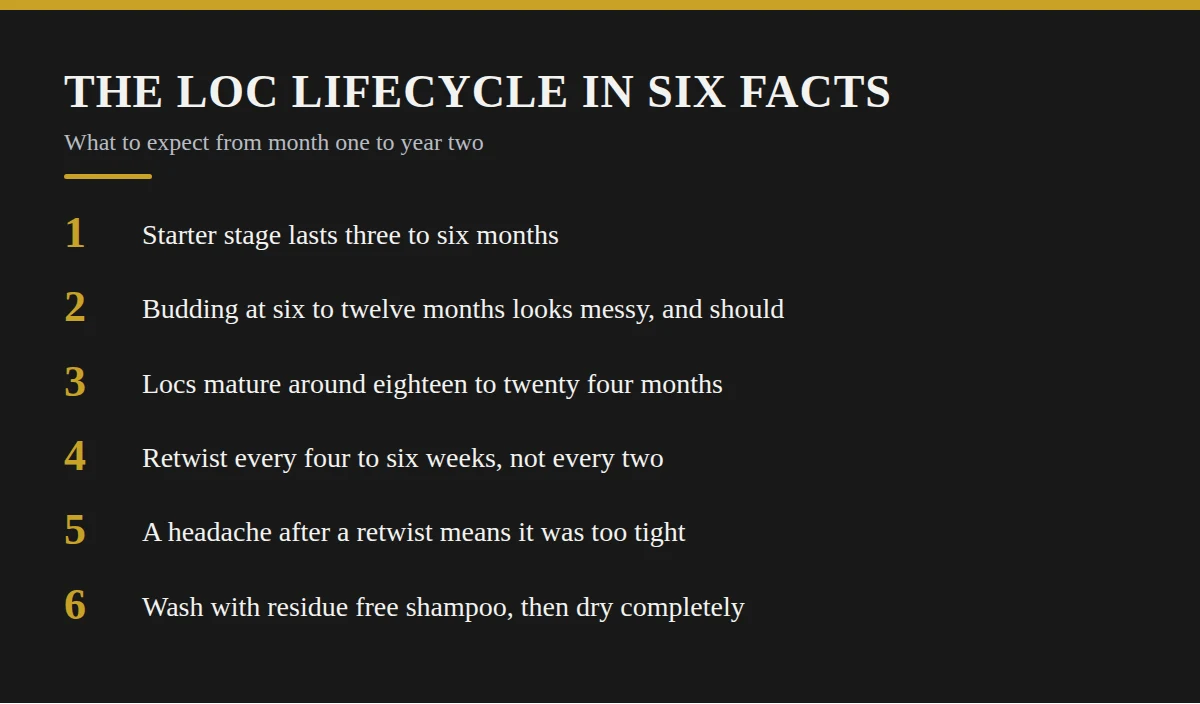
Starter stage runs roughly the first three to six months. The locs are held by the pattern you put in, not by anything internal. They unravel. This is normal.
Budding is where people quit. Somewhere between month six and month twelve the hair inside the loc starts knotting into itself, the surface goes fuzzy, and the neat parts swell and look messy. Frizz here is not damage, it is the loc forming. The urge to retwist it into submission every two weeks is exactly the urge to resist.
Teen stage, roughly twelve to eighteen months, is when locs start behaving. They hold their shape but still shrink, swell after washing, and stick out at angles you did not choose.
Maturity lands somewhere around eighteen months to two years for most people, later for looser curl patterns. The loc is dense end to end, hangs with its own weight, and no longer unravels.
Type 4 hair generally locs fastest because the coil pattern does most of the work on its own, which is the same structural reality that governs how textured hair behaves in every other context. Looser Type 3 patterns can take considerably longer and lean harder on interlocking or crochet work to hold.

The Retwist Is Where Hairlines Go
Here is the part that matters more than everything above it. The single most common cause of preventable damage in locs is not the style. It is retwisting too often and too tight.
A retwist every four to six weeks is plenty for most people. Every two weeks is a schedule sold by the fact that fresh roots photograph well, and it means the same follicles get pulled twenty six times a year instead of nine. Tension compounds. The follicle does not get a vote.
The clinical picture is not ambiguous. A study of 874 African adults in Cape Town, published in the British Journal of Dermatology, found traction alopecia in 22.6 percent of participants overall and 31.7 percent of the women, and a review in the Journal of the American Academy of Dermatology stratifying Black hairstyling practices by risk put sustained tension at the center of the problem. Locs sit in the moderate to high tension category, and the risk climbs with weight, with retwist frequency, and with how tightly the root is worked.
The early warning signs are specific and easy to check yourself. Tenderness or a headache after a retwist means it was too tight, every time, without exception. Small white bumps along the parting the next day mean the same thing. Locs that stand up stiffly instead of lying down are being held by tension, not styled. And the hairline receding while everything behind it stays thick is the classic presentation of traction alopecia, which is reversible early and permanent late.
Practical fixes: stretch the interval, palm-roll instead of twisting hard at the root, leave the perimeter locs looser than the rest or skip them entirely on some rounds, and never let anyone retwist a scalp that is already sore. If a loctician’s work reliably leaves you with a headache, that is information about the loctician.
Wash Them. Really.
The belief that locs cannot be washed is the most persistent myth attached to the style, and it is backwards. Locs need washing more thoughtfully than loose hair, not less often. Every product you put on a loc stays in it, because a loc is a closed structure that does not rinse clean the way loose hair does.
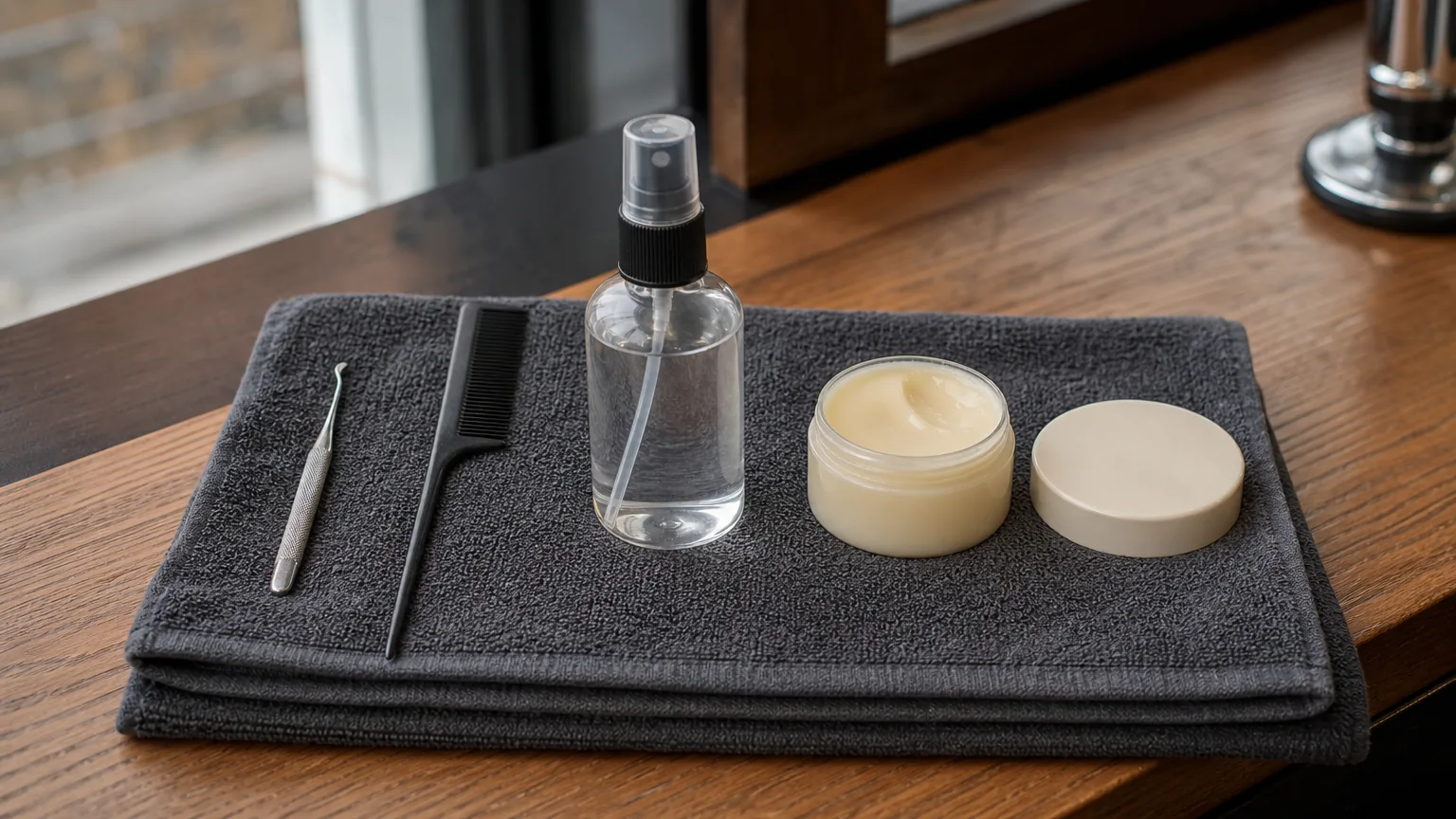
Use a residue-free or clarifying shampoo, diluted, applied to the scalp rather than squeezed over the length. Work it in with fingertips, let the runoff clean the locs on the way down, and rinse considerably longer than feels necessary. Skip heavy waxes and thick greases entirely, because they never fully come out and they build into a grey sludge in the loc core that eventually smells.
Then dry them properly, which is the step people skip. A loc that stays damp for a day is a wick holding moisture against the scalp, and that is how you get the sour mildew smell that gets called dread rot. Squeeze with a microfiber towel, sit under a hooded dryer or use a blow dryer on low, and do not tie damp locs up or sleep on them wet. Everything else about keeping the skin underneath healthy follows the same rules as any other scalp care routine for textured hair.
The Barber’s Side: Lineups and Tapers on Loc’d Clients
A loc’d client in the chair is a specific skill set, and it is not one most state board curricula cover, so it tends to be learned on the floor or not at all. Barbers coming up through school or an apprenticeship should get comfortable with it early, because the demand is not going anywhere.
The work is mostly about the perimeter. A lineup on a loc’d head follows the same principles as any other edge-up, except that the locs at the hairline are dense, immovable, and unforgiving of a crooked start. Set the line off the client’s natural growth pattern, not off the locs themselves, since the parting grid may not be symmetrical.
Tapered sides with locs on top is one of the most requested cuts in shops right now, and the point of failure is the transition. You are blending clipper work into a hard vertical wall of loc rather than into loose hair, so the guard work has to arrive at the loc line cleanly with no shelf. Section the top locs up and out of the way, cut the taper as its own complete piece, then drop the locs and check the transition with the head upright and the hair hanging naturally, because locs sit differently under their own weight than they do pinned.
Two things worth saying out loud to the client: cutting the length off a loc is not reversible in any sense, and the sides growing back in take months to catch up to the locs above them. Confirm the plan twice. A good barber protecting a client from a decision they have not thought through is most of what separates a skilled one from a fast one.
When a Loc Thins at the Root
Locs get heavier every year, and the weight hangs on the same follicles the whole time. A loc that has gone thin and stringy near the scalp while staying thick further down is being pulled apart at the anchor point, and it will eventually snap off there. Once that thinning starts, the loc does not repair itself.
Causes stack: length and weight, years of interlocking in the same rotation, retwisting too tight, and chemical damage from an old relaxer line growing through. The interventions are unglamorous. Reduce the weight by cutting length. Loosen or stop the interlocking rotation. Combine two thin locs into one thicker one, or have a loctician reinforce a weak root with crochet work. Lay off the retwist entirely for a few cycles.
If the thinning is happening at the scalp across the whole head rather than in individual locs, that is a different problem, and the full landscape of hair loss in Black hair is where to look next. Tenderness, scaling, or a hairline that keeps retreating after you have loosened the tension is a dermatologist visit, not a loctician visit.

Retirement: Comb Them Out or Cut Them Off
Every set of locs ends somehow, and there are exactly two options.
Cutting is fast, cheap, and final. Most people cut just above where the loc begins, keep whatever loose new growth exists at the root, and take a fresh cut from there. It is the practical choice after ten years of length, and there is nothing to regret about it.
Combing them out preserves length, and it is a genuinely brutal amount of work. Expect several hours per session over multiple days for a full head, worked from the tip up with a rat-tail comb, a heavy slip conditioner, and constant water. Mature locs come out; very old, very tight, or heavily interlocked locs may not come out intact. Budget for losing thirty to fifty percent of the visible length as shed hair, because a loc has been storing every hair you shed for years and all of it comes out at once. That shedding is normal and it looks alarming.
If you are combing out, do it in sections, keep the hair soaking wet, and stop when your hands are tired rather than pushing through, because impatience at hour four is what snaps hair that would otherwise have survived.
The Bottom Line
Locs reward patience and punish force, and almost every problem in this guide traces back to the same instinct: trying to make them look mature before they are. Pick a starter method that matches your tolerance for maintenance and your hairline’s tolerance for tension. Let the budding stage be ugly. Retwist every four to six weeks, gently, and treat a headache as a warning rather than a cost of business. Wash them properly and dry them completely. Watch the roots for thinning and act early, while it is still reversible. And when you are finished, know that both endings are legitimate. The only real mistake is spending five years growing something beautiful on top of a hairline you sacrificed to keep it neat.

Sources
- British Journal of Dermatology on traction alopecia and scalp disease prevalence in 874 African adults
- Journal of the American Academy of Dermatology with Black hairstyling practices stratified by traction alopecia risk
- British Journal of Dermatology for tension styling as a possible factor in central centrifugal cicatricial alopecia
- Dermatologic Therapy covering how persistent pulling on the follicle produces hair loss
Further reading
- American Academy of Dermatology on hairstyles that pull and how to lower the risk
- American Academy of Dermatology for everyday care built around African American hair
- Skin of Color Society with patient education on scarring and non-scarring hair loss
- Peer-reviewed research on traction alopecia and its treatment alongside scarring hair loss