Barbershops on the Civil Rights Trail: The Shops That Sheltered the Movement and the Towns Now Marking Them
Published on October 29, 2026
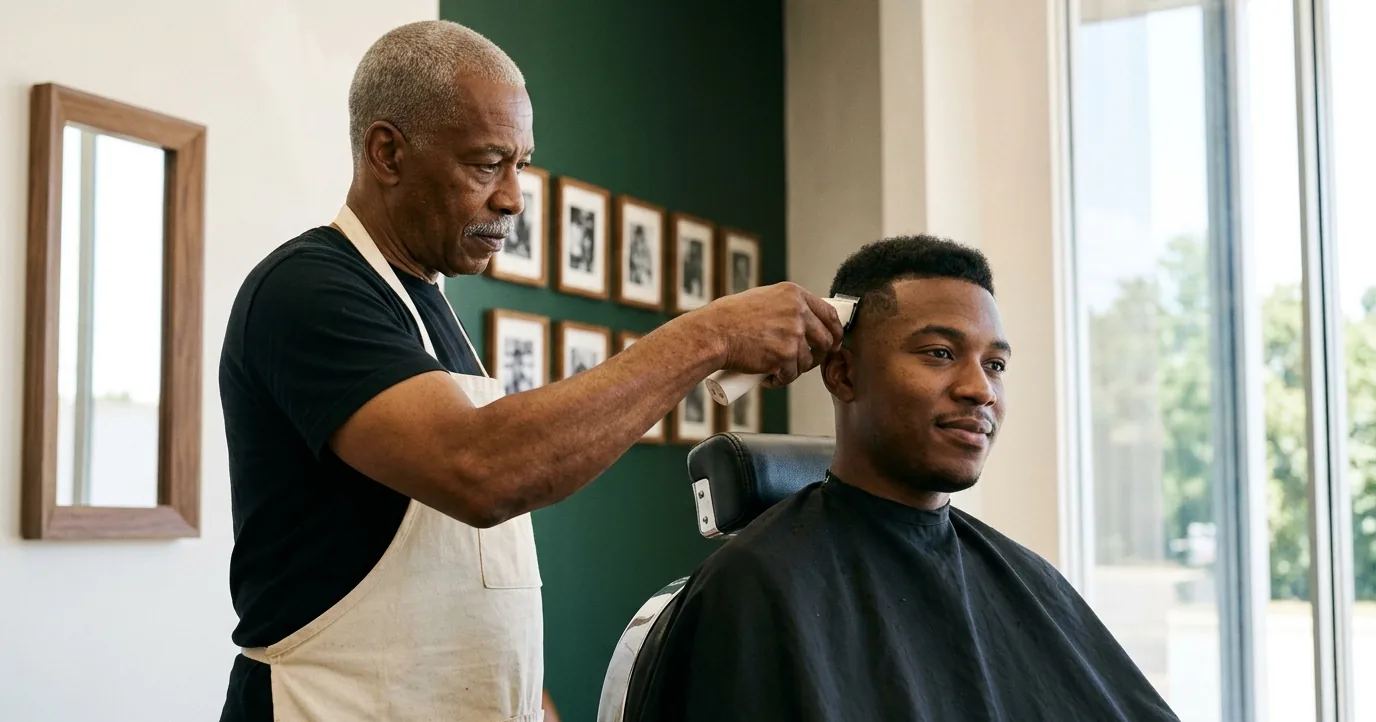
In one week this October, two very different towns unveiled memorials to barbershops. On October 21, Tuscaloosa, Alabama, cut the ribbon on Linton’s Barbershop Plaza, built on the block where Rev. Thomas Linton’s shop once stood. A few days later, Madison, New Jersey, put up a state Black Heritage Trail plaque marking the 1964 pickets outside the town’s segregated barbershops. One honors a Black shop that hid the movement’s people. The other honors the people who broke a white shop’s color line. Between them sits most of what the barbershop meant to the civil rights era, and a lesson about what it takes to keep that history standing.
The Shop at the Edge of Downtown
The Howard-Linton Barber and Beauty Shop opened in 1951 on what is now T.Y. Rogers Jr. Avenue, where downtown Tuscaloosa ended and the Black West End began. Rev. Thomas Linton cut hair there, and his daughter Felicia remembers it plainly: “Growing up, to us, this was just the shop where daddy came to work.”
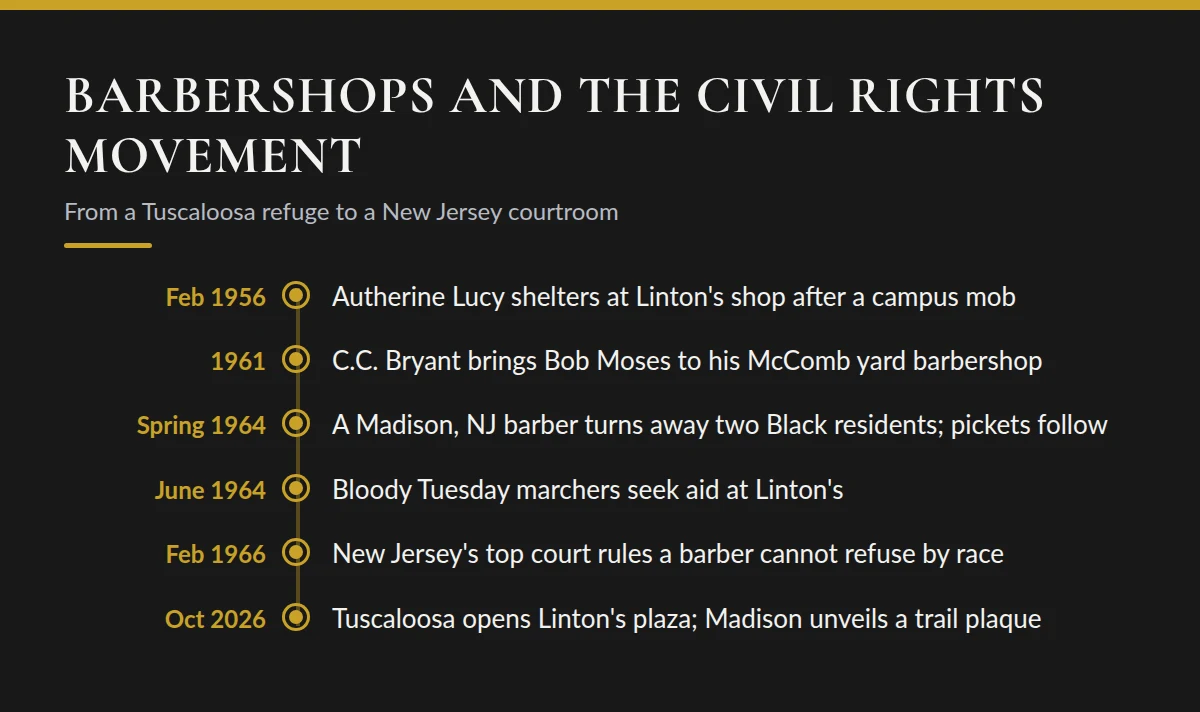
It was a great deal more. In February 1956, Autherine Lucy became the first Black student to enroll at the University of Alabama. On February 6, a crowd that grew past 2,000 met her on campus and pelted her with rotten eggs, and she left hidden in the back seat of a patrol car. She took shelter at Linton’s. He arranged her safe trip home and called in someone to help fix her hair, which the students had thrown eggs in, and the civil rights trail’s own description of the site says beauticians there bathed and cleaned her. That night the university’s trustees voted to exclude her, “ostensibly for her own safety,” and before the month was out they expelled her. The board did not overturn the expulsion until 1988. She went back and earned a master’s degree there in 1992.
From the 1950s on, the shop was where Black ministers met to plan their civil rights campaigns. Linton was one of three first lieutenants to Rev. T.Y. Rogers, who led the Tuscaloosa Citizens for Action Committee. He bailed out protesters, paid medical bills and gave advice to young people from the chair. Police tailed him often enough that a former foot soldier remembers the routine: “He would change his clothes, come in one door and go out through another door to throw off the police.”
Then came June 9, 1964, the day remembered as Bloody Tuesday. About 600 marchers gathered at First African Baptist Church to walk to the new county courthouse and protest its segregated restrooms. Some 70 officers, joined by nearly 200 deputized white citizens, Klansmen and onlookers, herded them back into the church, broke its stained glass windows, flooded the sanctuary with fire hoses and threw in tear gas. Nearly 100 people went to jail and 33 to the hospital. Many more, the Encyclopedia of Alabama records, sought aid at a nearby barbershop. That was Linton’s, about two blocks away, where injured marchers lined the floor.
For four decades the shop held that history, much of it on the walls: photographs, newspaper clippings, posters for speakers who came to town to talk about Bloody Tuesday, even a framed poll tax from 1958. Linton died in May 2020 at 88.
A Library Under a Tree
Our cultural history of the Black barbershop covers how the shop became a meeting room for the whole community. McComb, Mississippi, shows what that looked like on the ground.
C.C. Bryant cut hair beneath a tree in his McComb yard, next to a small library of Black newspapers, magazines and books, and the talk there kept turning to civil rights. He had been elected president of the Pike County NAACP in 1954. In 1961 he read in Jet magazine about a voting project the Student Nonviolent Coordinating Committee planned for the Mississippi Delta, far to the north. With help from Amzie Moore, another NAACP leader in the Delta, he brought the project’s leader, Bob Moses, down to McComb and opened his home to him. The SNCC Digital Gateway marks McComb as the place where SNCC’s Mississippi voter registration campaign began.
It cost him. His barbershop was bombed, and so were his house and his brother’s house. Bryant explained why a local host mattered anyway: “You can’t come here and start. Someone’s got to bring you.”
Picketing the Other Side of the Color Line
Black shops were one half of the barbershop’s civil rights story. White shops that refused Black customers were the other.
On February 5, 1964, Martin Luther King Jr. gave his “The American Dream” speech to more than 5,000 people at Drew University in Madison. That spring a local barber, Philip Gatti, turned away two Black residents: Thomas Peyton Sellers on April 23 and Reginald Barrow on May 7. The Civil Rights Action Committee organized pickets and boycotts of the town’s segregated shops, and Drew students and faculty joined the lines. Three students and the university chaplain, James Sessions, were arrested.
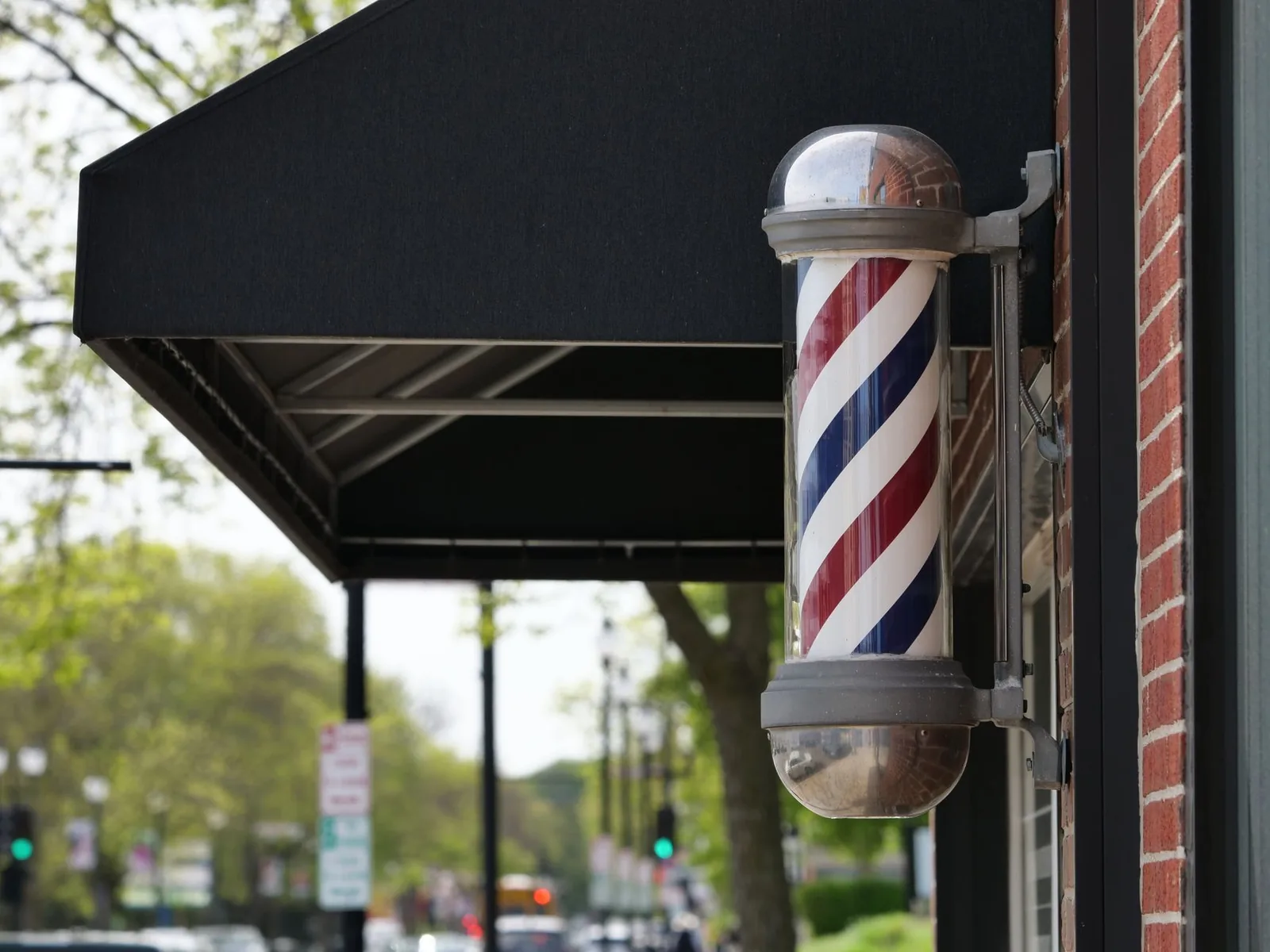
Gatti’s defense will sound familiar to anyone who follows the textured hair training debate today. He said he had refused the men not because of their race but because he had never been trained to cut Black hair and did not consider himself competent to handle its “unusual texture and quality.” He also claimed the shop required appointments. The state’s Division of Civil Rights rejected his defenses, and in February 1966 the New Jersey Supreme Court affirmed its order, seven votes to none. A barbershop, the court held, is a place of public accommodation under the state’s Law Against Discrimination: “To anyone who has ever seen the revolving peppermint stick pole, it would be idle to suggest that its invitation to enter the shop for a haircut was not a general public one.” The appointment rule was “simply a subterfuge.”
The court saved its sharpest words for the skill excuse. A barber’s license, it said, certifies competence in hair cutting, “not just Caucasian hair, but the hair that grows on the head of any human being.” A barber whose competence did not reach that far “lacks the legislatively established qualifications for license.” The state Board of Barber Examiners had already told every licensee in August 1964 that a barber who refused non-white customers by claiming he did not know how to cut their hair would be making a statement that “would be untrue.” Gatti was ordered to offer both men a haircut, instruct his employees in writing to serve everyone, and post the order in his shop for a year.
Federal law was no shortcut. The Civil Rights Act signed on July 2, 1964, lists hotels, restaurants, gas stations and places of entertainment, and it reaches a barbershop only when the shop sits inside one of them and serves its patrons, as a hotel barbershop does. When a barber working in the basement of the Duval Hotel in Tallahassee turned away Black customers that August, citing hair “different in texture and growth pattern,” a federal judge ruled the next year that the Act applied because of the hotel. He also said plainly that the law “does not purport to cover all barber shops,” and that the barber’s claimed lack of skill was “irrelevant.” Shops standing on their own were left to state law, which is where New Jersey’s statute came in.
The skill excuse outlived the era. Textured hair is still taught as an add-on in many barber and cosmetology programs, the gap behind the Black hair desert, and the New Jersey court’s point still stands: a license is supposed to mean you can cut the client in front of you. If you are heading into the trade, it is worth knowing what the state board exam actually tests.
At the Madison unveiling, Noelle Lorraine Williams, who directs New Jersey’s Black Heritage Trail, put the pickets in perspective: “They didn’t protest because they didn’t have a place to get their hair cut, but because of what segregation represented as a whole.” Among the speakers was Thomas Sellers III, son of the Thomas Sellers in the case.
How Towns Are Marking These Shops Now
Communities are keeping these places in public view in three main ways, and this October’s stories show each one.
The plaza. Tuscaloosa’s $1.4 million project, paid for through the city’s Elevate Tuscaloosa program, sits on the old shop’s block at the corner of T.Y. Rogers Jr. Avenue and 13th Street. It has an art installation by Caleb O’Connor with a relief of Linton, story panels on the city’s civil rights milestones and a central walkway laid out as a timeline. It is part of the Tuscaloosa Civil Rights History Trail, which opened in 2019; by 2022 the trail had 18 sites, with about 40 planned. “Too often, we see efforts to overlook or forget the history that helped shape our country,” Mayor Walt Maddox said at the opening. “The City of Tuscaloosa has chosen to stand in the gap.”
What a plaza cannot do is bring back a building. In 2022 the Tuscaloosa Civil Rights History and Reconciliation Foundation was planning to turn the shop itself into a museum. The building was torn down in 2024. What survives is Linton’s collection, which archivists and the foundation began sorting for a future museum after his death. The foundation’s co-president, Tim Lewis, called the plaza “step one” toward “having a place where we can show all of the things Reverend Linton collected.” Felicia Linton named what is gone: “Before, people would come by the shop and talk to him and he’d tell the story, but now he’s not here.”
The marker. Madison’s plaque stands on the grounds of the Museum of Early Trades and Crafts, close to where the protests took place, at the entry to downtown along Main Street. It got there through a nomination. Drew’s Center on Religion, Culture and Conflict worked with a local group, Hidden Figures of Madison, and students in a community-based learning course were directly involved. New Jersey created its Black Heritage Trail by law in 2022, and any member of the public or any institution may nominate a site.
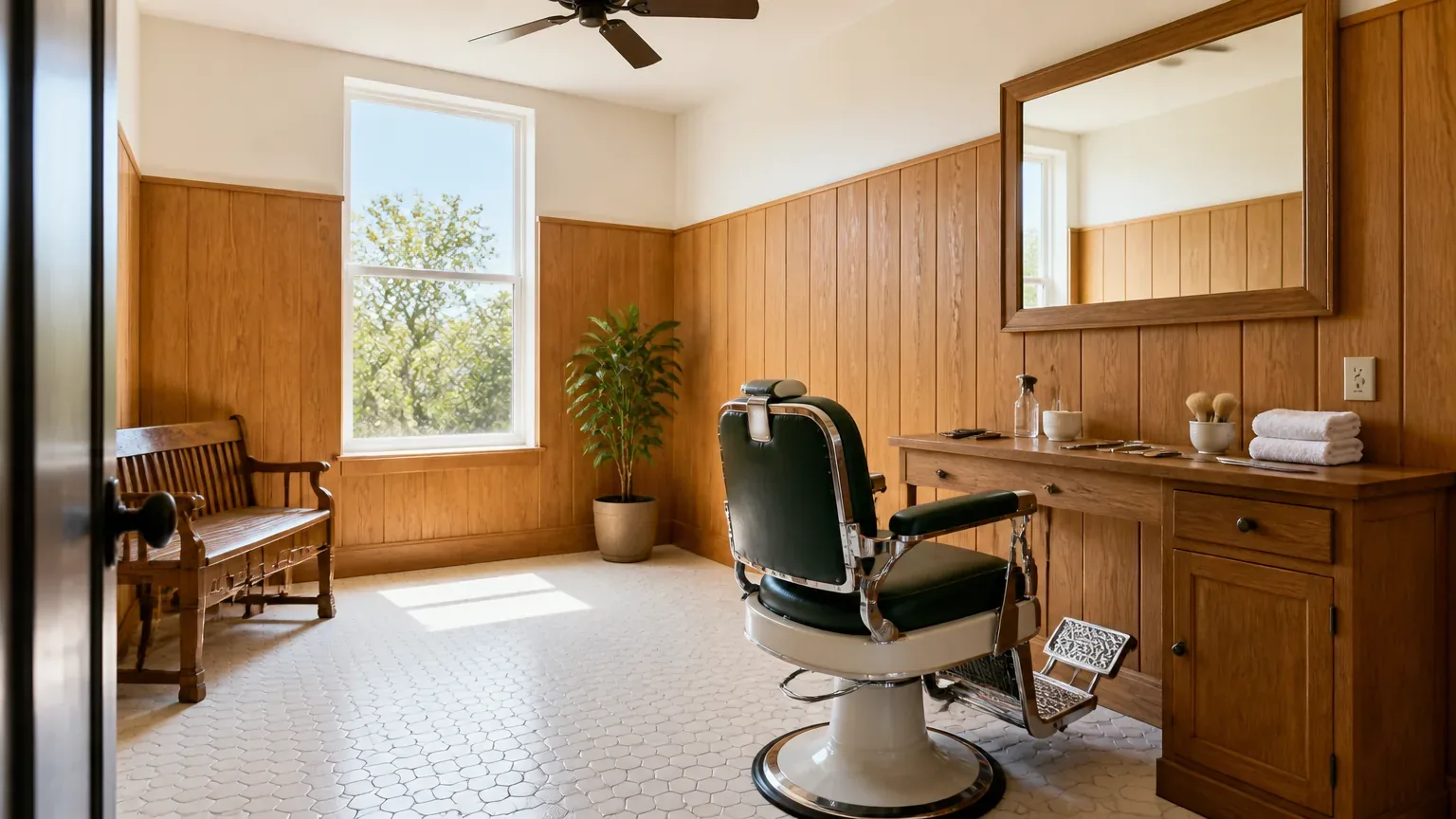
The move. Not every saved shop has a movement story. In Brazoria, Texas, a roughly 30-by-30-foot shop built around 1950 by the man his grandson says was the town’s first licensed barber has just been moved to the Brazoria Heritage Foundation’s historic complex. It will be restored inside and out to its original look and become part of the town’s history museum, and the foundation already runs school tours for students studying Texas history. The barber who worked in it for five decades never owned the land underneath, and he spent years worrying about its future. When the barber still working there found another location, he donated the building, and a local house-moving family donated the move. The foundation’s electricity bill alone runs about $50,000 a year, a reminder that saving a building is the start of the cost, not the end.
How to Get a Historic Shop Recognized
If a shop in your town carries this kind of history, the order you do things in matters more than the paperwork.
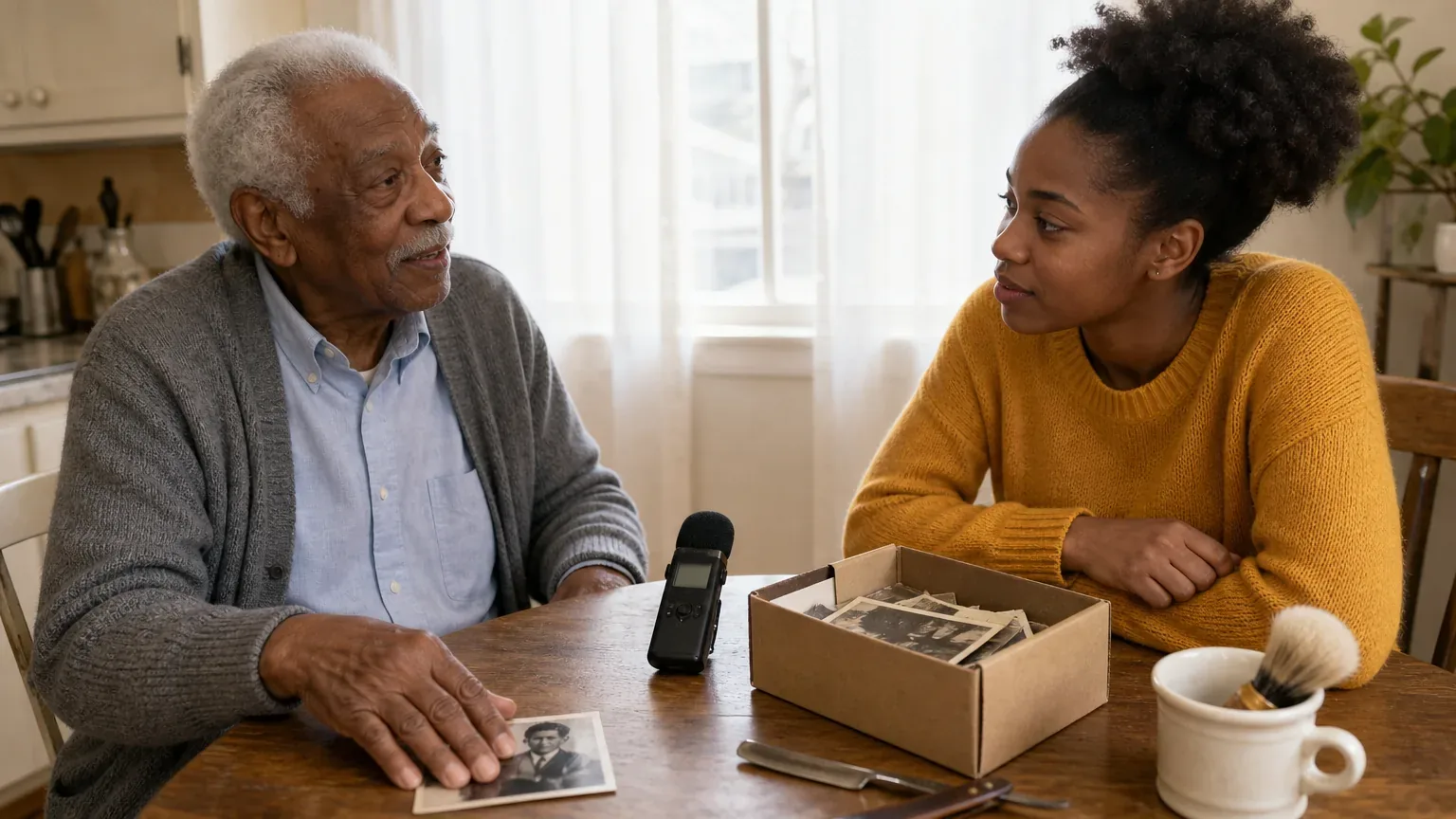
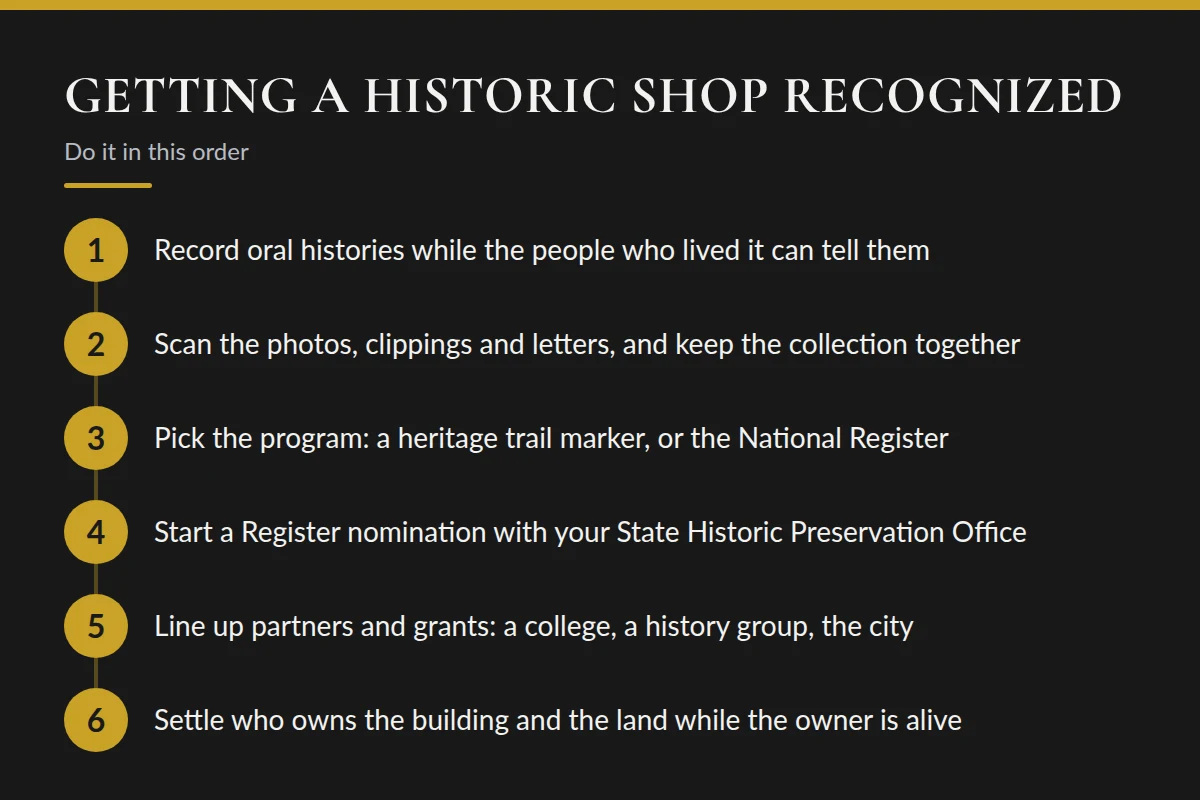
Record the people first. Linton told his story to anyone who came by, and once he was gone the panels had to do it for him. Record oral histories with retired barbers, longtime clients and their families while they can still tell them, and scan photographs, clippings, receipts and letters with a note on who is pictured and when.
Save the collection even if you cannot save the building. Tuscaloosa lost the shop but kept its archive, and the archive is what a future museum will be built around. A local library, university archive or historical society can store and catalogue it properly.
Match the claim to the program. A marker or heritage trail honors a story, and it can go up even where the building is gone. New Jersey’s trail asks for a short pre-application worksheet, then an online application with a historical narrative, a bibliography, the site’s location and documentation. The National Register of Historic Places lists the buildings themselves. A nomination starts with your State Historic Preservation Office, a property generally needs to be at least 50 years old and still look much the way it did, and an owner’s objection blocks the listing. The state review typically takes at least 90 days, and the National Park Service then decides within 45.
Find partners and money. Madison’s plaque came from a university center, a community group and a class of students. Tuscaloosa’s plaza came from a reconciliation foundation and the city’s capital program. For research and repairs, the National Park Service’s African American Civil Rights grants, paid from the Historic Preservation Fund, go to states, tribes, local governments and nonprofits, for both history projects such as research and exhibits and preservation projects that repair buildings. The National Trust for Historic Preservation’s African American Cultural Heritage Action Fund, launched in November 2017, has raised about $200 million and supported more than 400 preservation projects.
Settle the building question early. Who owns the land? What happens when the owner retires or dies? Brazoria’s barber had first planned for the foundation to inherit his shop after his death, then moved the gift up when the barber still working there moved on. A plan made while the owner is alive gives a building its best chance.
The Chair Is Still the Monument
Plaques and plazas keep the record straight, but the history they mark was made in working shops, by barbers like Linton, who kept cutting hair while he bailed protesters out of jail. The surest way to honor that is to keep the chairs full. Find a Black barbershop near you, sit down, and ask the barber what the walls have seen.
Further reading (sources)
- Tuscaloosa Thread on the ribbon cutting for Linton’s Barbershop Plaza
- WVTM 13 with Felicia Linton and city leaders at the plaza opening
- The Crimson White for the community remembering Rev. Thomas Linton
- Encyclopedia of Alabama on the Tuscaloosa campaign and Bloody Tuesday and Autherine Lucy’s enrollment and expulsion
- The Bama Buzz covering the Linton collection and plans for a museum and the plaza plans after the shop was torn down
- SNCC Digital Gateway for C.C. Bryant and the McComb voter registration campaign
- Drew University on the Black Heritage Trail plaque for the Madison barbershop protests
- Supreme Court of New Jersey in Sellers v. Philip’s Barber Shop, the full opinion
- U.S. District Court for the Northern District of Florida in Pinkney v. Meloy, the Tallahassee hotel barbershop case
- Legal Information Institute with the public accommodations section of the Civil Rights Act
- The Facts about Louie’s Barbershop moving to the Brazoria Heritage Foundation
- New Jersey Department of State on how to nominate a Black Heritage Trail site and the 2026 nomination cycle
- National Park Service for how to list a property on the National Register and African American Civil Rights grants
- National Trust for Historic Preservation with its African American Cultural Heritage Action Fund