How Much Does a Haircut Cost at a Black Barbershop? Prices by State and City (Fades, Lineups, Beards, Kids)
Published on October 15, 2026
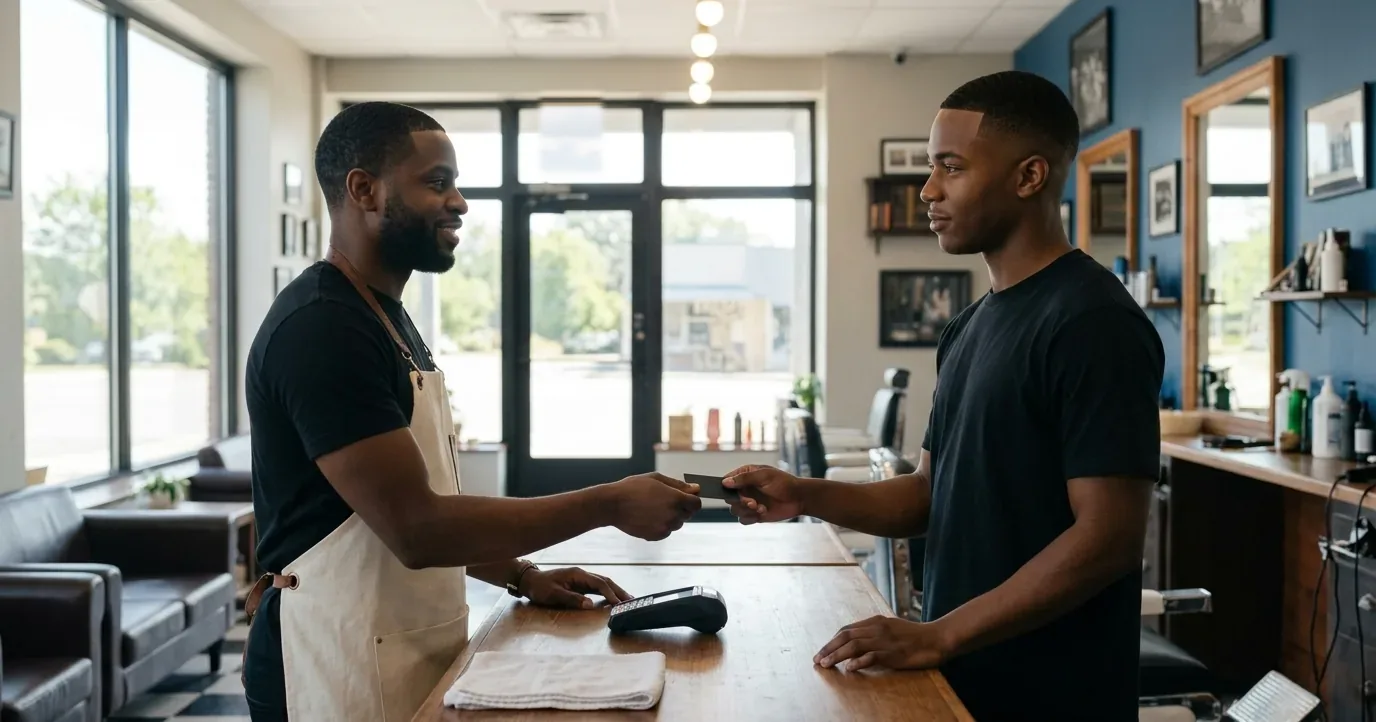
A standard adult haircut at a Black barbershop typically costs $40, and half of all shops charge somewhere between $35 and $50 for it. That price buys a fade, a taper or a scissor cut with the lineup included. Add a beard trim and the typical ticket climbs to $58. On its own, a lineup runs $22, a kids’ cut is $30, and a straight-razor shave with a hot towel is $40.
Those are national numbers, and the distance between a chair in Tucson and a chair in San Francisco is wide enough that a national number only takes you so far. This guide breaks the price down by service, by state and by city, explains what is normally part of the cut and what shows up as an extra line, walks through tipping and booking etiquette, and ends with a list of every city page on this site so you can find a shop close to home.
What a Haircut Costs by Service
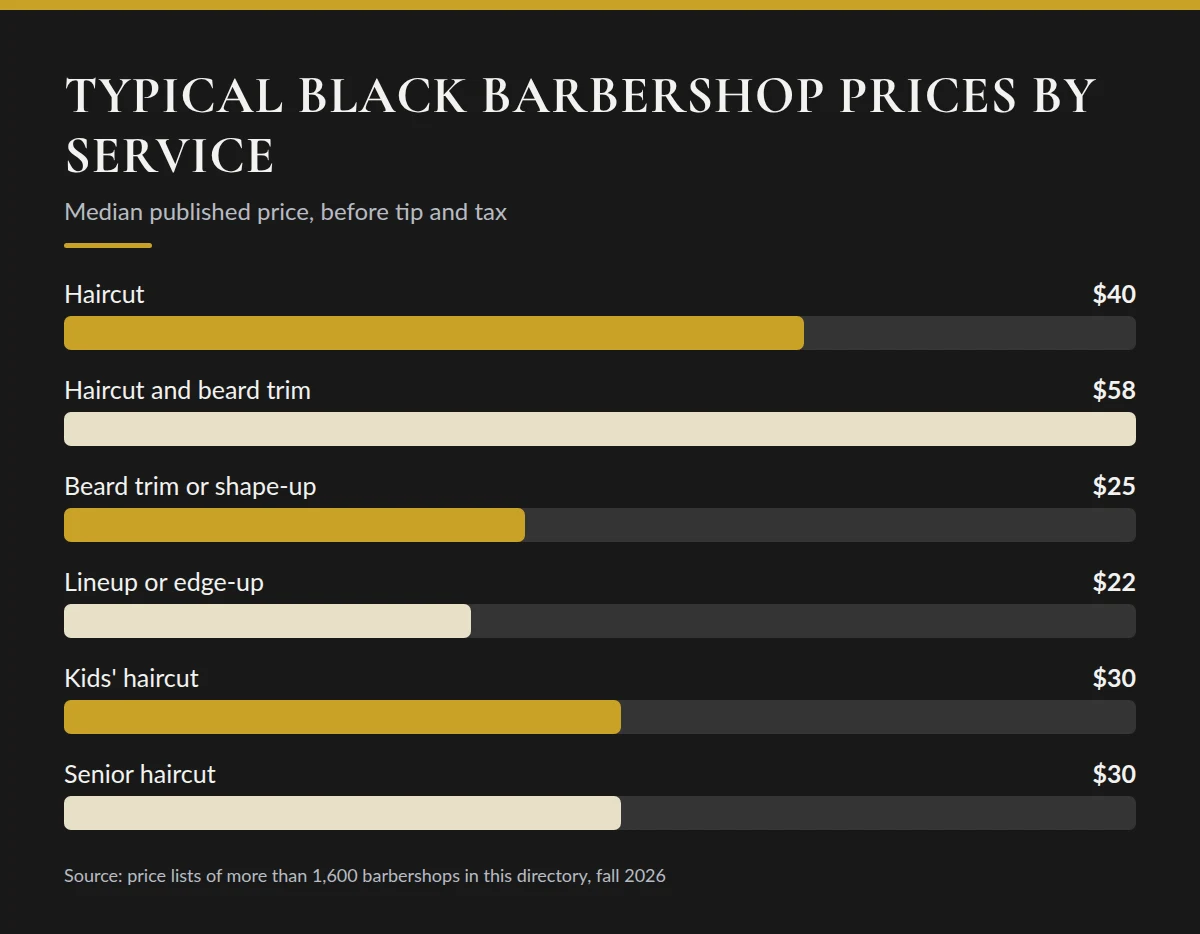
Prices in this guide come from the published price lists of more than 1,600 barbershops listed in this directory, collected in September and October 2026. We show the median (the middle price) so one very cheap or very expensive one does not skew it. The “middle half” column is the range from the 25th to the 75th percentile: a quarter of shops charge less than the bottom of it and a quarter charge more than the top. Every figure is the published price of one visit before tip and tax, and “haircut” means the shop’s standard adult cut. Prices change, so treat these as a guide, not a quote. To see the typical price in your own city and work out the tip, use the Haircut Price & Tip Calculator.
Table 1. National prices by service. Services with at least 10 priced shops.
| Service | Typical price (median) | Middle half of shops |
|---|---|---|
| Haircut | $40 | $35 to $50 |
| Haircut and beard trim | $58 | $48 to $70 |
| Beard trim or shape-up | $25 | $20 to $35 |
| Straight-razor or hot towel shave | $40 | $30 to $50 |
| Lineup or edge-up | $22 | $17 to $30 |
| Kids’ haircut | $30 | $25 to $38 |
| Senior haircut | $30 | $24 to $35 |
| Hair design or part | $15 | $10 to $34 |
| Color or gray blending | $45 | $32 to $70 |
| Locs, retwists or braids | $90 | $55 to $150 |
| House call or mobile service | $150 | $100 to $200 |
| VIP or after-hours appointment | $80 | $62 to $100 |
The spread inside that table is not random. A handful of things move a barbershop price, and once you can see them you can read any menu in the country.
Fade or scissor cut. On most menus the standard haircut is a clipper cut, a taper or a fade, with the edge-up included. A scissor cut on longer hair often carries its own line because it takes longer, and a skin fade with a hard part sits at the top of the range for the same reason: more time in the chair. If low, mid, drop and burst mean nothing to you yet, the dictionary of Black haircut terms explains what each cut is, how high it starts and how short it goes, so you know what you are paying for before you sit down.
Beard add-ons. The jump from a $40 haircut to a $58 haircut and beard combo tells you how shops think about beards. The trim is its own service with its own time, and the combo is simply the two bundled. A beard trim or shape-up alone is $25 in the typical shop, which is why a man who keeps his beard long and only needs it cleaned up between cuts can book that line by itself.
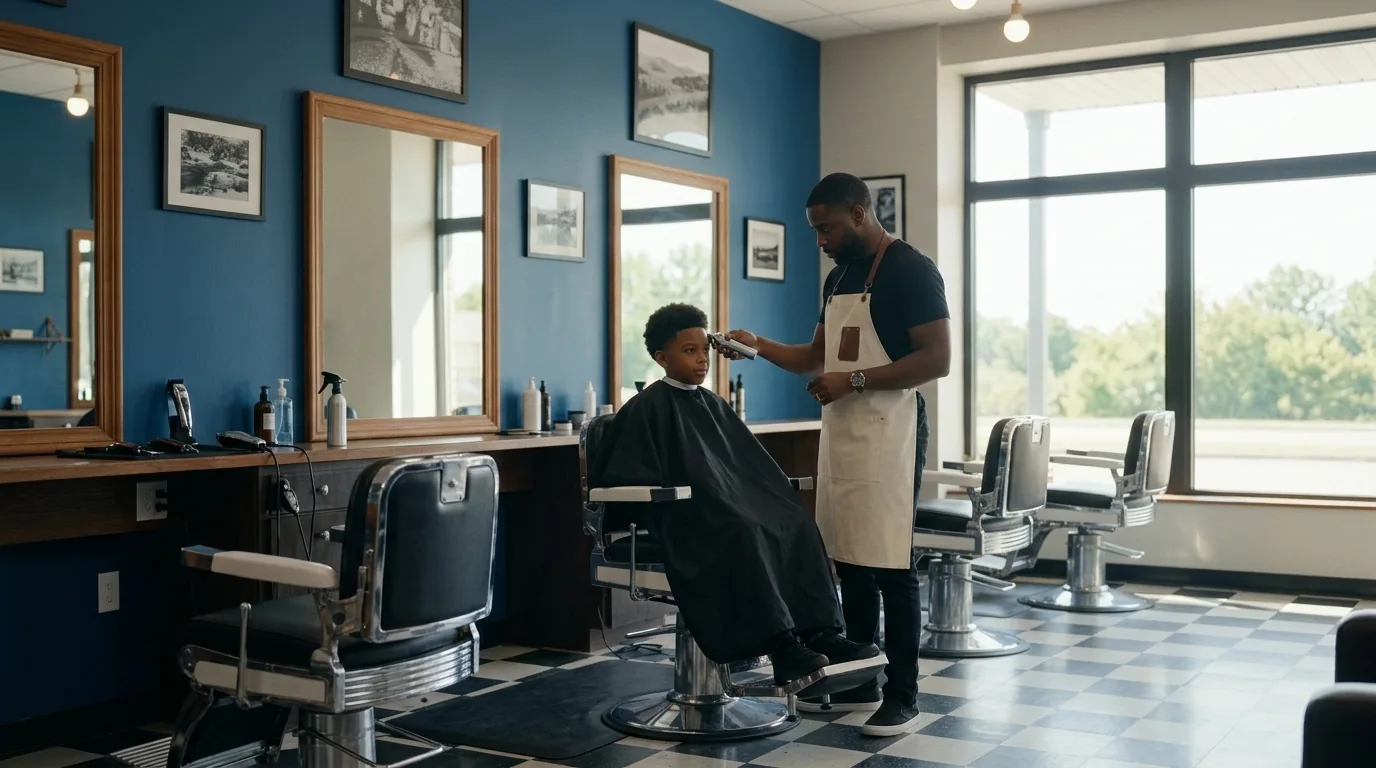
Kids and seniors. A kids’ cut ($30) and a senior cut ($30) sit below the adult price, but not by as much as many parents expect, because a restless six-year-old can take as long as a grown man. Most shops set an age cutoff for the kids’ price, so ask before you assume. If it is your child’s first time in a chair, the parent’s guide to Black children’s hair covers how to prepare them, what a good barber does with Type 4 hair on a small head, and when a child is ready for a fade. At the other end of the age range, color or gray blending ($45 typical) is for men who want the gray softened rather than covered, and how Black hair changes after 40 explains why the texture itself shifts and what that means for the cut.
Designs and parts. A hair design or part is $15 in the typical shop, but the middle half runs all the way from $10 to $34, because a single razor part and a freehand design across the whole side of the head are not the same job. Expect the price to follow the complexity and the time.
Locs, retwists and braids are a separate tier, not an add-on. The typical price is $90 and the middle half stretches from $55 to $150, because this is hours of hand work, often done by a loctician or braider rather than the barber who fades you, and priced by the length, the number of locs and the style. The complete guide to locs breaks down what a retwist should and should not include, how often you need one, and why a retwist pulled too tight costs you edges in the long run.
House calls and after-hours. The two priciest lines in the table, a house call or mobile service ($150) and a VIP or after-hours appointment ($85), are premium services. You are paying for the barber’s travel time, the empty chair back at the shop, and privacy. Mobile barbering has also become one answer to the Black hair desert, the stretch of smaller and mostly white towns where nobody within an hour’s drive cuts textured hair well.
Haircut Prices by State
Table 2. Haircut prices by state. States with 15 or more priced shops.
| State | Haircut (median) | Middle half |
|---|---|---|
| California | $48 | $40 to $60 |
| Illinois | $46 | $35 to $55 |
| Colorado | $45 | $37 to $52 |
| Pennsylvania | $45 | $40 to $50 |
| Oregon | $45 | $35 to $50 |
| Minnesota | $43 | $35 to $50 |
| Texas | $42 | $35 to $50 |
| New York | $42 | $35 to $52 |
| Florida | $42 | $35 to $53 |
| Georgia | $40 | $35 to $50 |
| Washington | $40 | $36 to $54 |
| Michigan | $40 | $30 to $45 |
| Tennessee | $40 | $35 to $50 |
| Maryland | $40 | $30 to $50 |
| Virginia | $40 | $32 to $45 |
| North Carolina | $40 | $28 to $48 |
| Ohio | $39 | $34 to $50 |
| Massachusetts | $38 | $32 to $44 |
| Arizona | $35 | $30 to $40 |
| Indiana | $35 | $30 to $39 |
| New Mexico | $35 | $30 to $40 |
| Oklahoma | $35 | $30 to $40 |
| Kentucky | $35 | $30 to $44 |
California and Illinois lead the table, followed by Colorado, Pennsylvania and Oregon, while Arizona, Indiana, New Mexico, Oklahoma and Kentucky share the lowest median at $35. Part of that is simply what things cost in each state. The Bureau of Economic Analysis publishes regional price parities, a measure of how far a state’s overall price level sits above or below the national average, and in 2024 California had the highest price level of any state while Oklahoma and Iowa were among the lowest. That lines up with the top and bottom of the barbershop table.
It does not explain everything. Massachusetts is an expensive state with a $38 haircut, below the national typical price, and North Carolina’s median of $40 sits inside a middle half that runs from $28 to $48, so the spread of prices within a state is often wider than the gap between states. The mix of shops matters as much as rent. A state whose listings are mostly neighborhood shops with walk-in chairs will post a lower median than one with a lot of appointment-only studios, even if the barbers are equally good. So read the middle half column alongside the median. Maryland’s $40 median comes with a $30 floor, which means plenty of Maryland chairs still cut for well under the typical price.
Table 3. States with fewer than 15 priced shops, grouped by region.
| Region | States with fewer than 15 priced shops | Haircut, median (combined) |
|---|---|---|
| Midwest (other states) | Iowa, Missouri, Nebraska, Wisconsin | $40 |
Alabama, the District of Columbia, Maine and Nevada had too few priced shops to show a figure. For those, use the national table.
Haircut Prices in Major Cities
Table 4. Haircut prices in major cities. Cities with 10 or more priced shops.
| City | Haircut (median) | Middle half |
|---|---|---|
| New York, New York | $42 | $35 to $48 |
| San Diego, California | $42 | $38 to $50 |
| Phoenix, Arizona | $33 | $30 to $38 |
| Nashville, Tennessee | $40 | $35 to $56 |
| Atlanta, Georgia | $48 | $40 to $56 |
| Denver, Colorado | $48 | $40 to $52 |
| Philadelphia, Pennsylvania | $45 | $40 to $50 |
| Chicago, Illinois | $48 | $35 to $55 |
| Houston, Texas | $45 | $38 to $51 |
| Portland, Oregon | $45 | $35 to $50 |
| San Francisco, California | $60 | $50 to $70 |
| Charlotte, North Carolina | $38 | $28 to $42 |
| San Jose, California | $48 | $40 to $50 |
| Miami, Florida | $50 | $40 to $58 |
| Tampa, Florida | $36 | $32 to $45 |
| Los Angeles, California | $52 | $45 to $58 |
| Raleigh, North Carolina | $46 | $35 to $52 |
| Fort Worth, Texas | $33 | $30 to $42 |
| Scottsdale, Arizona | $42 | $35 to $52 |
| Indianapolis, Indiana | $35 | $30 to $39 |
| Austin, Texas | $50 | $39 to $54 |
| Albuquerque, New Mexico | $35 | $32 to $41 |
| Dallas, Texas | $50 | $39 to $61 |
| Columbus, Ohio | $40 | $35 to $51 |
| Minneapolis, Minnesota | $40 | $35 to $47 |
| Seattle, Washington | $48 | $40 to $58 |
| Sacramento, California | $45 | $35 to $50 |
| Boston, Massachusetts | $39 | $35 to $45 |
| Louisville, Kentucky | $38 | $30 to $44 |
| Jacksonville, Florida | $39 | $35 to $45 |
| San Antonio, Texas | $40 | $32 to $42 |
| Baltimore, Maryland | $40 | $30 to $50 |
| Frisco, Texas | $46 | $41 to $56 |
| Tucson, Arizona | $32 | $26 to $35 |
| Memphis, Tennessee | $40 | $35 to $45 |
| Colorado Springs, Colorado | $41 | $36 to $58 |
| Omaha, Nebraska | $40 | $35 to $45 |
| Plano, Texas | $40 | $30 to $45 |
| Fresno, California | $38 | $35 to $45 |
| Oklahoma City, Oklahoma | $34 | $29 to $40 |
| Long Beach, California | $42 | $38 to $60 |
| Decatur, Georgia | $35 | $30 to $50 |
| Detroit, Michigan | $49 | $41 to $54 |
San Francisco is the most expensive city in the table at $60, with Los Angeles at $52 and Miami, Austin and Dallas at $50. At the other end sit Tucson at $32, Phoenix and Fort Worth at $33, and Oklahoma City at $34. Notice how often the same state holds both ends. Dallas is $50 while Fort Worth, its neighbor, is $33. Miami is $50 while Tampa is $36 and Jacksonville is $39. Scottsdale is $42 and Tucson is $32. The state median smooths all of that out, which is why the city table is the one to use if you live in or near one of these places.
Big-city pricing comes down to three things. The first is overhead. About 80 percent of barbers are self-employed, according to the Bureau of Labor Statistics, which means the price on the menu is mostly one barber covering a booth rent set by big-city commercial rents, plus supplies, insurance and taxes. The second is the mix: large cities have more appointment-only studios and more barbers with a following big enough to charge for it. The third is competition at the lower end, which is why a city like Chicago ($48) or Dallas ($50) can post a high median and still have plenty of chairs under $40 inside its middle half. Smaller cities sit lower on the median, but their ranges can be just as wide: Colorado Springs’ $41 median comes with a middle half that runs up to $58. The business guide to the Black barbershop explains the booth rent and commission models that sit behind every one of these prices.
What Is Included and What Is Extra
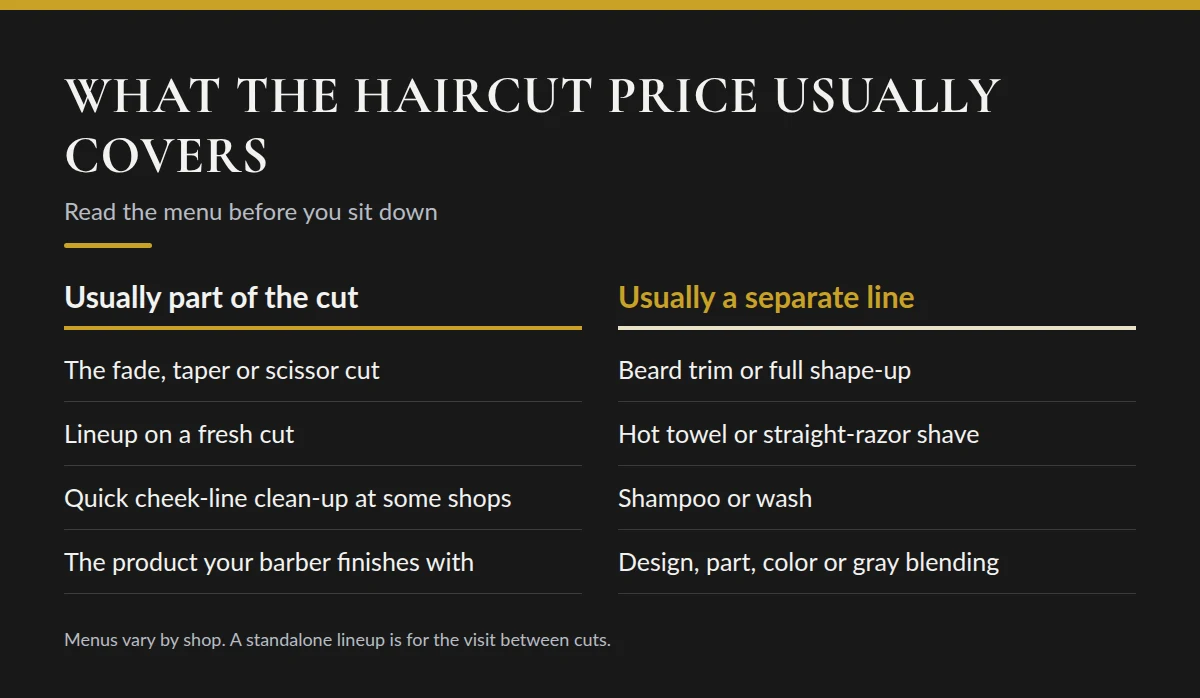
A Black barbershop menu is usually longer than a general barbershop menu, and most of the confusion at the register comes from not knowing which lines live inside the haircut price and which are stacked on top of it.
The lineup. On a full haircut, the lineup (the edge-up of the hairline, temples and nape) is part of the cut at almost every shop. The $22 standalone lineup on the price list is for the visit between cuts, when the fade still holds but the edges have grown fuzzy. If a shop charges separately for the lineup on a fresh cut, that is unusual enough to ask about.
The beard. A beard trim is an extra almost everywhere, which is why the combo line exists. Some shops include a quick clean-up of the cheek line with a haircut and charge only for a full shape-up; others charge for any beard work at all. Ask which one you are getting.
Hot towel and razor work. A straight-razor or hot towel shave ($40 typical) is its own service, and the hot towel comes with it. Some shops fold a hot towel finish into a premium cut as part of the experience, and the premium price reflects it. A razor finish on the hairline is standard in many shops but not all, and if you are prone to razor bumps or raised scars you should ask for a trimmer finish instead. The razor bump treatment ladder explains why a blade against the grain on coily hair sets off bumps in the first place, and keloids and the barber’s chair covers what a nick can turn into on skin that scars easily. Firm bumps at the nape after a tight taper deserve their own look, because they are often acne keloidalis nuchae rather than ordinary razor bumps, and the cut should change before they scar.
Shampoo. A wash is not a standard part of a barbershop haircut the way it is at a salon. Where a shop offers one, it is usually a separate line or part of a premium package. Come in with clean, dry hair unless the shop tells you otherwise.
Designs, color and the rest. A design or part, color or gray blending, and anything involving locs or braids are separate lines with their own prices, listed in Table 1. The product your barber finishes with is normally included; the bottle to take home is not. The men’s grooming guide covers what is worth buying for coily hair and a beard, and what you can skip.
Tipping and Booking: The Unwritten Price List
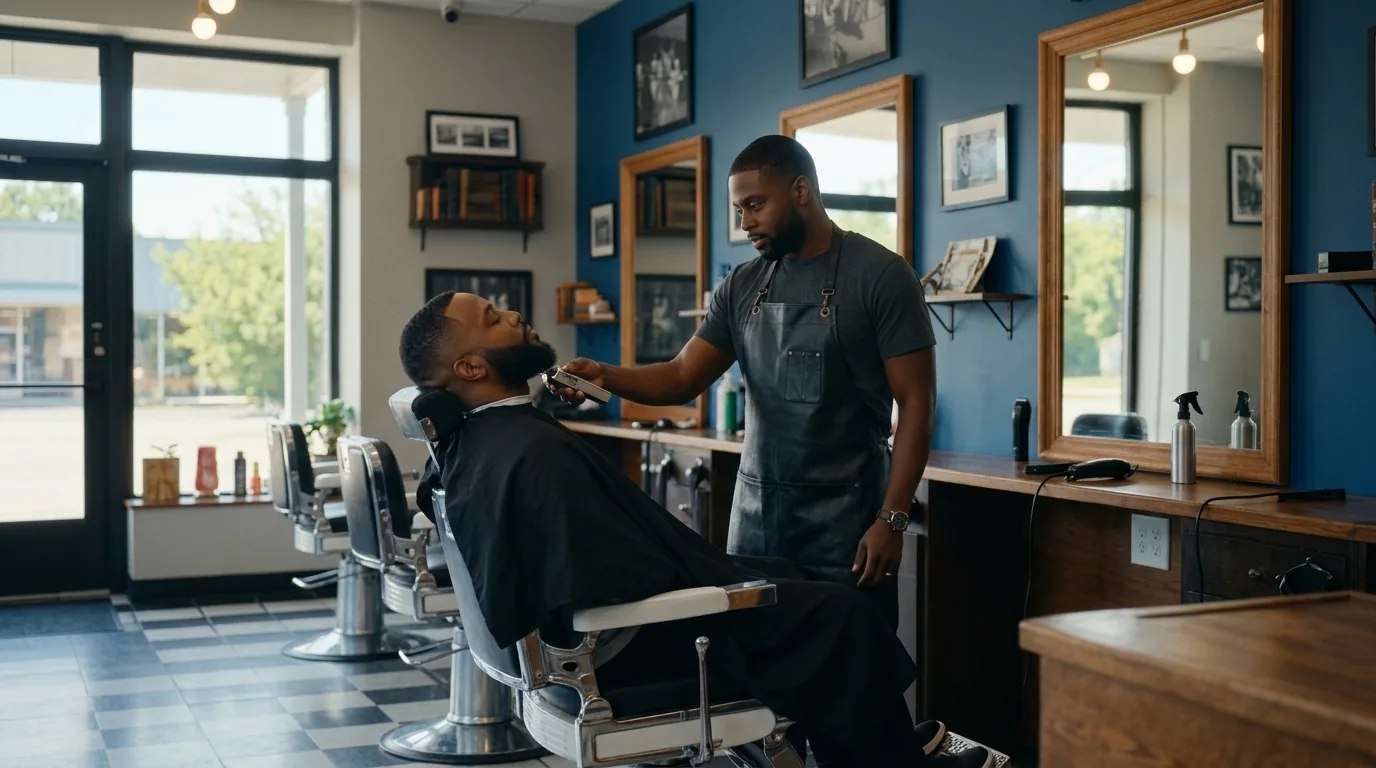
Tipping. The Emily Post Institute’s general tipping guide puts a hair salon visit at 15 to 20 percent of the bill, split among the people who served you. In a barbershop that is usually one person, so the whole tip goes to the barber who cut you. Tip on the full price rather than a discounted one, and tip in cash if you can. A card reader will usually offer a tip screen, and that works too, but cash reaches the barber the same day. The same percentage applies to a kids’ cut or a lineup. If a barber went well past the normal time to fix a cut somebody else botched, that is the moment to go above the usual range. The haircut price and tip calculator does the arithmetic on your city’s typical price.
Walk-ins and appointments. Shops run on one of three systems: walk-ins only, appointments only, or appointments with a walk-in window. The old walk-in shop still exists and still works, but most shops now book through an app or a booking page, and that is usually where the price list lives too. An appointment protects your time and the barber’s.
Deposits and cards on file. A growing number of shops ask new clients, or anyone booking a busy slot, to put a card on file or pay a deposit that comes off the price of the cut. The card is the shop’s protection against no-shows. Square, one of the most common booking and payment platforms, describes the usual setup in its own help pages: a card is required to complete the booking, it is charged only if you break the shop’s cancellation policy, and the fee can be a flat amount per appointment, a flat amount per service, or a percentage of the service price. Every platform works a little differently, so read the policy on the booking page before you confirm.
No-show and late cancellation fees. The reason these exist is simple arithmetic. When Marketplace reported on rising prices at Black barbershops in 2026, one Brooklyn barber said clients who used to come in about three times a month now come once. Fewer visits means every booked slot matters more, and an empty chair is money the barber does not get back. Cancel as early as you can, and if you are going to be late, call. Most barbers would rather move you than charge you. The owner’s side of all this, including why deposits are the single biggest fix for no-shows, is in the business guide linked above, and the piece on protecting a neighborhood shop explains why many owners now keep as little cash in the building as they can, even though cash tips are still welcome.
How to Read a Price List, and When a Higher Price Is Worth It
Most barbershop menus follow a few conventions once you know them.
- Tiers by barber. Many shops list a different price for a junior barber, a senior barber and the owner or a master barber. The cut is the same service; the price tracks experience and demand for that chair. A junior barber at a good shop is often the best value in the building.
- “Starting at.” A price with “starting at” or a plus sign means the shop prices by hair length, density or extras. Assume the real number lands higher and ask what moves it.
- Combos. Combos are usually priced a little below the separate services added together, which is the point of them. Compare the combo line to the two lines it bundles.
- Time. The more lines you add, the longer you are in the chair, and the longer you are in the chair, the more you pay. A skin fade, beard shape-up, hard part and design is a long appointment, and the price will say so.
What the price is paying for is worth understanding too. Every state requires barbers to be licensed, according to the Bureau of Labor Statistics, and a license means a state-set block of training hours and a board exam, which how to become a barber walks through state by state. The person cutting your hair is most likely self-employed, renting the chair and buying every blade, guard and cape out of the cut price. And those supplies have become expensive. The Brooklyn barbers Marketplace interviewed in 2026 said a pair of clippers now costs roughly double to nearly four times what it did in 2019, a pack of razors has doubled, and one of them had raised his prices by more than 50 percent in five years. The federal price index for haircuts and other personal care services has risen at roughly four to five percent a year in every half-year period since 2023.
So when is a higher price worth it? When the barber knows textured hair, which is not a given even in shops that advertise fades. The guide to choosing a skilled barber lists the signs: a consultation before the clippers come out, questions about how you wear your hair between cuts, a steady hand on the hairline, and a finished cut that still looks deliberate three weeks later. When the shop is clean and the tools are disinfected between clients, which the clipper and sanitation guide explains is a matter of state board rules as well as hygiene. And when the barber gives you his time, because a cut at the top of the middle half that lasts five weeks costs less per week than a cut at the bottom of it that needs redoing in two. A higher price is not worth it when it is buying a premium address with a junior barber, or when a “starting at” price doubles once you add the lines you actually need. Licensing rules and health codes vary by state, and the National Association of Barber Boards of America keeps a listing of every state barber board if you want to check what your state requires of a shop.
Find a Barbershop Near You
Every city below has its own page on this site listing the barbershops in this directory for that city. The tables above tell you what is typical; the city page tells you who is cutting near you.
- Alabama: Decatur
- Arizona: Glendale, Goodyear, Mesa, Phoenix, Scottsdale, Tempe, Tucson
- California: Bellflower, Campbell, Citrus Heights, Clovis, Culver City, Daly City, El Cajon, Elk Grove, Fresno, Inglewood, La Jolla, La Mesa, Lakewood, Lemon Grove, Long Beach, Los Angeles, Los Gatos, Marina Del Rey, Milpitas, Mountain View, National City, North Highlands, Oakland, Pacoima, Sacramento, San Diego, San Francisco, San Jose, Santa Clara, Santa Monica, Shingle Springs, South San Francisco, Spring Valley, Venice, West Hollywood, West Sacramento, Windsor Hills
- Colorado: Aurora, Boulder, Colorado Springs, Denver, Edgewater, Fountain, Glendale, Greenwood Village, Lakewood, Littleton, Westminster, Wheat Ridge
- District of Columbia: Washington
- Florida: Charlotte Harbor, Coconut Grove, Coral Gables, Doral, Hialeah, Jacksonville, Key Biscayne, Kissimmee, Miami Beach, Miami, North Miami Beach, North Miami, Odessa, Pembroke Pines, Pinecrest, Tampa, Temple Terrace, Ybor City
- Georgia: Alpharetta, Atlanta, Brookhaven, Buford, Canton, Chamblee, College Park, Conyers, Cumming, Decatur, Doraville, Duluth, Dunwoody, East Point, Fayetteville, Hapeville, Johns Creek, Lawrenceville, Lilburn, Lithonia, Mableton, Marietta, Milton, Norcross, Peachtree City, Peachtree Corners, Richmond Hill, Roswell, Sandy Springs, Sharpsburg, Stone Mountain, Stonecrest, Sugar Hill, Suwanee, Tucker, Tyrone
- Illinois: Berwyn, Bloomington, Chicago, Cicero, Evanston, Oak Park
- Indiana: Bloomington, Carmel, Clarksville, Greenwood, Indianapolis, Jeffersonville, Westfield
- Iowa: Council Bluffs
- Kansas: Kansas City, Overland Park, Shawnee
- Kentucky: Jeffersontown, Louisville, Shively
- Maine: Portland
- Maryland: Baltimore, Brooklyn, Catonsville, Columbia, District Heights, Glen Burnie, Jessup, Lansdowne, Linthicum Heights, Owings Mills, Parkville, Pasadena, Severn, Timonium, Towson, Windsor Mill, Woodlawn
- Massachusetts: Arlington, Boston, Cambridge, Chelsea, Dorchester Center, Dorchester, East Boston, Everett, Hyde Park, Jamaica Plain, Malden, Mattapan, Medford, Quincy, Roslindale, Roxbury, Somerville, South Boston, Waltham, Watertown
- Michigan: Berkley, Birmingham, Center Line, Chesterfield, Clinton Township, Dearborn Heights, Dearborn, Detroit, Eastpointe, Farmington Hills, Farmington, Ferndale, Garden City, Grand Rapids, Grosse Pointe Park, Hamtramck, Hazel Park, Inkster, Lathrup Village, Livonia, Macomb, Madison Heights, Mt Clemens, New Baltimore, Oak Park, Plymouth, Redford Township, Rochester Hills, Rochester, Romulus, Roseville, Royal Oak, Shelby Township, Southfield, Southgate, St. Clair Shores, Sterling Heights, Trenton, Troy, Utica, Warren, Washington, West Bloomfield Township, Westland, Wyandotte
- Minnesota: Bloomington, Brooklyn Park, Coon Rapids, Crystal, Eagan, Edina, Farmington, Fridley, Golden Valley, Hamel, Hilltop, Hopkins, Minneapolis, New Brighton, New Hope, Plymouth, Richfield, Roseville, St. Louis Park, St. Paul
- Mississippi: Long Beach, Southaven
- Missouri: Blue Springs, Gladstone, Grandview, Independence, Kansas City, Raytown
- Nebraska: Bellevue, Elkhorn, La Vista, Omaha, Papillion, Ralston
- Nevada: Henderson, Las Vegas, North Las Vegas
- New Jersey: Oakland
- New Mexico: Albuquerque, Bernalillo, Corrales, Los Ranchos De Albuquerque, Rio Rancho, Santa Fe
- New York: Brooklyn, Long Beach, New York, Ridgewood
- North Carolina: Apex, Asheville, Cary, Charlotte, Durham, Garner, Matthews, Morrisville, Pineville, Raleigh, Southport, Wake Forest, Wendell, Winston Salem
- Ohio: Cleveland, Columbus, Gahanna, Grove City, New Albany, Pickerington, Reynoldsburg, Whitehall
- Oklahoma: Broken Arrow, Del City, Edmond, Jenks, Midwest City, Moore, Mustang, Norman, Oklahoma City, Owasso, Tulsa, Warr Acres, Yukon
- Oregon: Beaverton, Happy Valley, Hillsboro, Lake Oswego, Milwaukie, Portland, Tigard
- Pennsylvania: Philadelphia, Pittsburgh, Upper Darby Township, Willow Grove
- South Carolina: Myrtle Beach
- Tennessee: Antioch, Bartlett, Cordova, Franklin, Germantown, Lebanon, Mason, Memphis, Nashville, Oak Ridge, Ripley
- Texas: Allen, Argyle, Arlington, Aubrey, Austin, Bartonville, Bedford, Blue Mound, Carrollton, Colleyville, Coppell, Corinth, Dallas, Denton, El Paso, Euless, Flower Mound, Forest Hill, Fort Worth, Frisco, Garland, Grand Prairie, Grapevine, Haltom City, Helotes, Highland Village, Highlands, Houston, Hurst, Irving, Katy, Keller, Lake Dallas, Lancaster, Lewisville, Little Elm, Mckinney, Mesquite, North Richland Hills, Pearland, Plano, Prosper, Richardson, River Oaks, Roanoke, Saginaw, San Antonio, Southlake, The Colony, Watauga, White Settlement, Windcrest, Wylie
- Virginia: Chesapeake, Hampton, Norfolk, Portsmouth, Virginia Beach
- Washington: Auburn, Belfair, Bellevue, Bonney Lake, Bothell, Bremerton, Burien, Covington, Des Moines, Dupont, Edgewood, Edmonds, Federal Way, Fife, Gig Harbor, Kent, Kirkland, Lacey, Lake Stevens, Lakewood, Lynnwood, Maple Valley, Marysville, Milton, Normandy Park, Pasco, Port Orchard, Poulsbo, Puyallup, Renton, Seatac, Seattle, Shoreline, Silverdale, Spokane, Steilacoom, Sumner, Tacoma, Tukwila, University Place, Vancouver, Wenatchee, Yakima
- Wisconsin: Milwaukee
Frequently Asked Questions About Barbershop Prices
How much does a fade cost at a Black barbershop?
A fade is the standard haircut on most menus, so the haircut price applies: $40 in the typical shop, with the middle half of shops charging $35 to $50. A skin fade or a fade with a hard part tends to land toward the top of that range because it takes longer.
How much is a lineup or edge-up?
A standalone lineup is $22 in the typical shop, with a middle half of $17 to $30. On a full haircut the lineup is normally included.
How much does a haircut and beard trim cost?
The combo is $58 in the typical shop, with a middle half of $48 to $70. A beard trim or shape-up on its own is $25.
How much is a kids’ haircut?
A kids’ cut is $30 in the typical shop, with a middle half of $25 to $38. Ask about the age cutoff, since every shop sets its own.
Which states and cities are the most expensive?
By state, California ($48) and Illinois ($46) lead the table, followed by Colorado, Pennsylvania and Oregon ($45). By city, San Francisco ($60) is the most expensive in the directory, followed by Los Angeles ($52), then Miami, Austin and Dallas ($50).
Where is a haircut cheapest?
Arizona, Indiana, New Mexico, Oklahoma and Kentucky share the lowest state median at $35. Among cities, Tucson ($32), Phoenix and Fort Worth ($33) and Oklahoma City ($34) are the lowest in the table.
How much should I tip my barber?
The Emily Post Institute’s guideline for a hair salon visit is 15 to 20 percent of the bill. Tip on the full price, and tip in cash when you can.
The Bottom Line
Expect a typical price of $40 for a standard cut with the lineup included, and $58 if you add the beard. Expect more in San Francisco, Los Angeles, Miami, Austin and Dallas, less in Tucson, Phoenix, Fort Worth and Oklahoma City, and a wide range inside every city on the list. Read the middle half column, read the menu for what is bundled and what is stacked, book the slot and show up for it, and tip the person who cut you. The right barber at the right price is worth more than the cheapest chair in town.
Further reading (sources)
- Emily Post Institute on how much to tip for hair services and other everyday services
- Bureau of Labor Statistics for the pay, outlook and licensing of barbers, hairstylists and cosmetologists
- Bureau of Labor Statistics with the consumer price index for haircuts and other personal care services
- Bureau of Economic Analysis on regional price parities by state and metro area
- Marketplace for how rising prices are changing Black barbershops
- Square with how booking cancellation and prepayment policies work
- National Association of Barber Boards of America on its listing of state barber boards