The Hot Towel Shave on a Curly Beard: How to Give the Classic Service Without Razor Bumps
Published on November 7, 2026
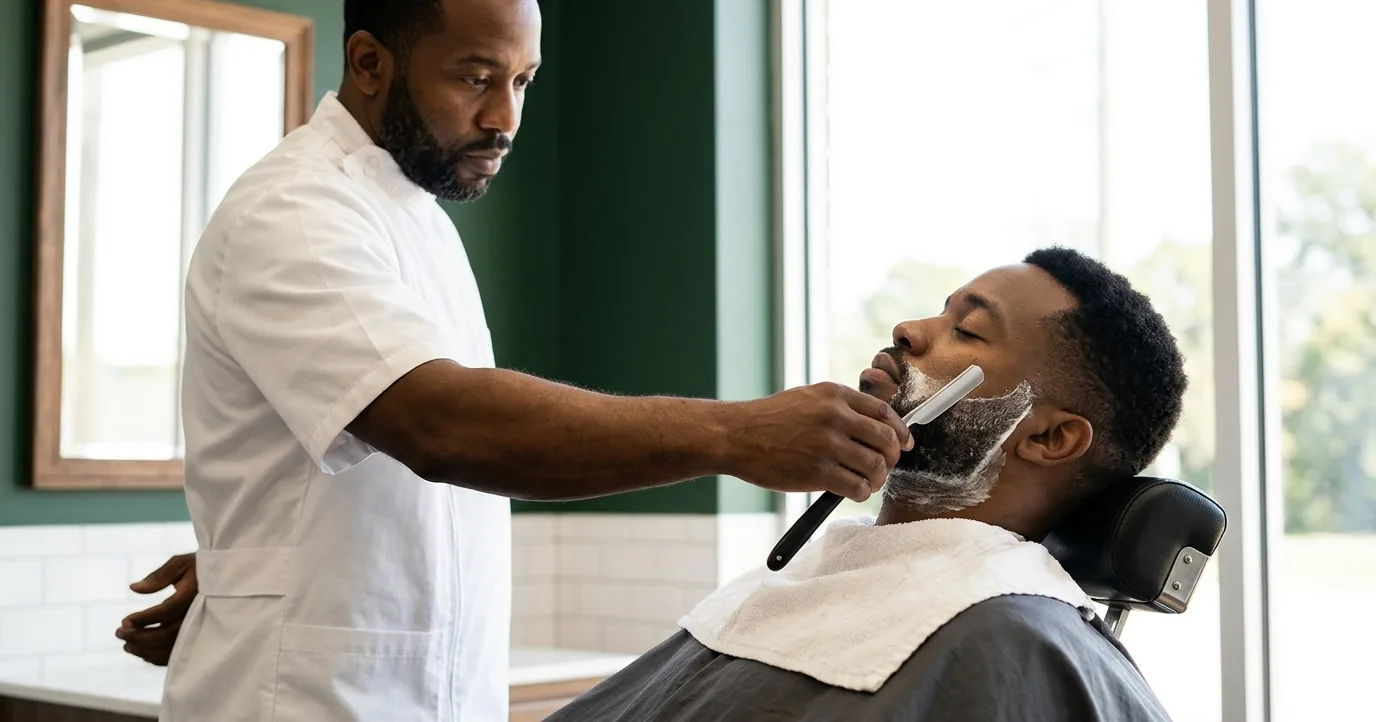
The hot towel shave is the barbershop at its most ceremonial. The chair tips back, a warm towel goes over the face, the lather goes on, and the shop gets a little quieter while the blade works. For a lot of Black men it is also the quickest route to a neck full of razor bumps by midweek. Pseudofolliculitis barbae (PFB), the medical name for those bumps, affects an estimated 45 to 80 percent of men of African ancestry, and the barbers who shave them know it. When researchers surveyed 50 barbers at 37 Oklahoma City shops serving mostly Black clients, nearly all of them knew a razor makes PFB worse, but their ideas on how to handle it “differed widely.”
This guide covers the service itself, done so the bumps never start: the consultation that decides whether the razor comes out at all, mapping the grain, the towel and lather that soften a coarse beard, one pass with the hands off the skin, when to swap the blade for a foil shaver or a close trim, the finish, and the sanitation an open razor demands. The medical side, from glycolic acid to prescription creams and laser, is in our PFB treatment ladder.
The Consultation Decides Whether the Razor Comes Out
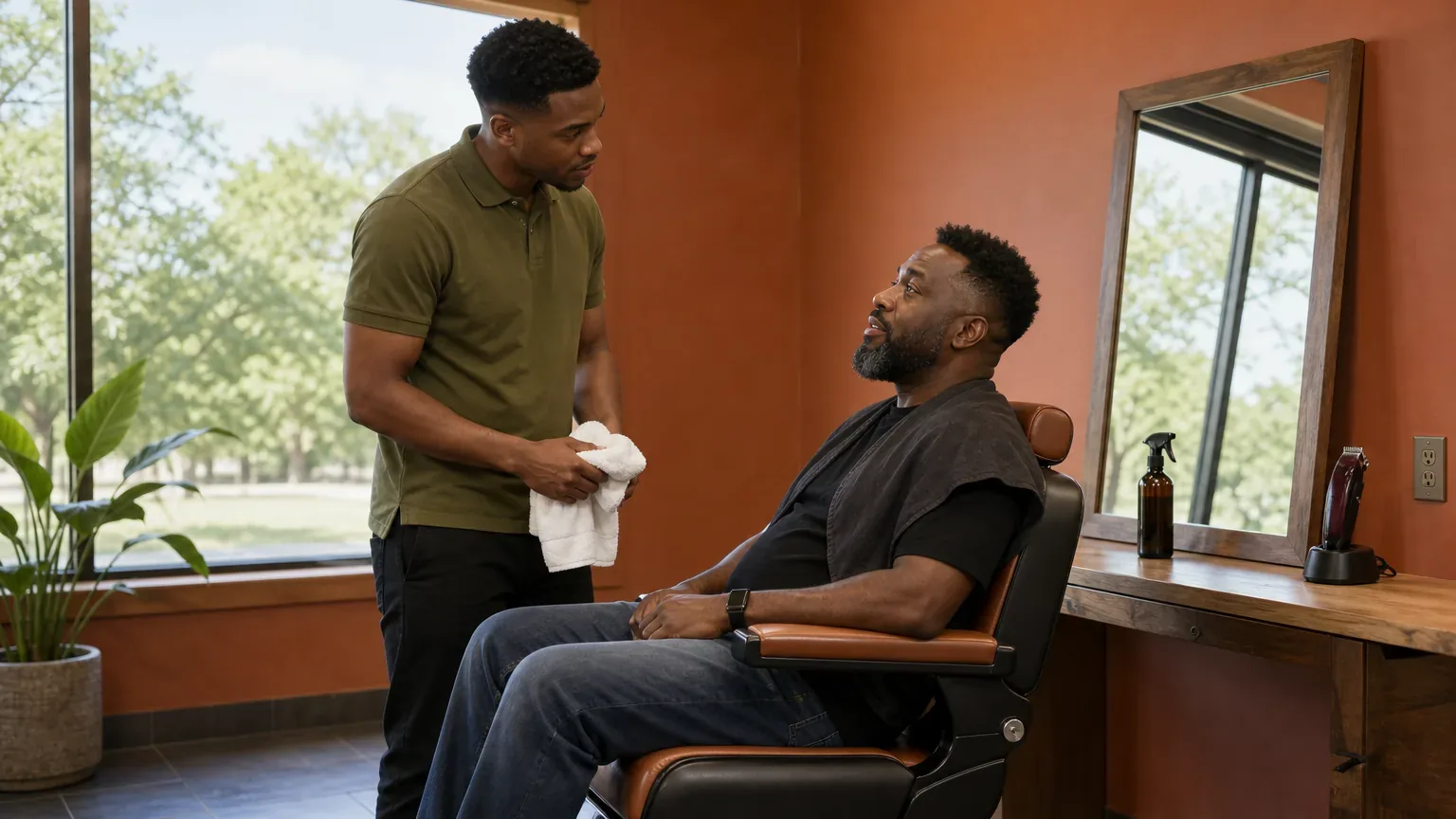
PFB can strike anyone with curly hair who shaves, not only the coarsest beards, so every curly beard gets the same three questions before the cape goes on:
- Do bumps follow your shaves? Bumps that show up in the days after a shave, along the path the blade took, are the PFB pattern. Irritation that starts during the shave and fades quickly is more likely razor burn.
- Ever had a keloid? On an earlobe, the jaw or the chest. A nick on keloid-prone skin can start a raised scar that outgrows the wound.
- Any bumps at the back of the neck? Firm bumps at the nape are often acne keloidalis nuchae, and a bare blade aggravates them.
Then look and feel, in good light. Tip the chin up, run your fingertips along the jaw and down the neck, and look for hairs looping back into bumps, pustules, dark marks along the beard line and firm scars. Not every bump in a beard is PFB. In the Oklahoma City survey, about one barber in six mistook PFB for tinea barbae, a contagious fungal infection of the beard. DermNet adds that PFB bumps can bleed when shaved.
What you find puts the client in one of three places:
- Clear skin, no history of bumps: the full shave, done the way the rest of this guide describes.
- Bumps that come and go: a shave with the grain only, or a foil shaver finish, and a look at the skin on the next visit to see how it held up.
- Inflamed bumps, pustules, broken skin or a rash: no shave today, and in some states no service on that skin at all. Texas bars barbers from servicing a client with “inflamed, infected, broken, raised or swollen skin,” and Arizona bars services on anyone showing “a sign of infection such as reddened, erupted, or open skin.” Book the shave for when the skin has settled, and if the bumps have been there for weeks, say the word dermatologist.
Map the Grain Before the Lather Hides It
On a coarse, curly beard the hair rarely grows one way. Men with coarse, curly hair usually find hairs growing in several directions, the American Academy of Dermatology (AAD) says, and DermNet names the area under the jawline, where the follicles point in various directions, as a typical site for PFB. Shave across a swirl you have not seen, and part of every stroke runs against the grain.
So map the beard at the consultation, while it is dry and you can still see the hair. Tip the client’s chin up to see under the jaw. Look at the stubble, then run a fingertip over each zone: the direction that feels smooth is with the grain, and the direction that catches is against it. In the AAD’s home version, men pull the skin tight to get a close look. That is fine for looking. It is never fine once the blade is on the skin.
Write the map on the client’s card. A beard’s grain stays put, which is why the AAD calls mapping a job you only do once, and the note spares the next barber the guesswork. For regulars whose beard grows every which way, pass along the AAD’s other tip: brushing the beard in one direction every day with a clean, soft toothbrush trains the hair to grow that way, which the AAD says can reduce new bumps significantly.
Hot Towel and Lather: Soften the Hair Before Any Blade
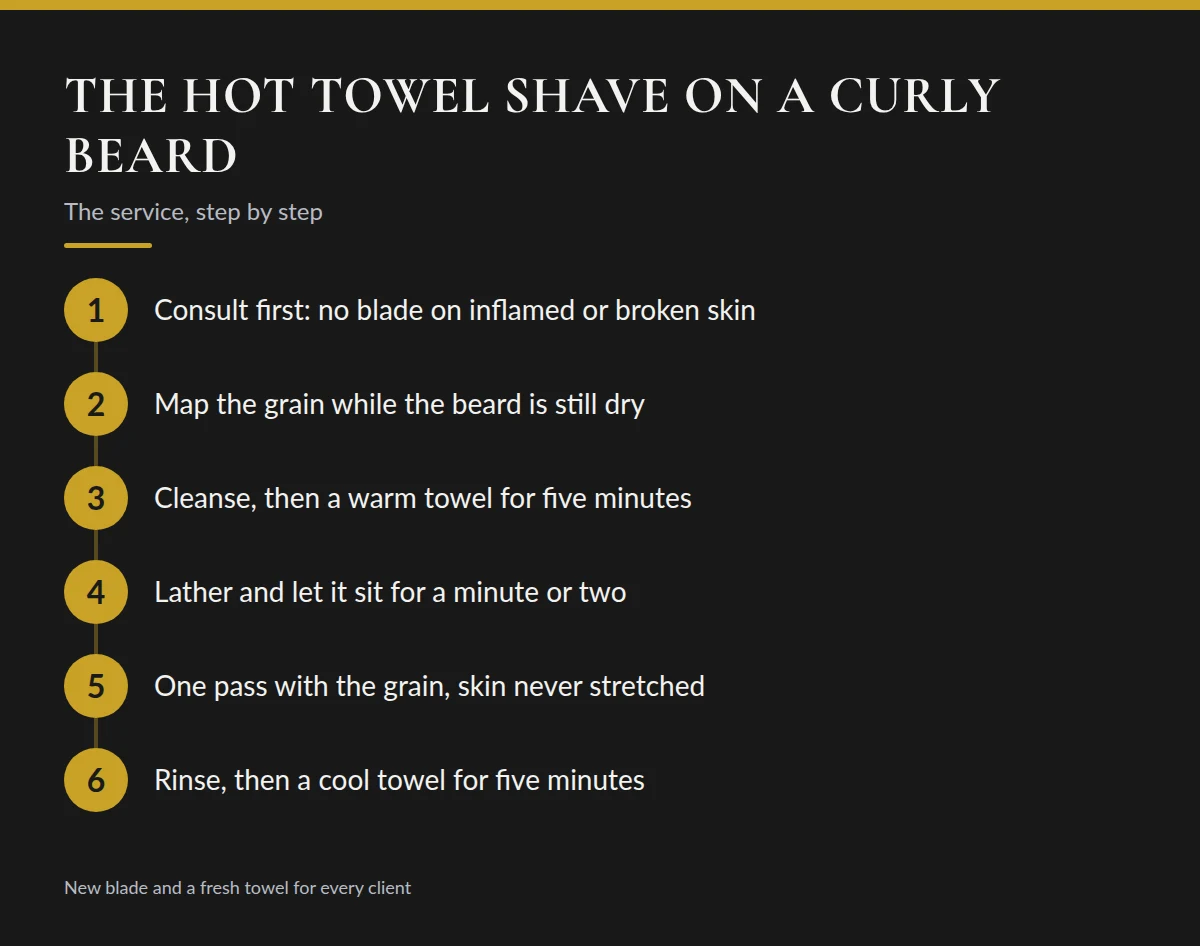
The towel is more than theater. Warmth and moisture make the hairs swell, the AAD explains, so they are less likely to curve back into the skin after the shave, and a warm compress also loosens hairs that have already curved in. Coarse hair needs that time. Here is the AAD’s routine for men with darker skin tones, moved to the chair:
- Cleanse first. A gentle, non-comedogenic cleanser worked in small circles with a washcloth lifts dead skin cells, which the AAD says can reduce the number of hairs that curve back in. Rinse it all off with warm water.
- Give the towel five minutes. Wring it out well and test it against the inside of your own wrist before it touches a face: warm, never scalding. Wrap the beard and leave the nose clear. Five minutes is the AAD’s number. If the first towel cools before then, swap in a fresh one.
- Lather, then wait. A moisturizing shave cream should sit on the skin for a minute or two, and it has to stay wet. If it dries before the blade gets there, rinse and lather again. Never shave a dry beard.
Check your state’s rules before you reach for a brush. Kansas bans shaving mugs and lather brushes in barbershops outright, so there the lather is worked in by hand. Where a brush is allowed, it is a tool like any other and gets cleaned and disinfected before the next client.
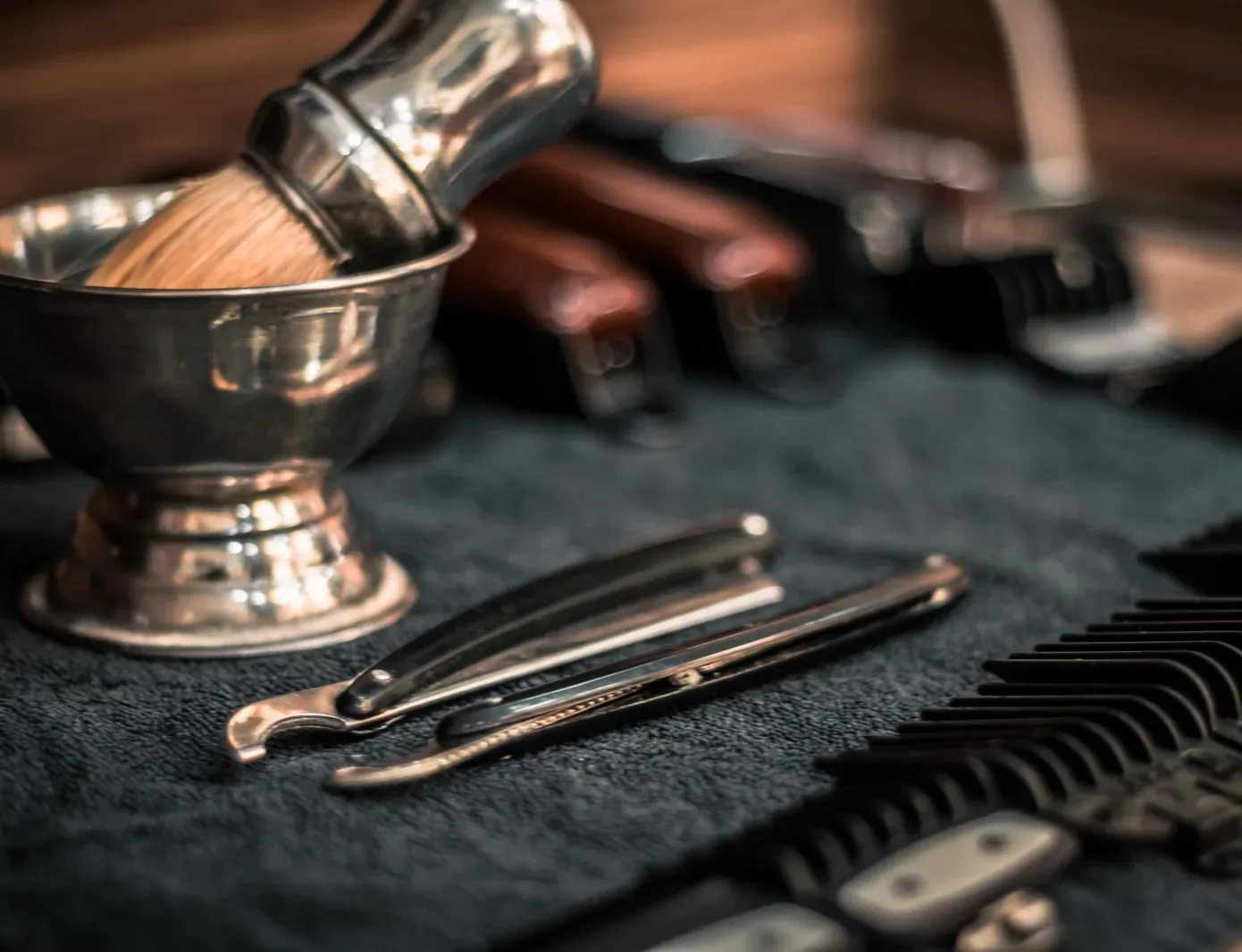
The towel is a one-client item too. Texas requires a clean towel for every client, with the used one pulled after each service and washed in hot water and chlorine bleach. A towel that warmed one face never goes back in the cabinet for the next.
One Pass, With the Grain, and Hands Off the Skin
Plenty of shops sell the shave as a close shave, with a second pass across or against the grain for a finish that feels like glass. On a curly beard that second pass is where the bumps come from. Cut a coiled hair below the surface and its sharp tip has two ways back in, DermNet explains: it can pierce the skin nearby, or slip back under the surface and push through the wall of its own follicle. The skin then reacts to the buried hair as it would to a splinter. The rules that prevent it are short:
- With the grain, slowly, in short strokes, following the map, and rinse the blade after each stroke.
- One pass. DermNet advises against shaving the same area twice and suggests leaving about a millimeter of stubble. The AAD’s outer limit is twice over any area. Treat that as a ceiling, not a target, and make any second touch with the grain.
- Light pressure. The AAD says to avoid shaving closely or pressing hard on the skin.
- Never stretch the skin. Pulling or stretching the skin while shaving can cause new razor bumps and worsen old ones, the AAD warns. Stretched skin lets the blade take the hair below the surface, and when the skin relaxes the cut end sinks with it.
That last rule cuts against how most barbers learn the straight razor, with the free hand pulling the skin taut so the blade glides without catching. DermNet’s advice for PFB is to shave with the non-shaving hand behind the back, to remove the temptation to pull the skin tight for an extra close shave. In the chair, flatten the surface with the client’s head position rather than your fingers: turn the head to open the cheek, and tip the chin up for the neck. If a spot cannot be shaved safely without stretching it, such as the loose skin at the throat, it does not get the blade. Finish it with a foil shaver.
Keep the edge fresh as well. A dull blade drags the hair before it cuts it, and the AAD says a dull blade greatly increases the risk of razor bumps. In a shop that question is settled, because every client gets a new blade (more on that below).
Then tell the client what to expect: “It won’t feel glass smooth. That little bit of stubble is what keeps the hair out of your skin.”
When the Blade Is the Wrong Tool
The razor is one way to deliver the service, not the service itself. PFB is more common in men who shave with a blade than in men who use an electric shaver, DermNet notes, and most clients who should skip the blade fit one of three alternatives:
- A foil shaver cuts at the surface rather than below it, so it leaves far fewer ingrown hairs than a razor pass. It is the finish for clients whose bumps come and go, and for any patch you cannot shave without stretching.
- A close trim with a trimmer or a short guard keeps the tip above the skin. The evidence is old but striking: in a late-1970s study of 96 men with PFB, a 30-day grow-out followed by electric clippers only, plus a twice-daily cleansing pad, let 96 percent of the men who followed it meet the Air Force grooming code.
- A break from the blade. For a beard already full of bumps, the fix is letting it grow. The AAD says to expect fewer bumps within a month and clear skin by about three months, and DermNet puts the settling at roughly four to six weeks.
Some clients should not get a blade on the affected skin at any visit: anyone with keloids along the jaw or neck, bumps at the nape, or PFB that flares after every careful shave. For that last group, the next stop is a dermatologist.
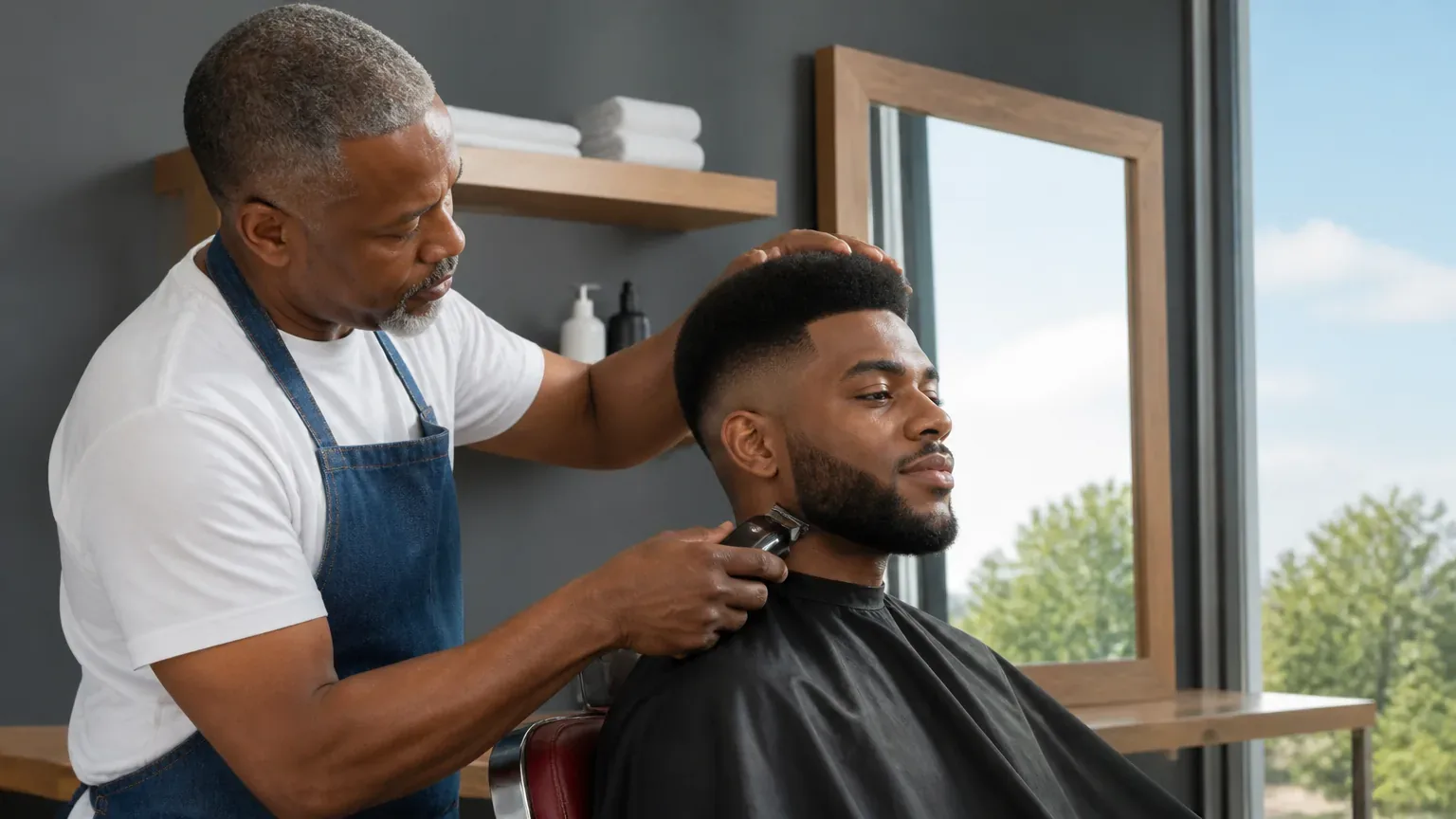
Whatever the tool, keep the ritual. Cleanse, towel, the foil or the trimmer, a cool towel and a calm finish is still the service the client booked, and nothing about it needs to cost less.
The Finish: Aftercare in the Chair and at Home
Close the service as gently as you opened it:
- Rinse off every trace of lather with warm water, since leftover shave cream can irritate the skin, according to the AAD.
- A cool towel for about five minutes, the AAD’s closing step.
- A soothing aftershave made for bump-prone skin, or a fragrance-free moisturizer. If a product burns or stings, the AAD says to stop using it, so retire any splash that makes clients wince. Our skin care guide for Black men covers the daily routine that keeps the beard line calm between visits.
- Single-use styptic for a nick, never a shared alum block.
Then send the client home with three instructions. Leave any bump alone, because plucking a hair inside a razor bump causes new bumps, the AAD warns. Keep an eye on the beard line over the next few days, and mention any bumps at the next visit so the shave can change. And if bumps keep coming after the shave has changed, see a dermatologist. Men who keep getting razor bumps can develop permanent deep grooves and raised scars, the AAD says, and Coquilla and Lewis, reviewing PFB care in the military, stress proper treatment to avoid scarring, dark marks and keloids.
Sanitation for an Open Razor
A straight razor is the sharpest tool in the shop, and the shave is the service where a nick is likeliest. Even a simple nick from a razor blade can let microorganisms past the skin, and a 2024 review of infections acquired in barbershops found that shaving with reused, non-disinfected blades raises the risk of passing on HIV and hepatitis B and C. Most of that evidence comes from countries where those viruses are far more common, the authors note, but the routine that prevents it is the same everywhere:
- A new blade for every client, unwrapped where the client can see it. A changeable blade is made to be thrown away, and one that has been through a beard is duller for the next.
- Disinfect the razor after every client. Texas lists razors among the tools that must be wiped and sprayed with an EPA-registered bactericidal, fungicidal and virucidal disinfectant after each client, then fully immersed at the end of the day.
- Used blades go into a sharps container. Arizona requires sharp tools to be sealed in a rigid, puncture-proof container, never tossed loose in the trash.
- Gloves when blood appears. Arizona’s rule calls for single-use, fluid-proof gloves whenever a discharge is present or likely. If a nick bleeds, stop the service, glove up, stop the bleeding with a single-use styptic, throw away anything with blood on it and disinfect every tool it touched. The full routine, and the OSHA standard behind it, is in our tool and sanitation guide.
- One towel per client, laundered before it comes near another face.
These are examples, not a national code. Every state board writes its own sanitation rules, so check your board’s current rules before you set up a shave station.
The Bottom Line
In September 2026, a panel of US dermatologists agreed that changing how the hair comes off is the first-line treatment for PFB. In a barbershop, that makes the shave either the treatment or the cause. Decide at the consultation, map the grain, give the towel its five minutes, take one pass with the grain without pulling the skin, and put the blade down for the clients whose skin says no. That is not a watered-down classic. It is the classic, done for the beard that is actually in the chair.
Further reading (sources)
- American Academy of Dermatology on the shaving routine dermatologists recommend for darker skin tones
- DermNet for PFB shaving technique, from a single pass to the hand behind the back
- Adotama and colleagues with a survey of what Oklahoma City barbers know about razor bumps and nape bumps
- Alomary and colleagues on the dermatologists’ consensus that changing hair removal comes first
- Conte and Lawrence for a grow-out and clippers-only routine that let servicemen meet grooming rules
- Coquilla and Lewis with a review of managing PFB in the military without scarring
- Crutchfield on why anyone with curly hair who shaves can develop PFB
- Britsch, Bereswill and Heimesaat for a review of infections picked up in barbershops
- Texas Administrative Code with the general health rules on inflamed skin and towels
- Texas Administrative Code on disinfecting razors and other tools after every client
- Arizona Administrative Code for infection control rules covering sharps, gloves, blood and open skin
- Kansas Administrative Regulations with the ban on shaving mugs and lather brushes